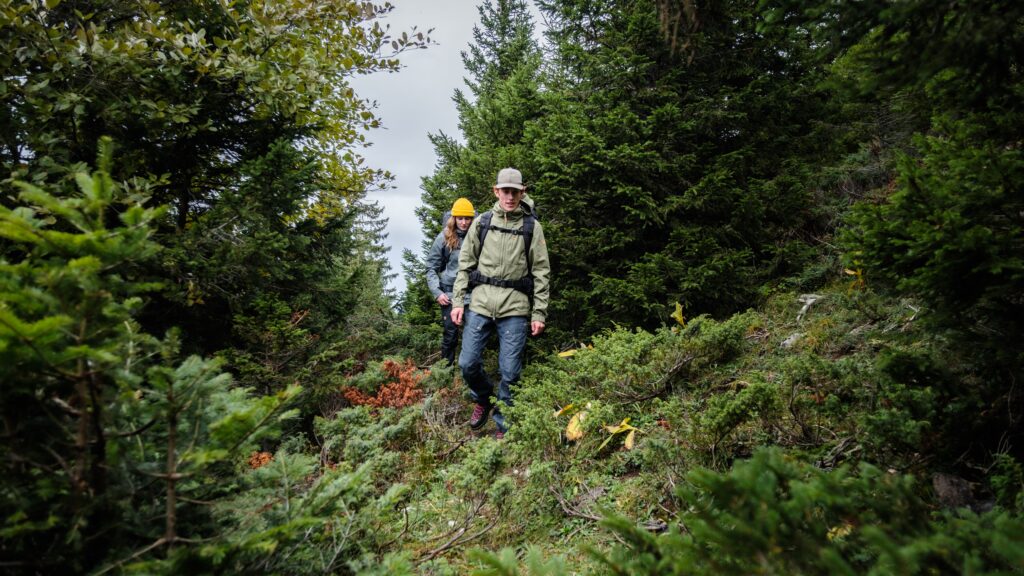
Finding the right hiking shoe requires balancing freedom of movement, comfort, and technical performance. Hiking has established itself as the quintessential intermediate activity, falling somewhere between a Sunday stroll and an alpine expedition. Behind this English term lies a well-known reality on the ground: active walking on trails, often for a full day, at a steady pace.
While in the United States the term encompasses all types of outdoor activities, in Europe it refers specifically to light hikes or brisk walks. Whether you’re looking for men’s hiking shoes or women’s hiking shoes, the goal is to find footwear that won’t let you down.
Hiking: Definition and Uses
Hiking is , above all, a brisk walk. Unlike highly technical hiking or carrying heavy loads, hiking is generally done on marked trails. It requires lightweight, flexible gear.
The rise of fast hiking has, in fact, prompted manufacturers to rethink their designs to improve speed. Today, people no longer choose the upper of their shoes simply out of habit. Instead, the choice is based on their walking pace and the type of terrain.
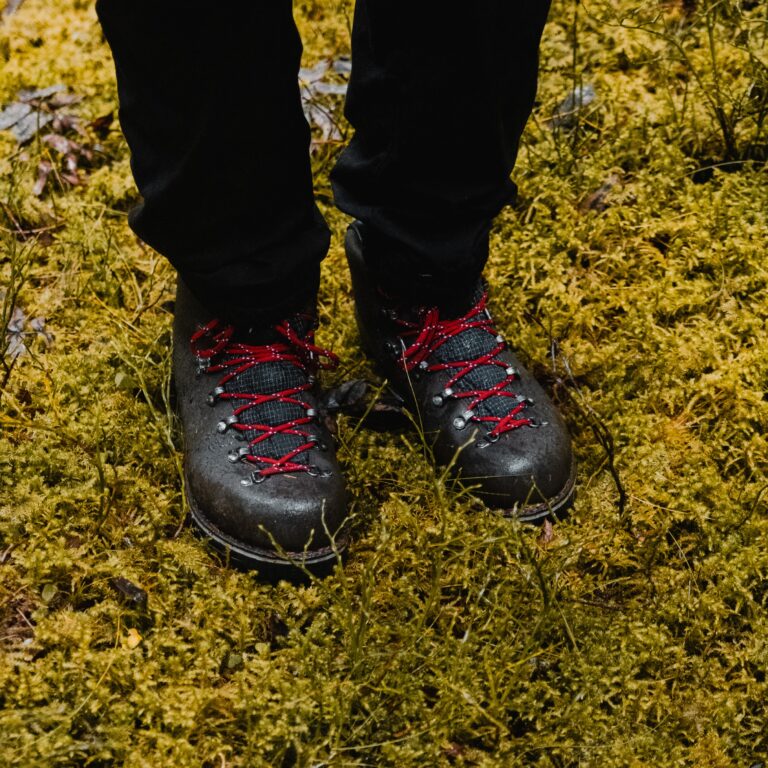
What equipment do you need for your practice? The Galibier Approach
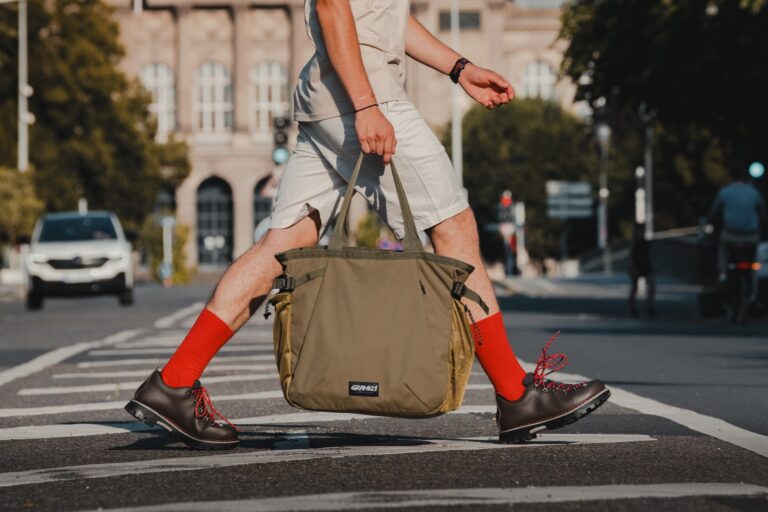
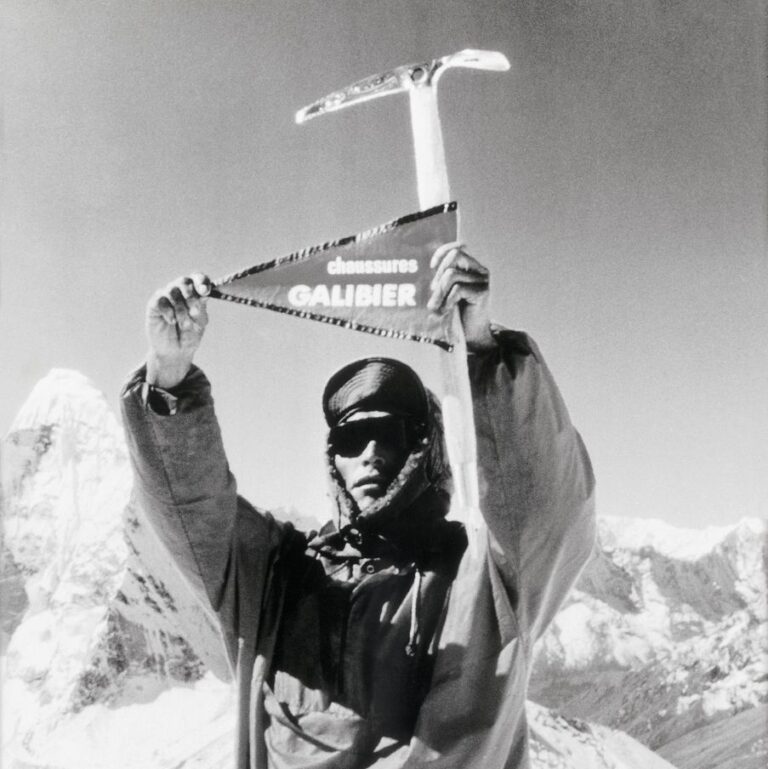
Rooted in mountain tradition since 1922, Galibier rejects planned obsolescence. Unlike most fast-hiking boots, our Super Rando line allows for a complete resole. What’s more, choosing Galibier means making a reliable investment that protects your feet.
Super Hike: Gear Designed for Long Distances
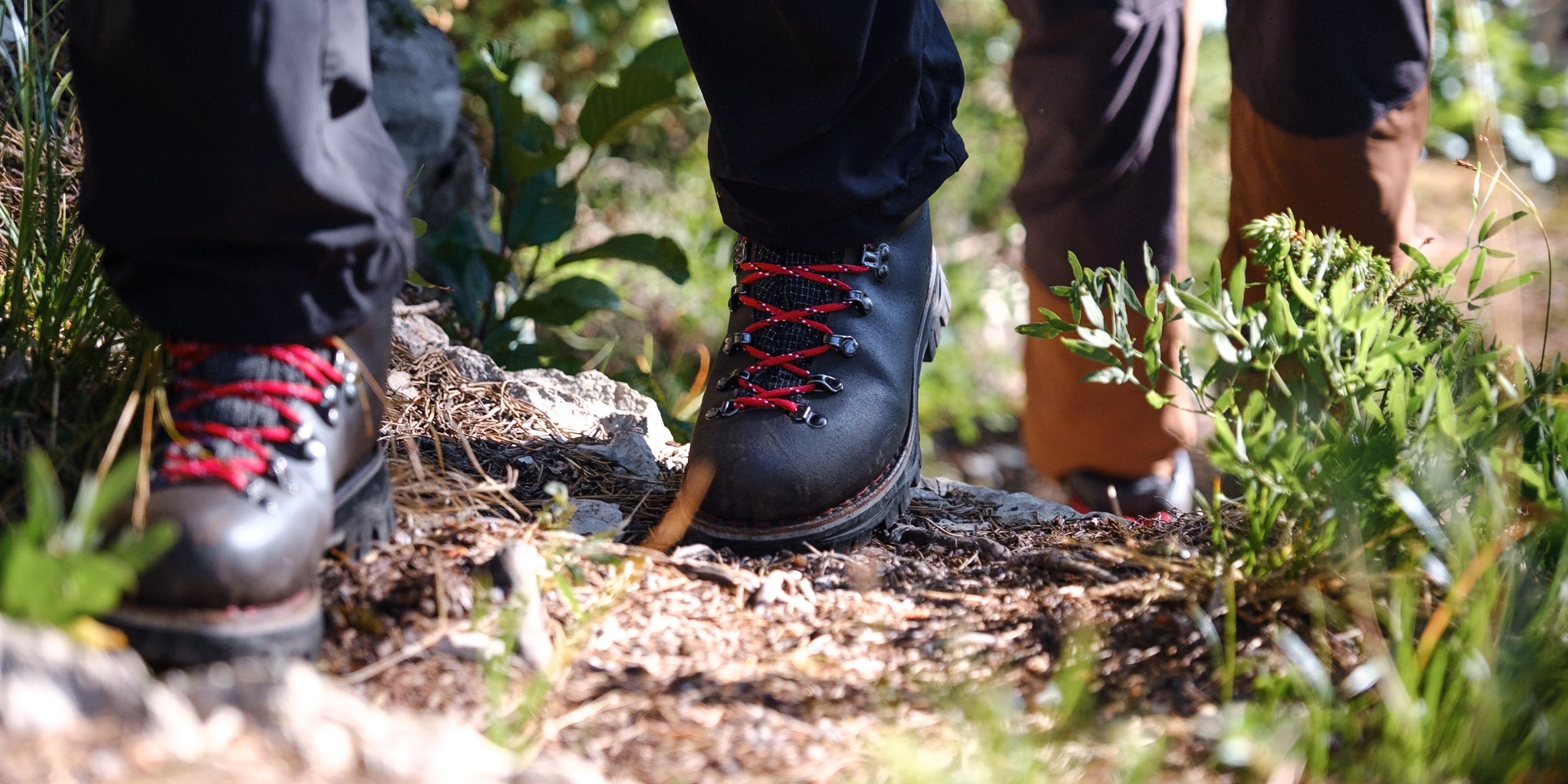
Built for long distances, the Super Rando line is the perfect choice if you’re looking to rack up the kilometers without sacrificing protection. Building on our heritage of expertise, the Super Rando Mid combines the reliability of our one-piece construction with optimal ankle support. This is essential when you’re hiking on unstable terrain with a heavy pack.
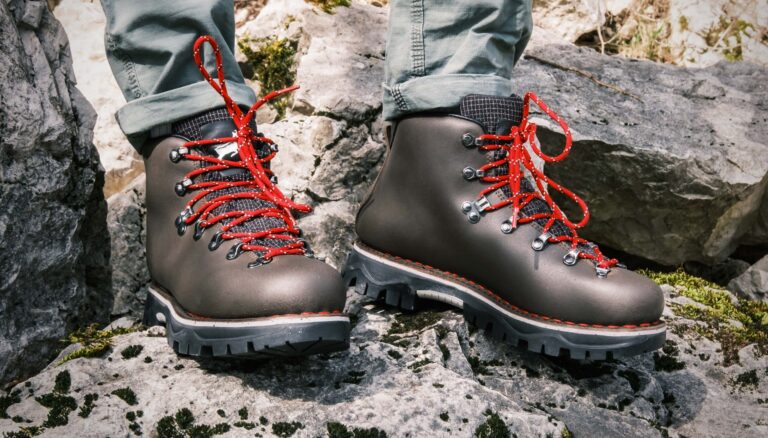
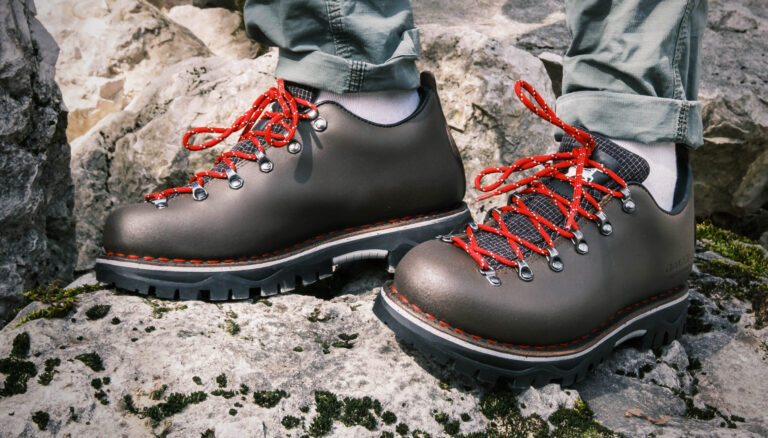
If you prefer a more vigorous pace and better temperature regulation, check out the Super Rando Low. The low-cut design maximizes breathability while maintaining the line’s signature durability.
Super Varappe: Excellence in Technical Hiking
Designed for challenging terrain where traction is vital, the Super Varappe line excels on rock and stands out from models focused purely on running. What’s more, for rugged trails, the Super Varappe Mid offers complete waterproofing thanks to its 100% recyclable, PFAS-free Sympatex membrane. Its technical fit ensures rock-solid support on scree in all weather conditions.
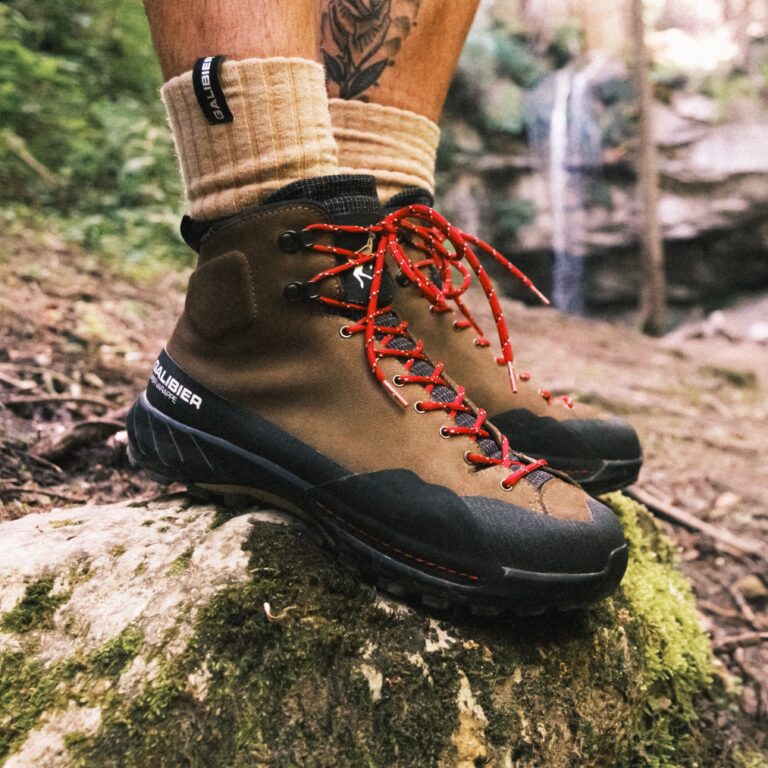
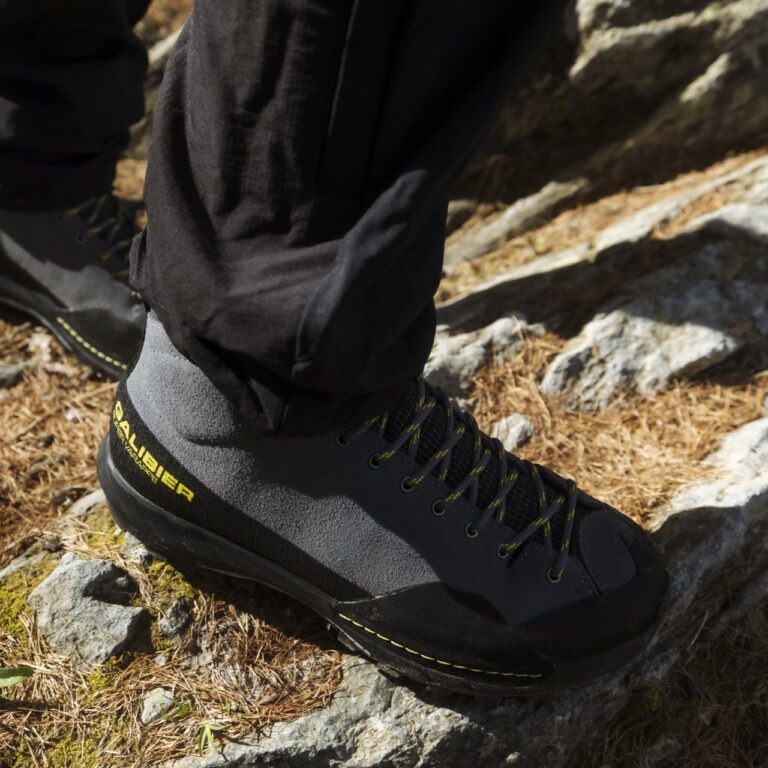
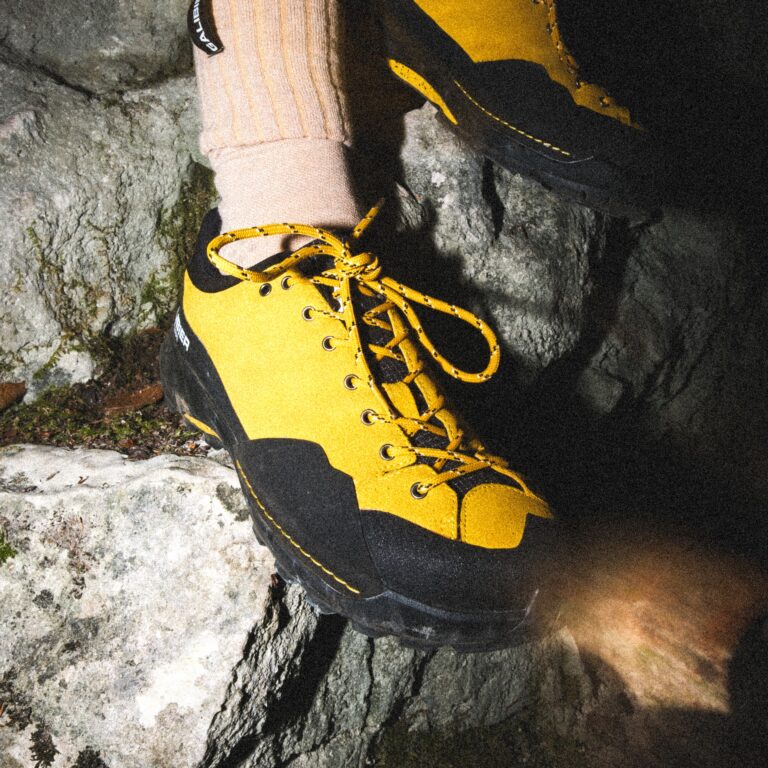
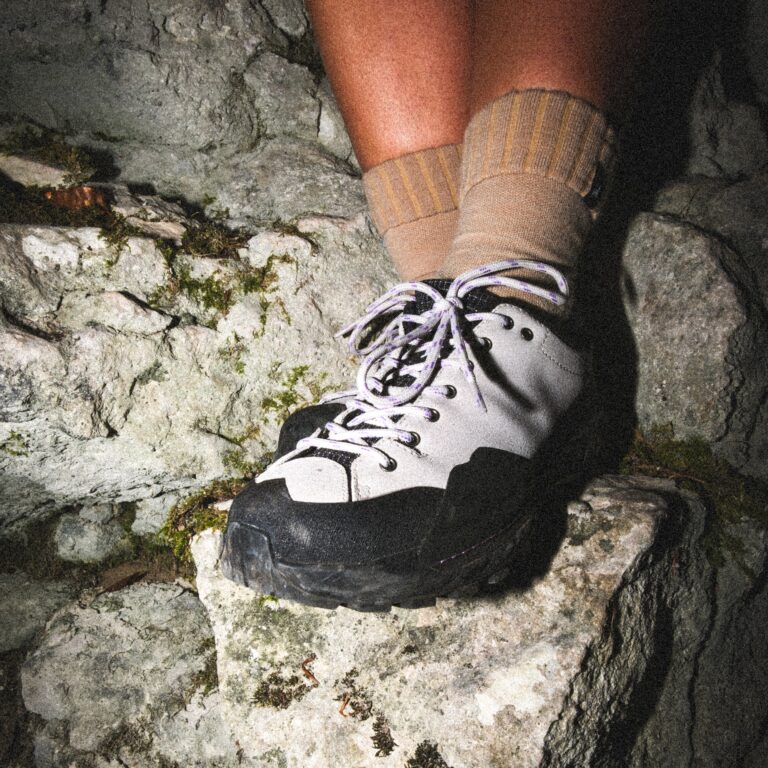
To maximize your freedom of movement, the Super Varappe Low combines Perwanger leather with a Dyneema tongue. This hybrid model—ultralight and abrasion-resistant—optimizes fast walking and is a formidable choice for challenging hikes on steep terrain.
Features of a Hiking Shoe
Behind every design choice lies a specific biomechanical requirement. A high-performance hiking boot must meet the biomechanical demands of sustained walking. The challenge is to strike a balance between protecting the foot from uneven terrain and ensuring the flexibility needed to maintain a smooth stride throughout the day.
Thermal comfort and cushioning: the right balance of materials
Cushioning is the first line of defense against muscle fatigue. A dense midsole absorbs the repeated impacts of a brisk stride without losing its shape prematurely as the kilometers pile up. During an active run, breathability becomes just as crucial: the foot heats up quickly. While a Gore-Tex membrane is essential for walking through wet grass or braving the rain, choosing high-quality full-grain leather ensures excellent natural temperature regulation in dry weather, thereby preventing the skin from overheating.
Hiking Shoes: Requirements for Low-Cut Models
When hiking, a low-cut upper is the natural choice to free up the ankle joint and promote a dynamic stride. However, this increase in agility should not come at the expense of stability. Support is provided by a firm heel counter that locks the back of the foot in place, complemented by precise lacing that extends low down the instep.
It’s tempting to choose very lightweight low-cut hiking boots, but the quest to save every gram should never come at the expense of durability. A sturdy rubber toe cap effectively protects your toes from impacts on rocky terrain. This balance between durability and agility is what defines the best fast-hiking boots.
Outsole: Traction and Safety on Rough Terrain

Your safety depends directly on the outsole. On loose ground, the beveled, widely spaced lugs automatically displace soil to maintain consistent traction. When the terrain hardens, the Vibram® rubber provides the necessary friction to navigate wet rocks and roots without slipping. This firm grip stabilizes your footing on descents and offers long-lasting resistance to mineral abrasion.
What is the difference between hiking and trekking?
The two are often conflated, but these practices are fundamentally opposed.
Hiking takes place on marked trails, lasts a few hours, and involves basic gear and a pace that emphasizes physical exercise.
Trekking, on the other hand, typically involves multiple days in terrain that can be rugged at times, requiring solid experience, a planned nutrition strategy, and the carrying of heavy gear, including a sleeping bag.
Embarking on long hikes with a heavy backpack while wearing fast-hiking shoes will lead to premature fatigue. There is a specific shoe design for every type of activity.
Where to Go Hiking: From Local Trails to Far-Flung Adventures
Hiking is enjoyed on every continent and inevitably inspires travel. While our mountain ranges offer an exceptional playground for regular day hikes, the sport often encourages us to broaden our horizons. When planning an upcoming expedition, exploring the world’s best trails offers the chance to dream of legendary routes. These range from the steep trails of the Cinque Terre to the challenging ridges of the GR20 in Corsica.
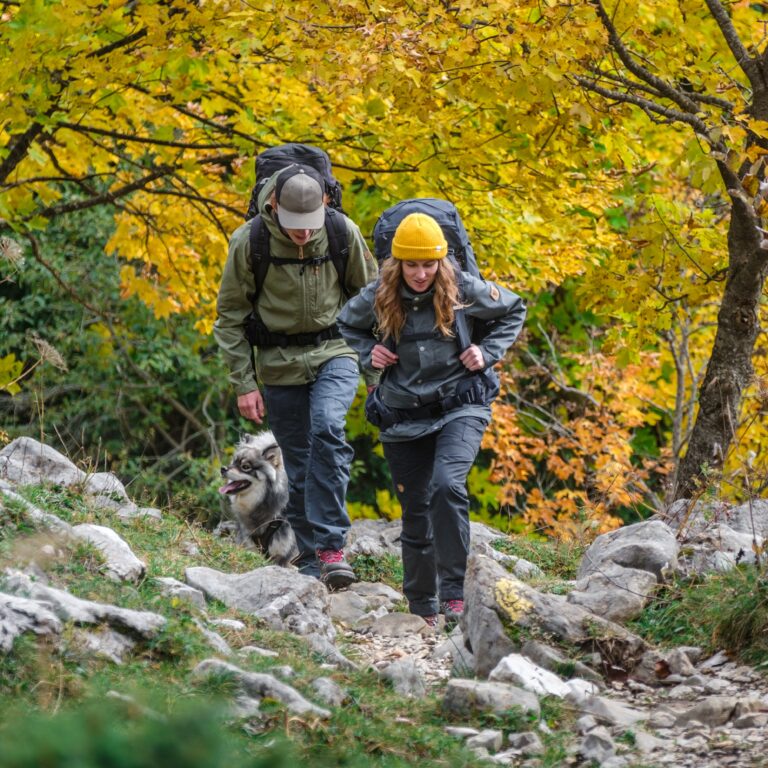
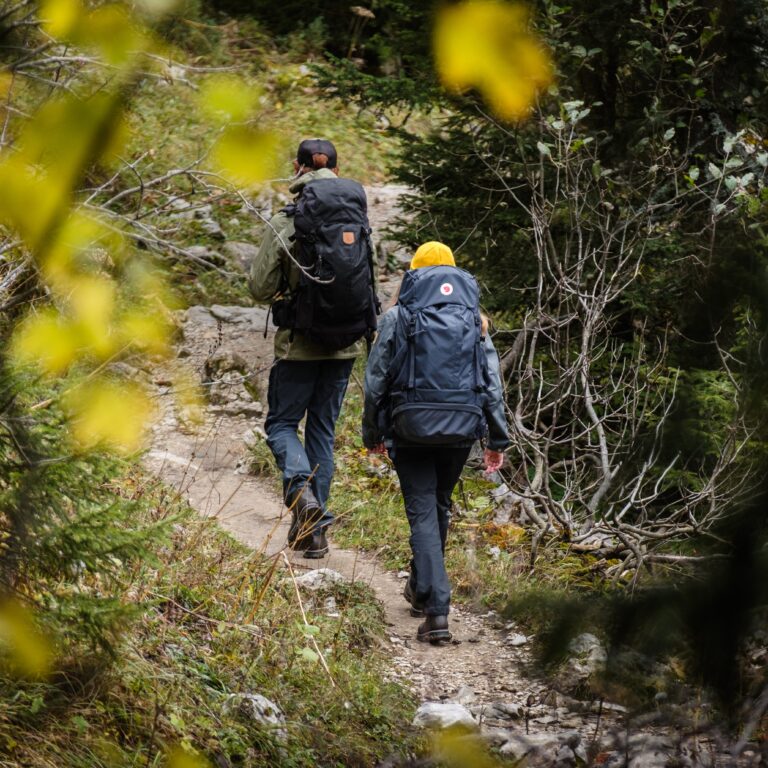
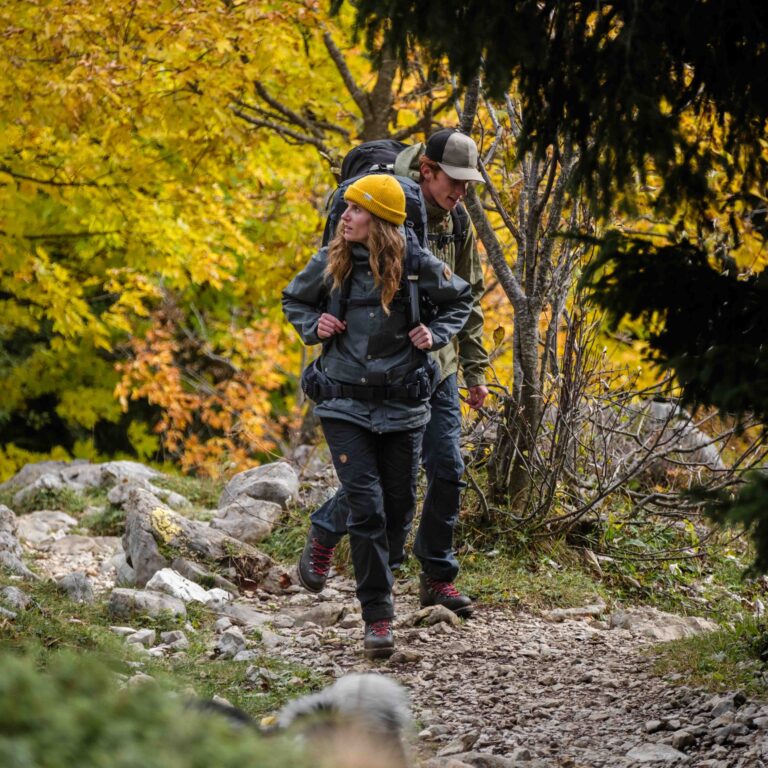
This diversity of environments underscores a fundamental rule of thumb in the field. The abrasiveness of the rock, the humidity level, and the nature of the soil vary drastically from one country to another. Therefore, it’s essential to wear waterproof and breathable shoes. This will help you cope with these geological variations without letting you down in the middle of your trip.
FAQ – Hiking Shoes
GALIBIER

Hiking corresponds to our day hikes, but involves a brisk pace (which gave rise to “fast hiking”).
“Hiking” in the strict sense also includes very slow, contemplative walks.
Backpacking involves being completely self-sufficient over several days, requiring you to carry a heavy load (tent, stove, food). This weight requirement calls for high-top, very rigid boots, making classic hiking boots unsuitable and potentially leading to injury.
For a classic trail hike, the answer is no. The Super Guide is a traditional mountaineering boot: its weight and fully rigid sole restrict the foot’s natural roll, which becomes a real ordeal on long hiking stages.
It’s only useful for trekking on high-altitude routes that border on mountaineering: high glacial routes, off-trail ascents on steep scree slopes, or crossings that require crampons and carrying a very heavy load.
If your route stays on long-distance hiking trails, opt for the Super Rando Mid, designed to handle long distances while providing ankle support.
A fast-hiking shoe with a soft sole will generally wear out after 500 to 800 km. In contrast, a sturdy Galibier model made of leather with a Vibram sole will easily last more than 1,500 km, with the added benefit of being able to be resoled to make it feel like new again.