Women’s hiking boots must be absolutely reliable to handle the mud and abrasive scree of rugged trails. Mountain adventures leave no room for compromises when it comes to gear. Hiking independently whether on a multi-day trek or a long-distance expedition puts your body under intense strain. Your feet become your primary source of propulsion, supporting both your body weight and the load of heavy gear.
The purpose of this guide is to provide you with the technical insights you need to understand what sets a true expedition boot apart from a simple hiking shoe. We’ll analyze the impact of weight, duration, and terrain to help you avoid the pitfalls of immediate comfort in the store. Finding the best women’s hiking boots requires looking beyond aesthetics and focusing on the structure, safety, and durability of the gear.
Why Choose Hiking Shoes Designed for Women
Female biomechanics exhibit well-documented differences in alpine environments. Generally speaking, the female foot is characterized by a narrower heel and an instep with a different volume than that of men. The main challenge during long hikes on sloping or downhill terrain is to prevent the heel from lifting, which is the primary cause of friction and blisters.
However, the technical solution to this foot shape does not necessarily require an artificially narrowed last. At Galibier, we design our models around a universal fit that has been proven through decades of mountaineering. True adaptation to the female foot comes from the quality of the materials. High-quality full-grain leather possesses a certain “shape memory.”
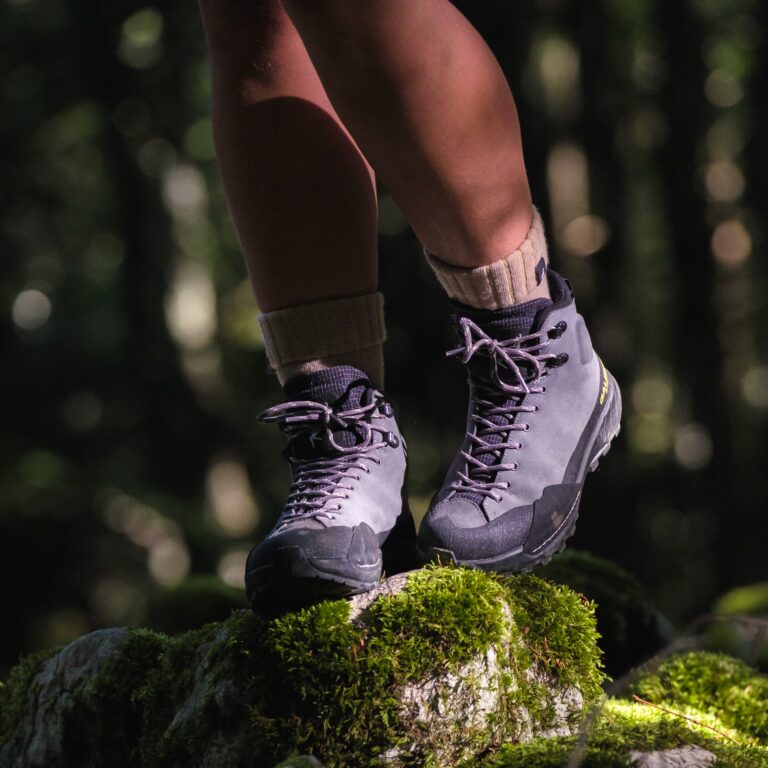
As you run, the upper will mold to your foot, becoming more flexible and adapting millimeter by millimeter to the unique contours of your foot. Combined with a technical lacing system that allows you to adjust the tension separately between the forefoot and the ankle, this universal fit ensures support, eliminating friction points while preventing joint fatigue caused by carrying a heavy backpack.
Key Features of Women’s Hiking Shoes
In the mountains, safety begins with a clear understanding of your equipment. Taking the time to analyze a boot’s construction, the density of its leather, the stiffness of its sole, and the height of its upper remains the only way to prevent physical or equipment failure once you’re far from any help.
Understanding how a hiking boot is constructed isn’t just a theoretical exercise: it’s what ensures your feet stay stable under load. Checking the quality of the materials and the level of support before you set out will prevent you from putting unnecessary strain on your joints due to ill-fitting gear.
The reliability of the materials and the shoe’s construction
In the mountains, safety begins with a clear-headed assessment of your gear. Understanding the construction of a hiking boot the density of its leather, the stiffness of its sole unit, and the height of its shaft is by no means a theoretical exercise: it’s what ensures your footing remains stable under the weight of your pack. Assessing the quality of the construction and the level of support before setting out remains the only way to protect your joints and prevent any equipment failure once you’re far from help.
Resilience in the Face of the Elements

Trekking across snowfields, through tall grass drenched in dew, or during sudden storms is part of everyday life on a trek. Water resistance is a matter of thermal safety. The integration of a Sympatex membrane provides a waterproof barrier while allowing sweat to escape. However, the effectiveness of this membrane depends directly on the treatment of the outer leather. It must be regularly conditioned to remain water-repellent, thus preventing the shoe from becoming saturated with water and growing heavy.
Women’s Hiking Shoes: Traction and Durability of the Sole
The outsole is your only point of contact with harsh terrain. Grip is ensured by deep, multidirectional lugs that can shed mud and bite into loose soil. But traction alone isn’t enough. Wear and tear is the real enemy. A serious women’s trekking shoe features high-density rubber that will withstand abrasion over hundreds of kilometers of granite rock, without ever crumbling or losing its grip.
It’s crucial to distinguish between immediate comfort and structural comfort. A hiking boot worthy of the name may feel stiff when you first try it on. That’s perfectly normal. Long-term comfort comes from a dense midsole (often made of polyurethane) that won’t collapse under the weight of your load after three days of hiking. It is this stiffness in the midsole that prevents your arch from collapsing due to fatigue, thereby protecting you from sharp pain under your foot.
A Closer Look at Galibier Hiking Boots
Galibier’s vision stands in direct opposition to the throwaway culture. We design hiking boots built to last for decades, meticulously crafted to accompany you on every journey.
This commitment is not merely a statement of intent, but a reality on the ground. By choosing full-grain leather and traditional construction methods, we design products capable of withstanding repeated abrasion from granite and the stresses of carrying heavy loads. Most importantly, when the rubber sole eventually wears out after hundreds of kilometers, our construction allows our artisans to completely resole the shoes.
Don’t throw away your gear restore it to its original performance level so you can tackle new elevations.
Super Rando Mid: The Hiking and Trekking Shoe
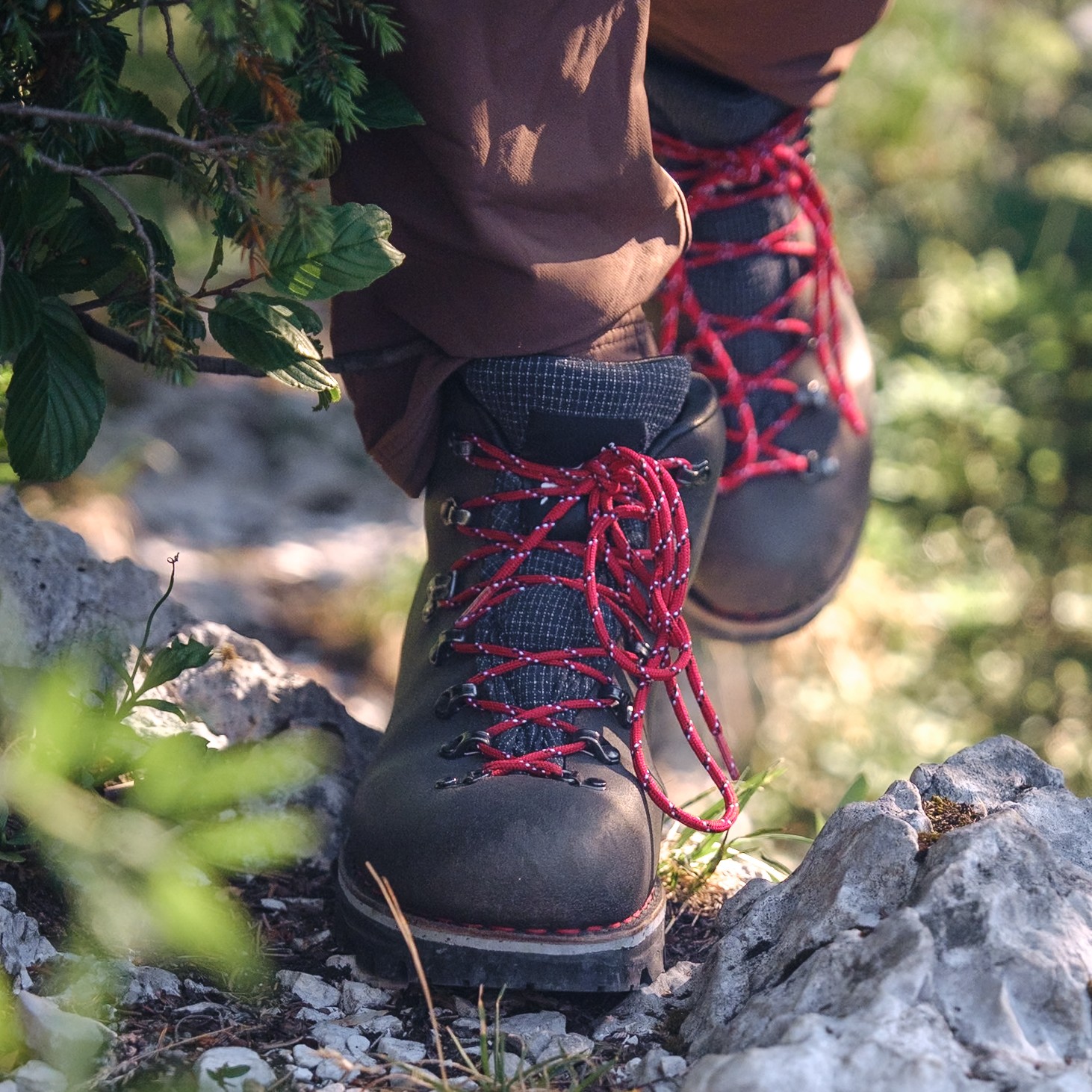
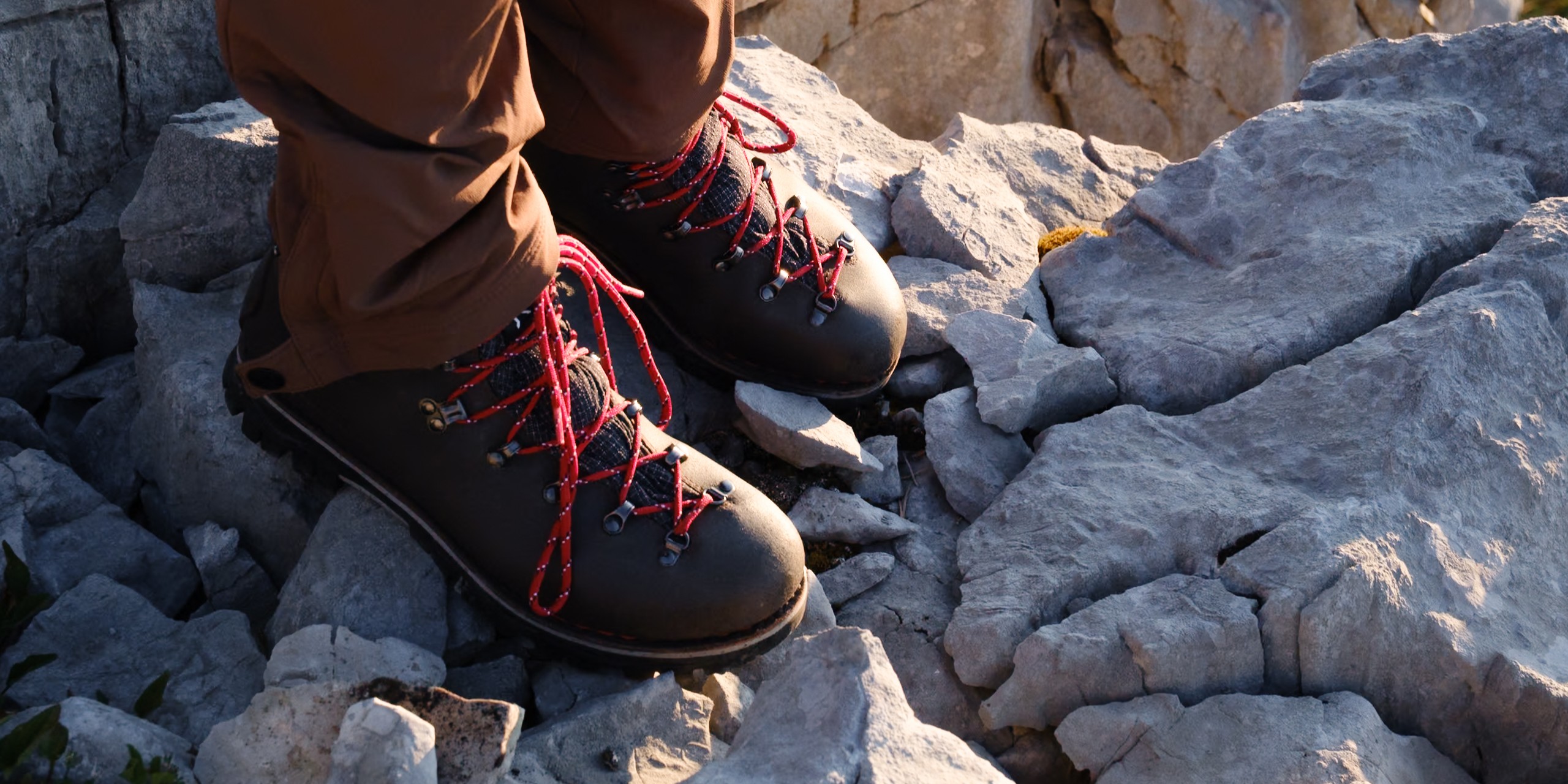
The Super Rando Mid embodies the rebirth of an icon. It carefully preserves the defining features that forged the Galibier legend: its famous red laces, its distinctive tread pattern, and its one-piece construction, which ensures unmatched reliability. It is this unique silhouette—instantly recognizable on the trails—that speaks to our time-honored craftsmanship.
Fast-hiking and trekking: Super Rando Low
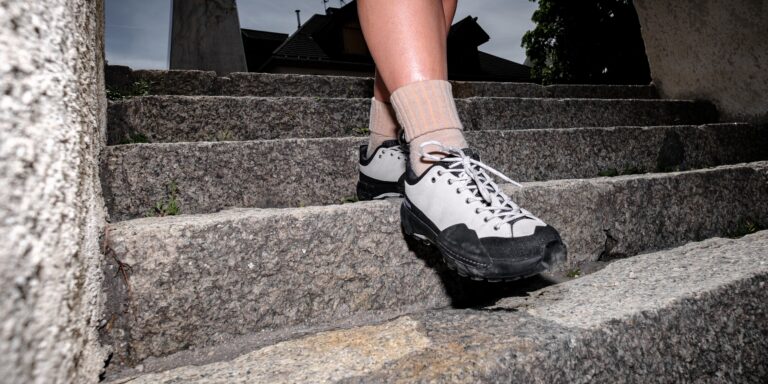
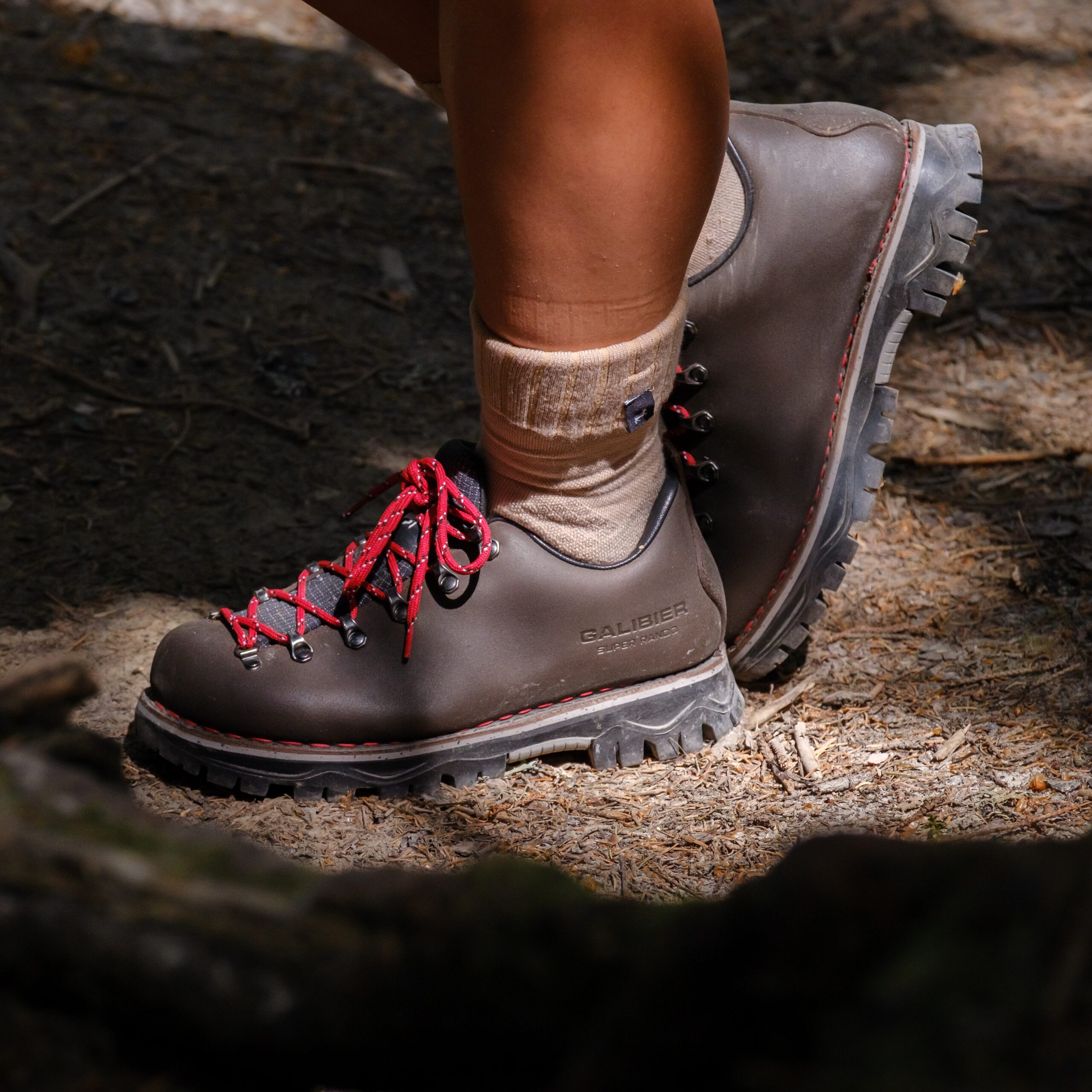
However, staying true to the brand’s aesthetic codes does not come at the expense of innovation. Beneath its timeless design, the Super Rando Low features a construction made of technical materials. This structural advancement significantly reduces the shoe’s weight while improving its breathability.
How to Choose Women’s Hiking Shoes
Trekking places much greater demands on equipment than traditional hiking.
Multi-day hiking subjects gear to physical stresses that a typical hike does not. When hiking independently, the repeated impact of each step under load requires a shoe with a sturdy structure one capable of absorbing repeated shocks and maintaining the foot’s alignment without collapsing as the kilometers add up.
Depending on the technical difficulty of the terrain and the duration of the expedition
The demands of your route determine how stiff your gear should be. If you’re hiking on well-marked, long-distance trails with few rocks, a shoe with a relatively flexible foot roll will help you conserve energy.
Conversely, if your route includes off-trail sections, unstable scree, or snowfields, a stiff sole is absolutely essential. It will allow you to scrape against the rock and use the edge of the boot to carve steps, without placing that twisting strain on your own muscles.
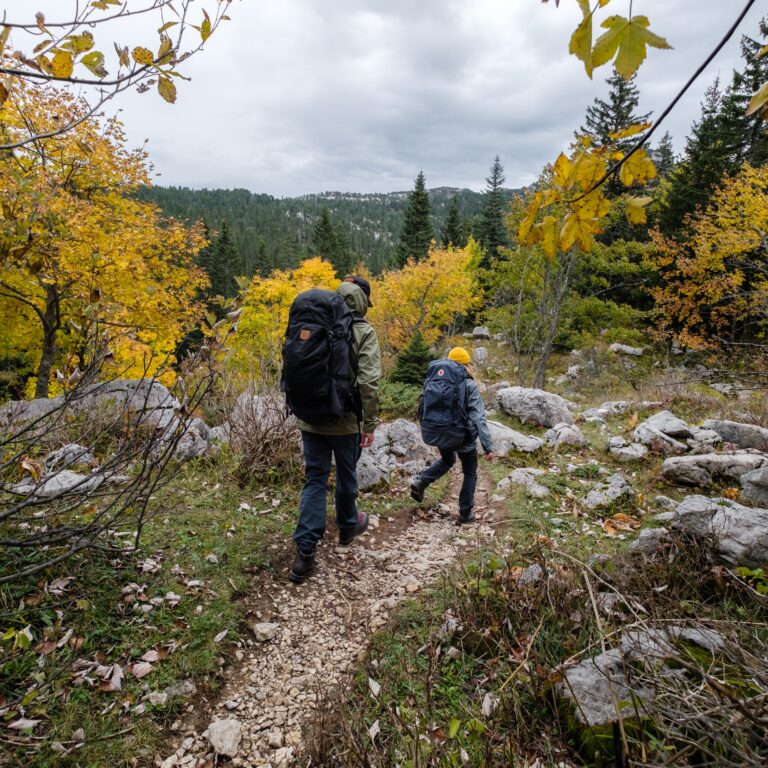
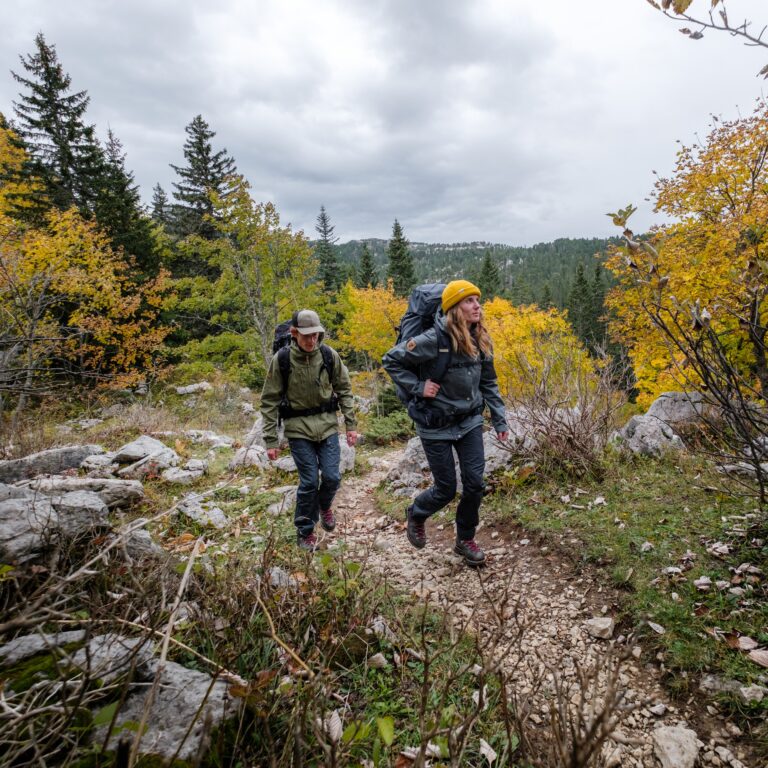
The concept of cumulative fatigue is central to trekking. On a two-day hike, your fresh muscles naturally compensate for minor unevenness in the terrain. On a trek lasting several weeks, fatigue impairs your proprioception, and your footing becomes less precise. You’ll then need to choose the best women’s trekking shoe in terms of support. The shoe takes over for your exhausted muscles by guiding your foot along a stable path, thereby preventing injuries toward the end of the hike.
Ankle support: depending on the weight of the bag being carried
The weight you’re carrying is the factor that definitively rules out lightweight shoes. The heavier your pack, the more force is transferred to your joints with every step. If you’re carrying a light load, you can get away with a low-cut shoe.
On the other hand, as soon as your load exceeds ten kilos, a tall shaft and a rigid frame are essential. They absorb shock and distribute the pressure of the load across the entire sole plate, protecting your knees and back.
To optimize your pack and carry only the essentials, the MonGR website (published by the FFRandonnée) offers an excellent reference list of gear to pack in your backpack for a backpacking trip.
Footwear: Women’s Hiking Shoes
The fitting is the culmination of your preparation. During the fitting which must be done in the late afternoon while wearing your hiking socks you should focus on two areas. First, heel stability: when simulating a steep uphill walk, your heel should not slip upward at all.

Next, forefoot fit: when you strike the ground to simulate a descent, your toes should never bump against the front of the shoe. The remaining space is adjusted through proper lacing and the choice of sock thickness.
Women’s Trekking Shoes vs. Hiking Shoes
Distinguishing between these two types of footwear is essential to avoid making the wrong purchase. Lightweight hiking shoes are designed for day hikes with a light pack (water bottle and rain gear). They are immediately comfortable, very flexible, and extremely lightweight.
Trekking which requires self-reliance and carrying a load over long distances quickly wears out this type of gear. A lightweight hiking shoe will collapse under the weight of your pack, exposing your ankle to sprains and making every rock feel painful under the sole of your foot. Women’s trekking boots are designed to handle their weight and initial stiffness: they are tools for passive protection, built for endurance and the harsh conditions of the alpine environment.
Caring for Women’s Hiking Boots
At Galibier, our philosophy is clear: a true mountain boot requires a break-in period. But this initial effort guarantees a superior fit and absolute reliability over the long term. Above all, our designs are built to last. As you cover more kilometers, the leather on your women’s hiking boots develops a patina and retains the memory of your trails. And when the rubber eventually wears down on the rocks, a complete sole replacement by our artisans is all it takes to restore their perfect grip.
For comprehensive care instructions tailored to how often you use the product, please see our care advice.
Your gear will be restored to its full technical condition, ready to tackle new elevation gains.
FAQ – Women’s Hiking Shoes
GALIBIER

For long hikes, opt for high-top models with a full-length rock guard and a high-density outsole. When shopping for women’s hiking and trekking shoes, the demands of your route should always take precedence over weight. Keep in mind that for a successful trek, women’s hiking boots and a backpack form an inseparable mechanical duo: your boots must be able to support the weight of your gear without sagging.
A women’s low-cut trekking shoe is designed exclusively for very smooth, even trails—and especially for hikes with an extremely light pack (fast-hiking). However, when hiking independently on rugged or steep terrain, a high-top boot becomes essential again to secure the ankle and prevent ligament injuries.
If the leather is regularly cleaned and conditioned, a pair of women’s leather hiking boots can last for decades. The advantage of a Galibier model lies in its traditional construction, which allows our artisans to completely resole it, extending its lifespan almost indefinitely.