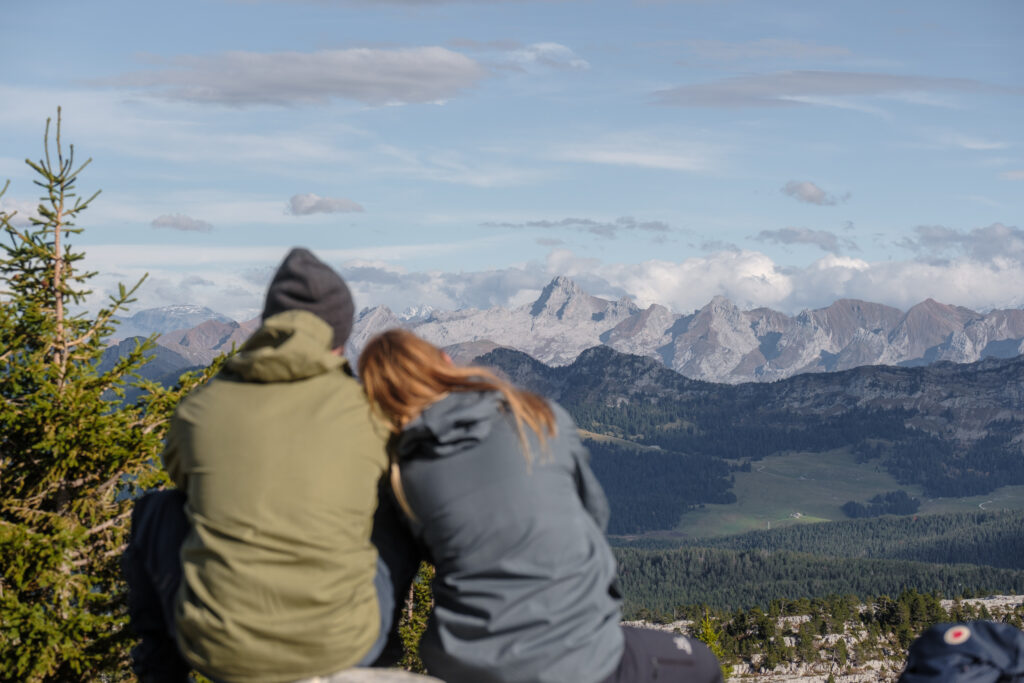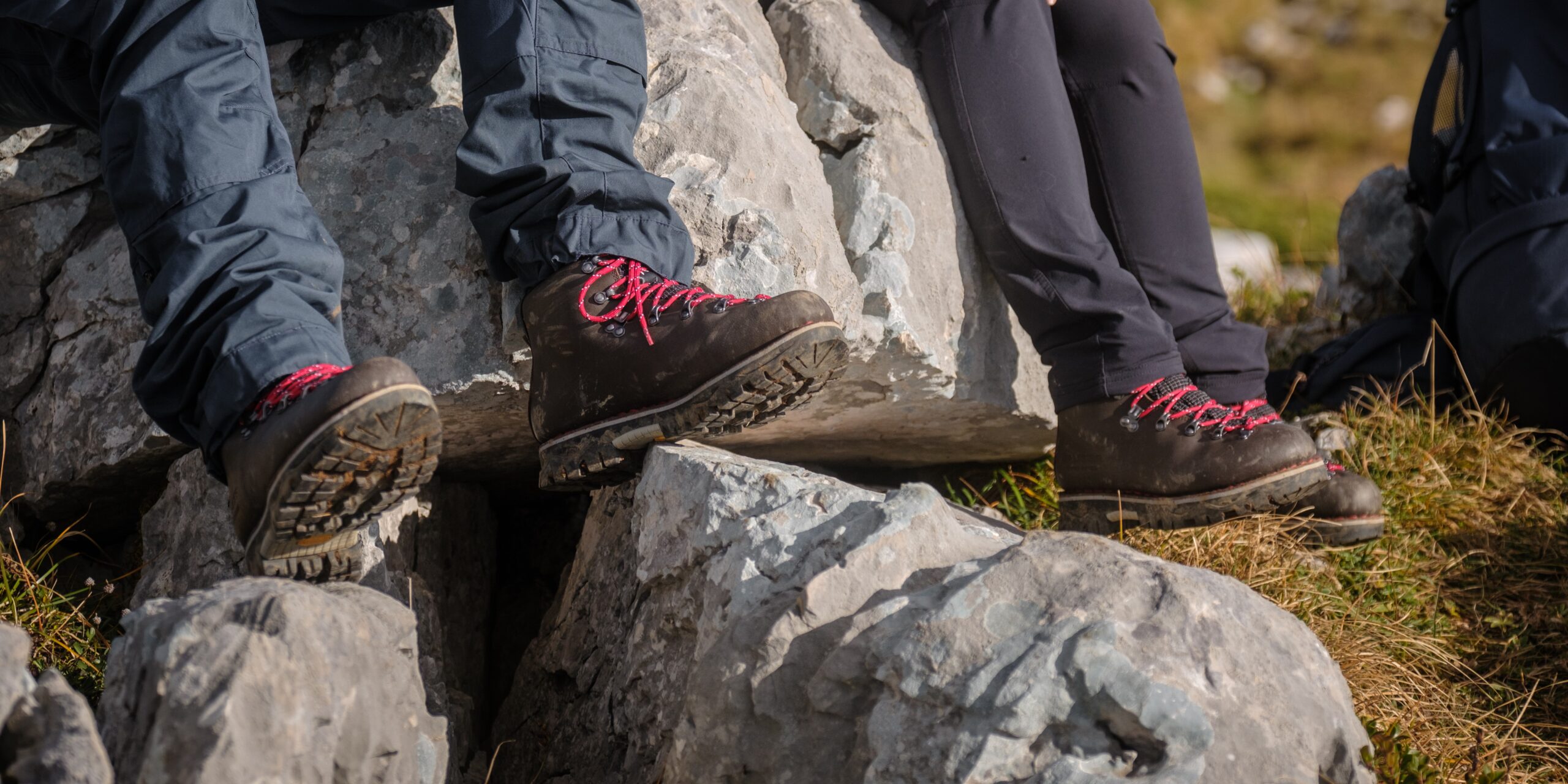
Choosing a pair of hiking boots isn’t something to be taken lightly. Setting out on a multi-day self-guided hike requires equipment you can rely on. Your feet support both your weight and that of your backpack. An excellent pair of boots is your best guarantee of safety on challenging trails.
A backpack and hiking boots are the essential pair that determines how far you can go. This guide explains how to evaluate the technical specifications. We’ll help you choose the right boots based on your actual hiking habits. The goal is clear: to hike for long distances while keeping your feet dry and protected.
The Origins of Trekking: Between Hiking and Expeditions
Trekking is defined first and foremost as a long-distance hike through wilderness or hard-to-reach areas, often involving overnight camping. Etymologically, the word “trek” comes from Afrikaans and means “migration.” It owes its fame to the Great Trek, a famous migration led by South African pioneers (the Voortrekkers) between 1834 and 1852 toward the Transvaal and Natal.
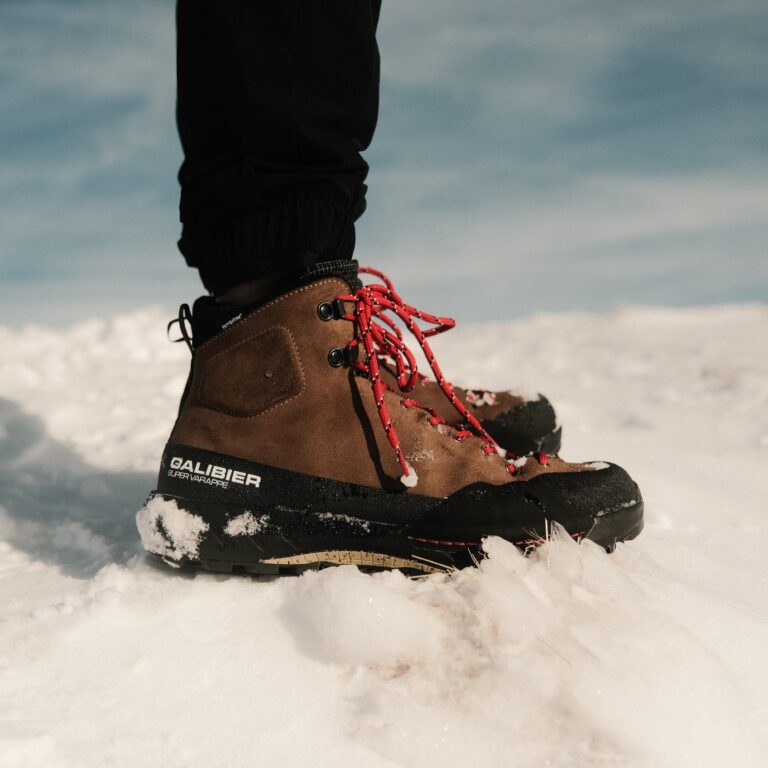
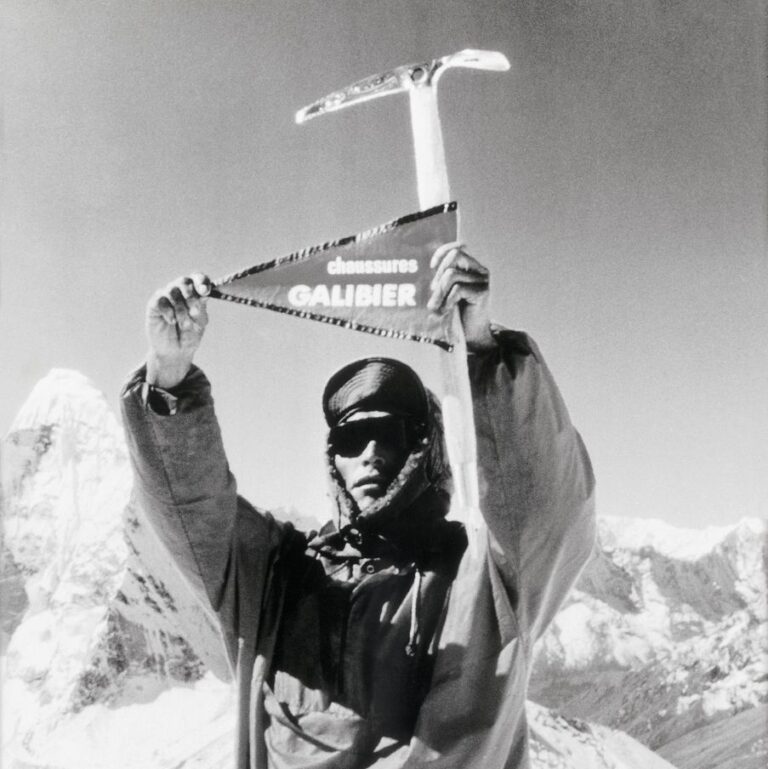
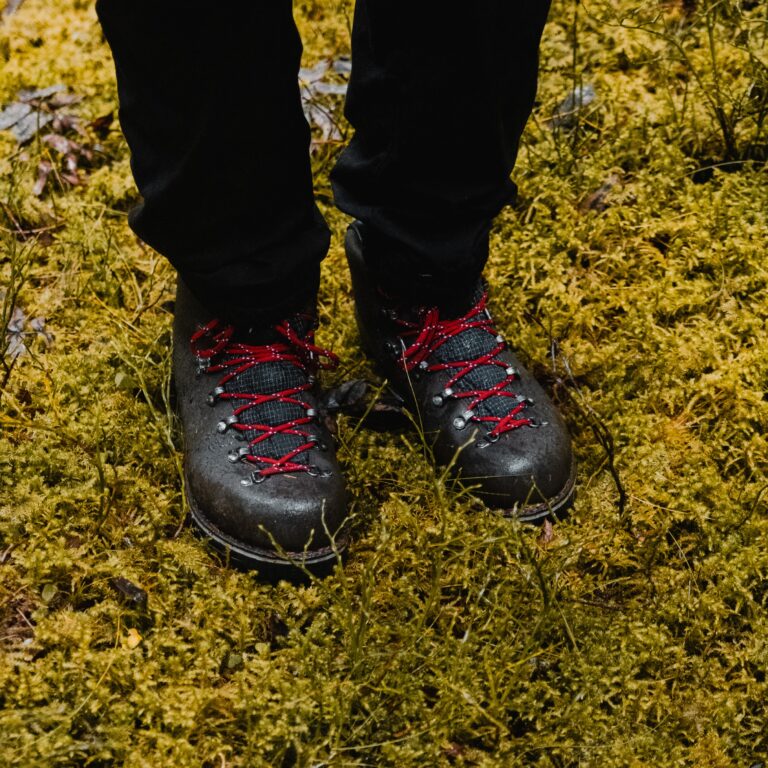
Today, the activity is part of a hybrid tradition, situated at the crossroads of alpine hiking and Himalayan expeditions. Trekking ends where Himalayan mountaineering and alpine climbing begin that is, when walking gives way to climbing and requires specific techniques for moving forward. This transition from the approach hike to the vertical ascent demands uncompromising gear capable of withstanding total physical exertion over several days.
From Nepal to Sustainable Tourism: The Spirit of Backpacking
The modern use of the term has its roots in Nepal. In 1964, Major Jimmy Roberts founded Mountain Travel Nepal, the first local agency, and was the first to use the word “trekking” to describe these long exploratory hikes. The activity then became much more widespread, particularly with the opening of the famous Annapurna Circuit in 1977.
Beyond the demanding physical exertion required to cope with the cold or high altitudes, trekking is often experienced as a true source of spiritual and mental renewal. Because of its slow pace, walking in vast, isolated spaces encourages introspection. This approach is a natural fit for a form of alternative tourism that rejects mass tourism in favor of respect for the environment and local communities.
At Galibier, this mindset resonates with our own vision of the mountains. Choosing a repairable boot means embracing this same philosophy of respect for the terrain and mindful consumption.
Trekking Shoes: Definition and Features
Trekking goes far beyond a simple day hike. It involves prolonged exertion, often in remote areas, while carrying a full load on your back. The terrain varies constantly, alternating between loose soil, abrasive rocks, and mud. A true trekking shoe is designed for these specific conditions. It features a heavily reinforced structure.
Ankle support is maximized to compensate for muscle fatigue that builds up over time. The overall stiffness of the sole prevents the arch of the foot from collapsing under the weight of the backpack.
Every trek has its own challenges: What kind of hiker are you?
Galibier’s legacy in exploration has taught us that there is no such thing as a one-size-fits-all shoe only equipment designed for specific activities.
In the high mountains, your choice of gear must accurately reflect the reality of the terrain. Each route presents its own challenges: elevation gain, changing weather, and carrying gear for several days and it is these demands that guide the design of our products. An ill-fitting boot means one step closer to the summit; gear designed for the terrain means the freedom to move forward without compromise.
Multi-day Hike: Self-Sufficiency Under a Heavy Load
You’re heading out for a week or more, carrying your tent and stove on your back. Your pack easily exceeds the 12-kilo mark, and your route takes you through scree fields, steep slopes, and unpredictable weather conditions. In these circumstances, your joints are under extreme strain. Your gear must compensate for muscle fatigue at the end of the day.

This is where the Super Rando Mid really shines. Its high-cut upper locks the ankle in place, while its one-piece construction and lugged outsole ensure optimal force transfer to the ground. It’s the essential tool for maintaining a secure footing over long distances.
The Hiker Who Travels from Shelter to Shelter: A More Relaxed Commitment
Your approach to the mountains focuses on immersing yourself in the experience for a few days, while relying on the comfort of mountain huts. Your backpack stays light usually under eight kilograms and you’ll be hiking on well-marked long-distance trails. Keeping your ankle joint loose maximizes your stride length and conserves your energy.
Combine performance and agility with the Super Rando Low. This low-cut model allows for freedom of movement, enabling a natural and dynamic stride. Be careful, though: without rigid support, this shoe requires strong ankles and excellent technical skill, as your muscles become your only source of support.

The Call of the Peaks: When Trekking Becomes Mountaineering
Sometimes, the route leaves the trails behind for good and heads onto glaciers, rocky ridges, or vertical couloirs. Walking then gives way to climbing. This transition to high-altitude mountaineering requires a radical change in equipment. The sole must be absolutely rigid to allow for the use of crampons and the cutting of steps in the ice.

This is the exclusive domain of the Super Guide. A historic icon of high-altitude mountaineering, it is not designed to follow a hiking trail, but rather conceived as a genuine technical tool for guides and mountaineers tackling steep terrain.
The Essence of Trekking: The Body’s Response to Isolation
Trekking goes far beyond the simple framework of recreational hiking. A trek is defined above all by traversing wild environments and deliberately distancing oneself from any point of retreat. It is an experience of total immersion. Because of its slow pace, traveling through the mountains encourages introspection, transforming physical exertion into a true means of mental rejuvenation.
Yet this search for meaning always comes up against a harsh reality: self-reliance takes a toll. Setting out on a multi-day trek means carrying everything you need to survive on your back. The repeated physical exertion, changes in elevation, drops in temperature, and the ruggedness of the scree slopes inexorably take their toll on the body.
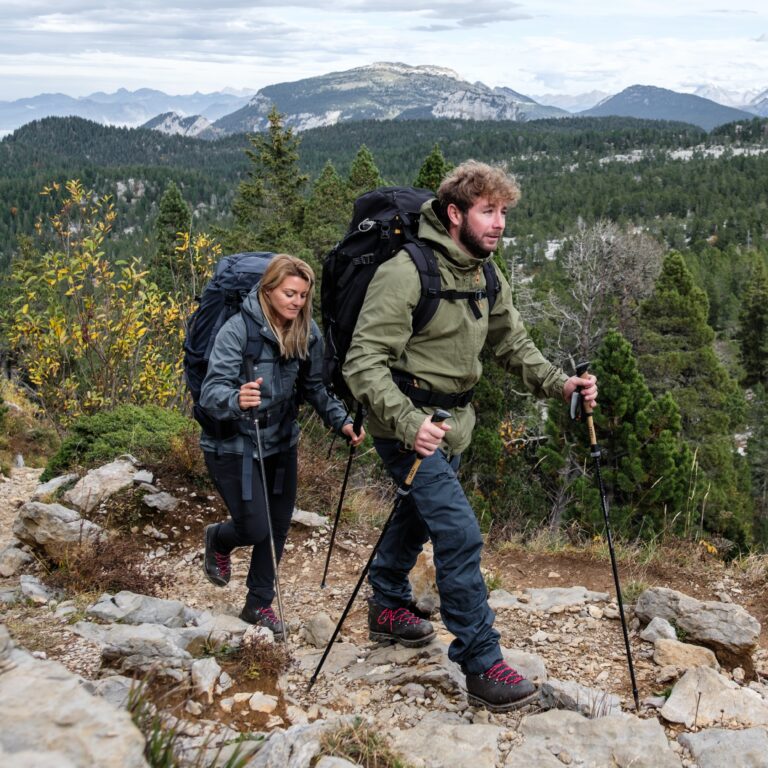
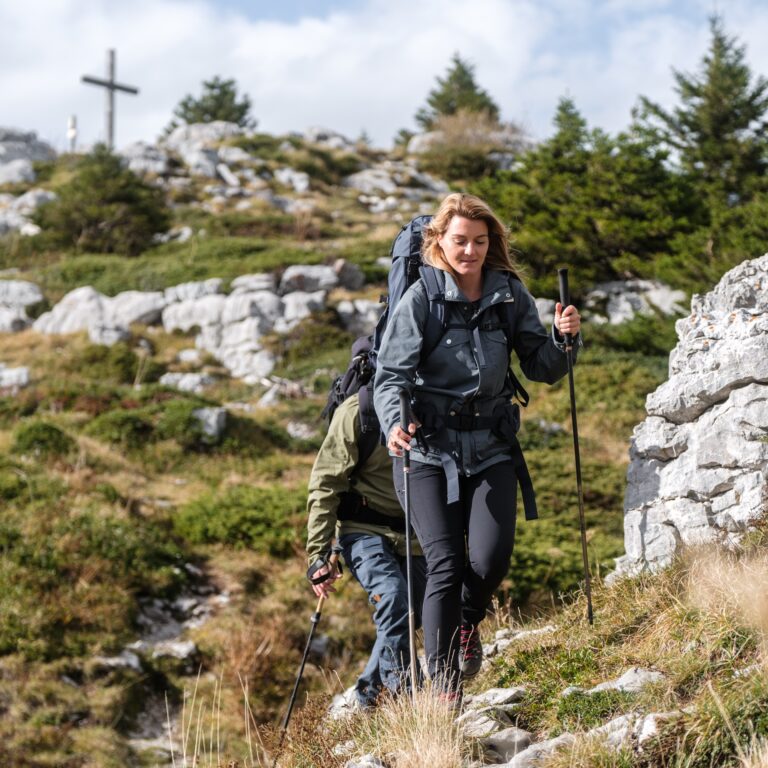
In these remote areas, equipment failure is not an option. Your shoes cease to be mere recreational gear and become your sole guarantee of safety a vital link between your weary body and terrain that forgives no missteps.
How to Choose Hiking Shoes
The legacy of exploration and the commitment to responsible trekking place physical and technical demands that go beyond what standard hiking gear can provide. Given the isolation, the weight carried, and the variety of terrain encountered on multi-day treks, the reliability of the boot is the determining factor. It must not only be comfortable but also serve as a structural tool capable of supporting the body under stress.
Assess the terrain’s difficulty: hiking boots
The type of terrain directly determines the level of stiffness required. On well-marked, fast-paced trails, a slightly flexible shoe promotes a smooth foot strike. On scree or technical off-trail terrain, a stiff sole is essential. It allows you to create footholds by using the ledges on the slope without tiring your calves.
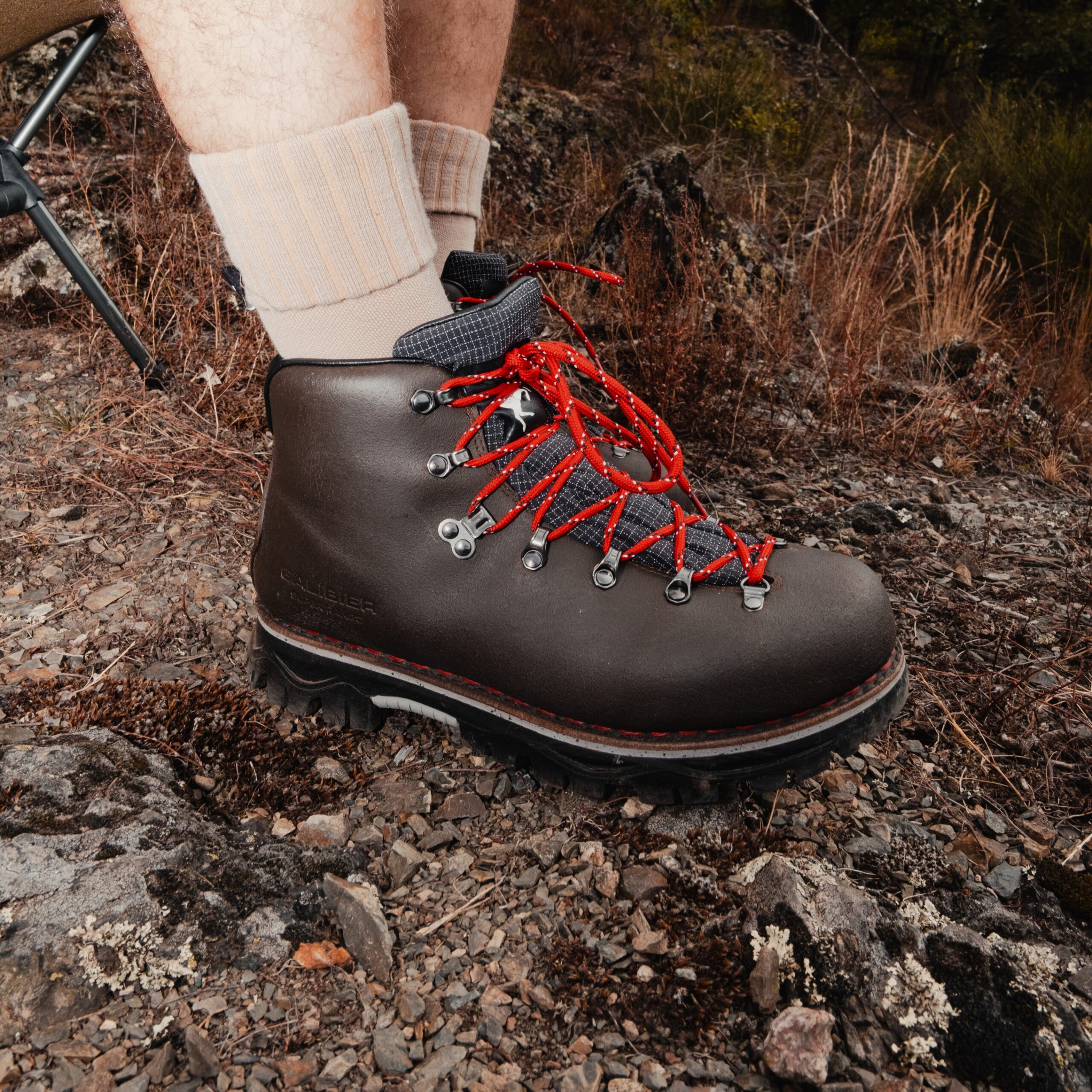
Estimate the duration of the trip and adjust the pole to the weight of the backpack
A two-day trek allows for low-cut models. A two-week expedition requires the best possible men’s or women’s trekking shoes in terms of structural reliability. As fatigue inevitably sets in, the shoe must ultimately compensate for your own missteps. Finding good women’s hiking boots follows exactly the same rules regarding support and performance requirements.
The heavier your backpack is, the more structured the shoe needs to be. A very light backpack allows you to wear a low-cut hiking shoe. On the other hand, a heavy backpack requires a high-cut upper and a stiff sole to transfer the load to the ground without putting excessive pressure on the hiker’s foot.
Hiking Boots: Finding the Perfect Fit
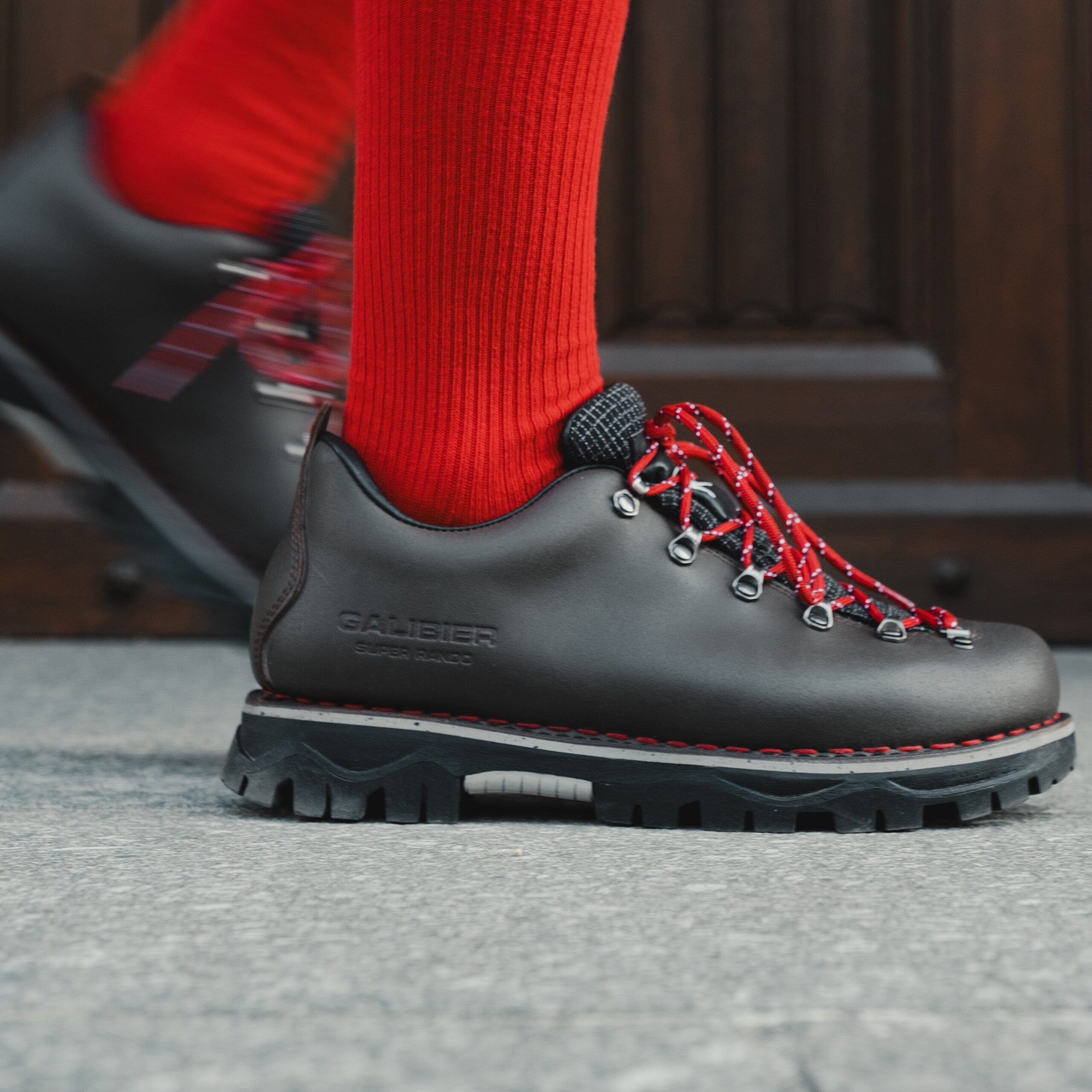
Wearing hiking socks made from merino wool and technical fibers ensures flawless temperature regulation, minimizing odors while protecting the skin from painful chafing.
Always schedule your try-ons for the end of the day to account for foot swelling. The heel must remain firmly secured when climbing, while the forefoot must never hit the inner wall when descending. This attention to fit is essential for preventing blisters.
Caring for Hiking Boots

1 – Drying
Leave to dry naturally in an airy room, away from heat sources (radiator, fireplace, sun) to prevent the leather from hardening or warping.

2 – Brushing and cleaning
Brush and clean gently to remove dust, mud and dirt, using a polishing brush or foam cleaner if necessary, but never machine wash shoes.

3 – Nourishing the leather
Apply a thin layer of natural wax to keep leather supple, prevent cracking and revive its color.

4 – Waterproofing
Spray a waterproofing agent all over the shoe, paying particular attention to the seams, to limit water penetration and extend the life of the leather.
Hiking Boots: Mistakes to Avoid
The most common mistake is choosing footwear that isn’t suited to the terrain. Selecting a low-cut trekking shoe for a multi-day hike with a heavy pack directly exposes the hiker to joint injuries due to a lack of mechanical support.
Next is a lack of preparation. Leather hiking boots require a break-in period during initial outings to soften up and mold to the shape of your feet. At the same time, choosing the wrong size becomes a serious problem after several days of continuous exertion, when your feet swell under the strain.
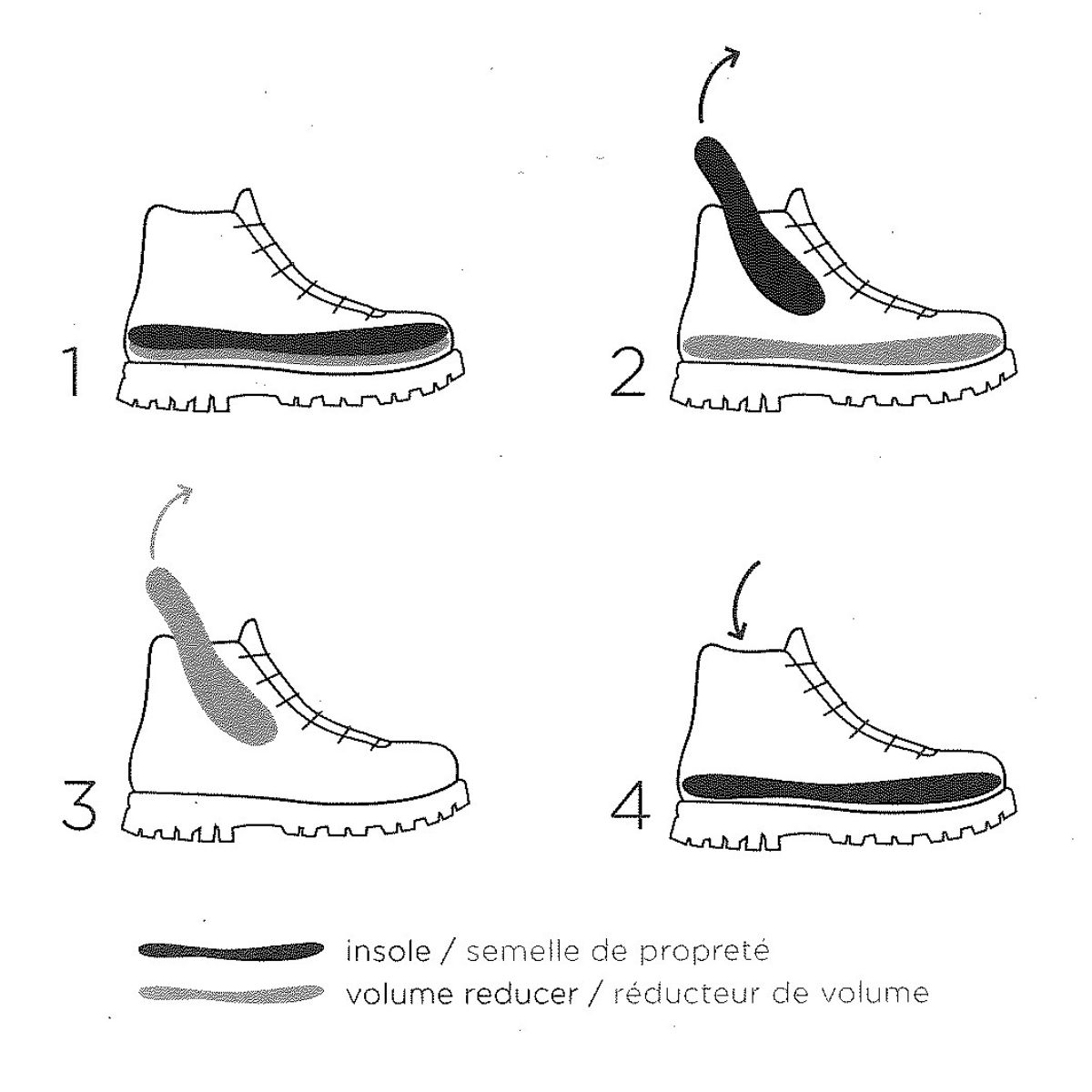
To address these issues of precision and variations in foot shape, the Super Rando line features a removable volume reducer. This technical innovation allows for fine-tuning the fit to ensure consistent support and optimal stability on all types of terrain.
Full-grain leather to shield against the elements, a high-top upper to support worn-out ligaments, and a dense midsole to protect the arch of the foot from repeated impacts.
It is by embracing the rigors of this craft that we build a reliable tool—designed not for fleeting trends, but for use over the course of decades.
FAQ – Hiking Shoes
GALIBIER

Choose men’s or women’s hiking boots equipped with full-length stone guards, a sturdy leather upper, and a semi-rigid sole. When choosing men’s or women’shiking boots, prioritize absolute reliability just like the Galibier models, which are designed to withstand the elements and abrasion.
Yes, for heavy loads over 10 kilograms and very rugged terrain. The high shaft mechanically stabilizes the ankle. Low-cut hiking boots or trail running shoes should be reserved exclusively for light loads on clear, well-maintained trails. They’re often the best men’s trekking shoes for well-trodden trails, but not for extended hikes.
It depends on how often they’re used, the abrasiveness of the terrain, and how well they’re maintained. A high-quality sole lasts an average of 800 to 1,200 kilometers before losing its grip. The best traditional leatherhiking boots, if well maintained, can be resoled several times by a cobbler and last for several decades.