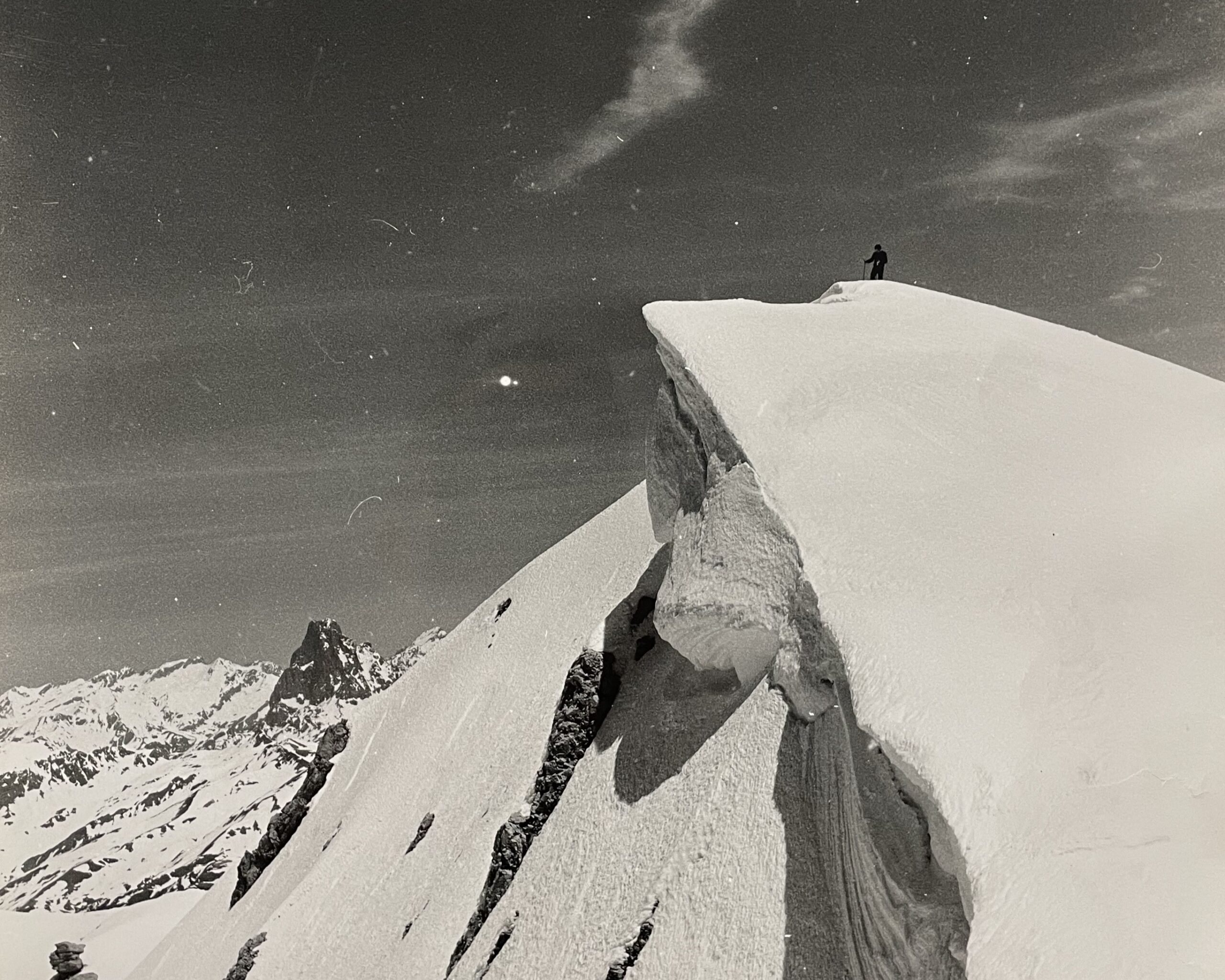
Leather mountain footwear: the heritage of the pioneers
Article published on 28 February 2026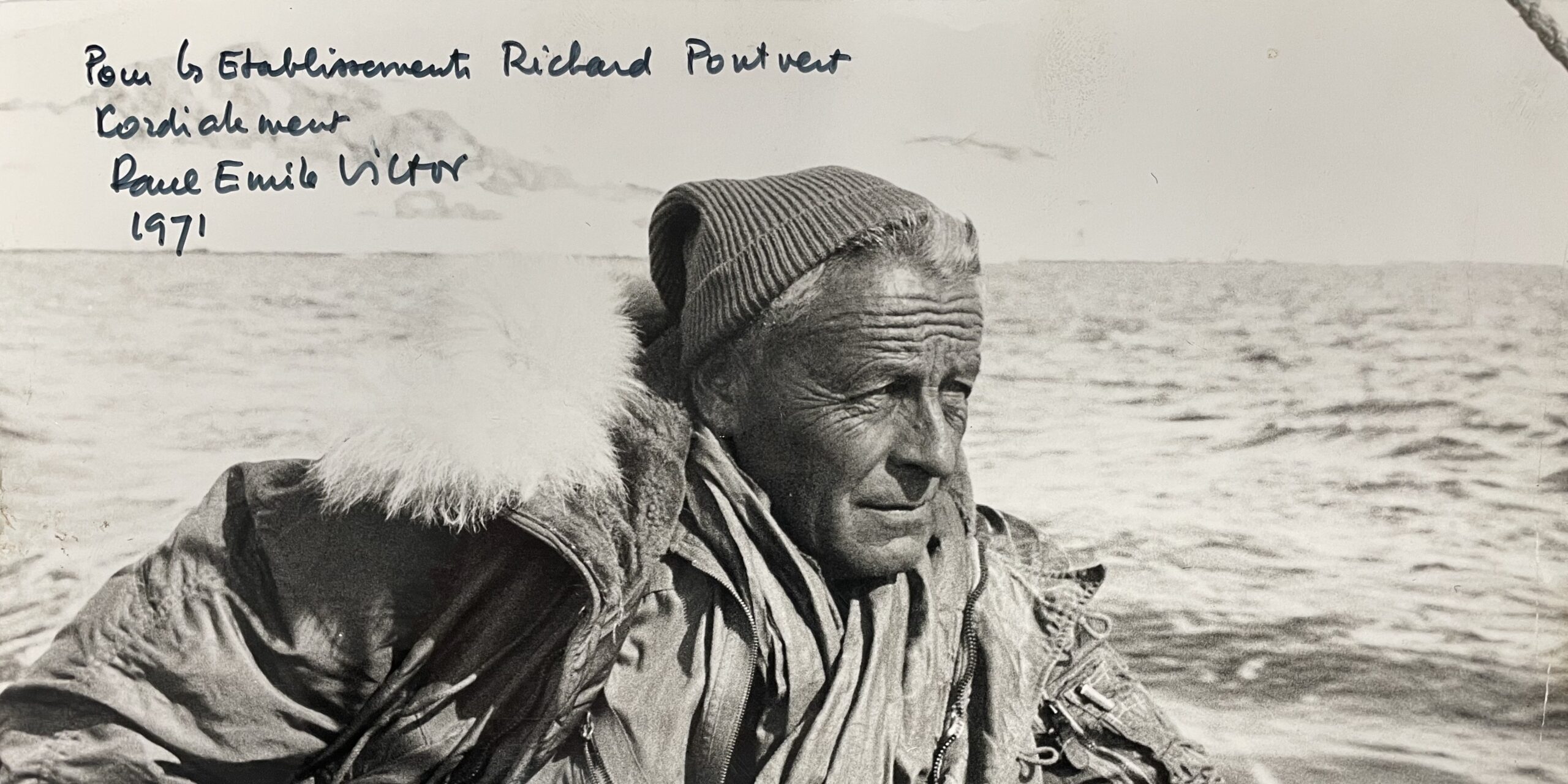
There is some equipment that never gets old, because it has been designed to the highest standards. Leather mountain boots are just such a product. Galibier has stood the test of time by remaining true to an unshakeable conviction: in the face of rock and weather, nothing matches the reliability and resistance of leather.
Much more than a brand, Galibier embodies the historic heritage of French mountaineering. Long before the advent of synthetic membranes, our models equipped the pioneers of adventure. When Lionel Terray or René Desmaison tackled the most hostile North faces, they didn’t entrust their feet to plastic, but to the quality of a pair of Galibier shoes. For these pioneers, footwear was not a fashion accessory, but life insurance.
Today, choosing a Galibier is not about nostalgia. It means making a rational choice for a material that has proved its worth on the world’s rooftops, and even at the poles, at the feet of Paul-Émile Victor. It means opting for a boot-making savoir-faire that will last through the decades, far from the programmed obsolescence that affects so many of today’s shoe brands .
Galibier: leather, a mountain footwear tradition
We often hear that modern materials make shoes lighter and more flexible. However, full-grain leather possesses technical virtues that chemistry has yet to match, and which explorers well understood.
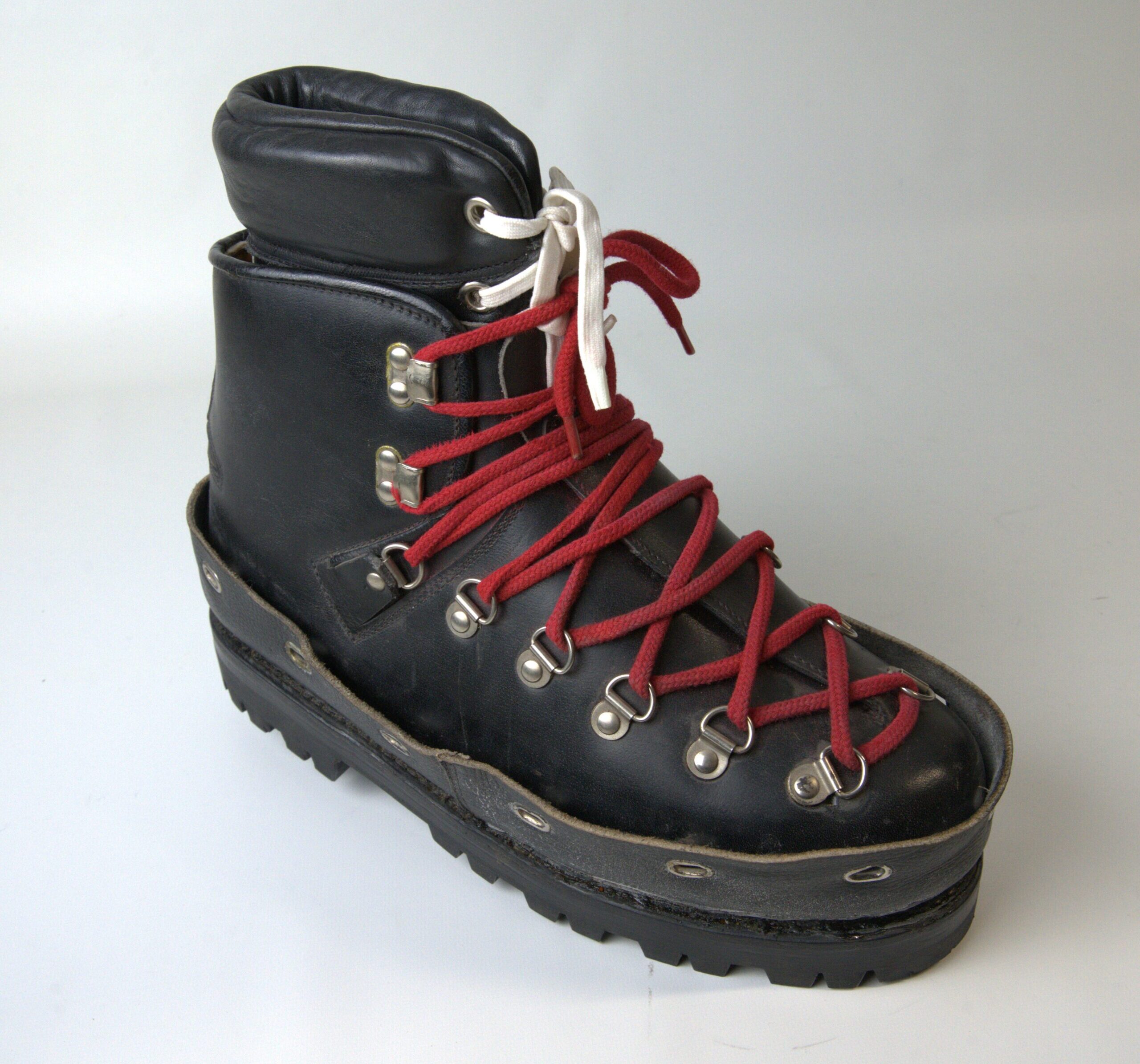
L’Héritage Paul-Émile Victor: Few know it, but for his polar expeditions, the explorer used a modified version of the Super Guide. This special cold-weather model was lined in leather with an enlarged volume to accommodate a removable felt liner, guaranteeing total insulation. It also featured specific hooks for integral gaiters. This technical DNA still permeates the manufacture of our shoes today.
A pole-proof leather mountain boot
It’s no coincidence that Paul-Émile Victor chose Galibier for his French polar expeditions. Before the advent of synthetic materials in the 60s (which were often fragile in extreme cold in their early days), leather was the only material capable of withstanding extreme temperatures without ever giving way.
In the mountains, the challenge changes depending on the type of terrain. Sharp stones, abrasive rocks, roots, ice: your shoes are constantly under attack. Where synthetic fabrics can tear on rough terrain, leather can withstand them.
A one-piece Galibier leather mountain boot doesn’t wear by tearing, it acquires a patina over time. Scratches tell the story of your climbs without ever compromising the integrity of the structure. This mechanical resistance is the first guarantee of safety.
Leather mountain boots: breathability and waterproofing
Contrary to popular belief, leather is a “breathable” material. Its fibrous structure wicks away moisture generated by exertion, avoiding the “steamy” effect sometimes found in poorly ventilated synthetic walking shoes. For his polar missions, Paul-Émile Victor needed to evacuate body moisture to prevent it from freezing inside the shoe.
At the same time, the advantages of leather shoes lie in their natural waterproofing. When properly cared for and lubricated, leather provides a formidable barrier against water, even without the addition of a waterproof membrane.
A waterproofed mountain leather boot will get you through the snow and streams, while keeping your feet dry. What’s more, its thermal insulation capacity is superior: in winter or at high altitude, the thickness of the leather protects against the cold far better than an ultra-thin mesh upper.

The comfort of a walking shoe that adapts to your feet
This is perhaps the strongest argument for long-distance walkers. Leather is a living material that adapts to your footwear. Over the miles, the upper will soften at flex points and adapt to the shape of your foot, much better than rigid plastic trekking shoes .
This is what we call “making your shoes”. Once this stage has been completed, comfort is absolute, drastically reducing the risk of blisters on long treks.
Leather mountain shoes for men vs. women: what’s the difference?
At Galibier, we make no concessions to technicality, whatever the user. However, anatomy dictates certain adaptations necessary to guarantee fit and performance.
The distinction between a man’s leather mountain shoe and a woman’s is essentially a question of fit (the “last”). Women’s feet generally have a narrower heel, a more arched arch and sometimes a lower instep.
Our models are fitted with specially designed footwear to guarantee optimum comfort and avoid discomfort. This prevents both heel slippage on ascents (which causes overheating) and foot float on descents.
The materials, however, remain strictly identical. We use the same leather croupons, the same Vibram soles and, above all, the same Norwegian stitching. Whether you’re looking for leather hiking boots or any other type, reliability remains a fundamental requirement.
Our types of leather shoes: the Galibier heritage
For more than a century, certain names have sounded like legends in mountain refuges. Whatever type of footwear you’re looking for, our models embody this philosophy of the object that keeps.
Super Guide: the icon of the high mountains
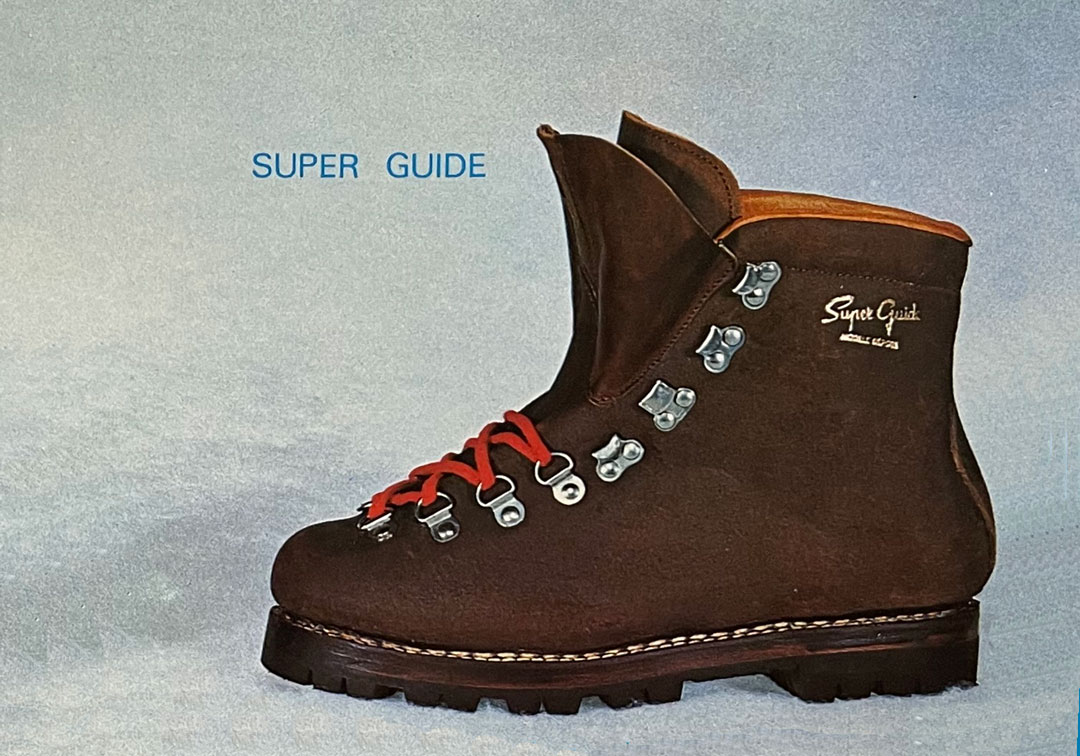
The Super Guide is an absolute icon. Recognizable by its thick leather, it has been worn by the greatest guides. Rigid, cramponable and virtually indestructible thanks to its Norwegian stitching, it is the very definition of a traditional mountain leather boot. It is both a historic collector's item and a walking tool whose performance was unrivalled in its day.
The Super Rando Mid and Low: the Galibier version of the mountains
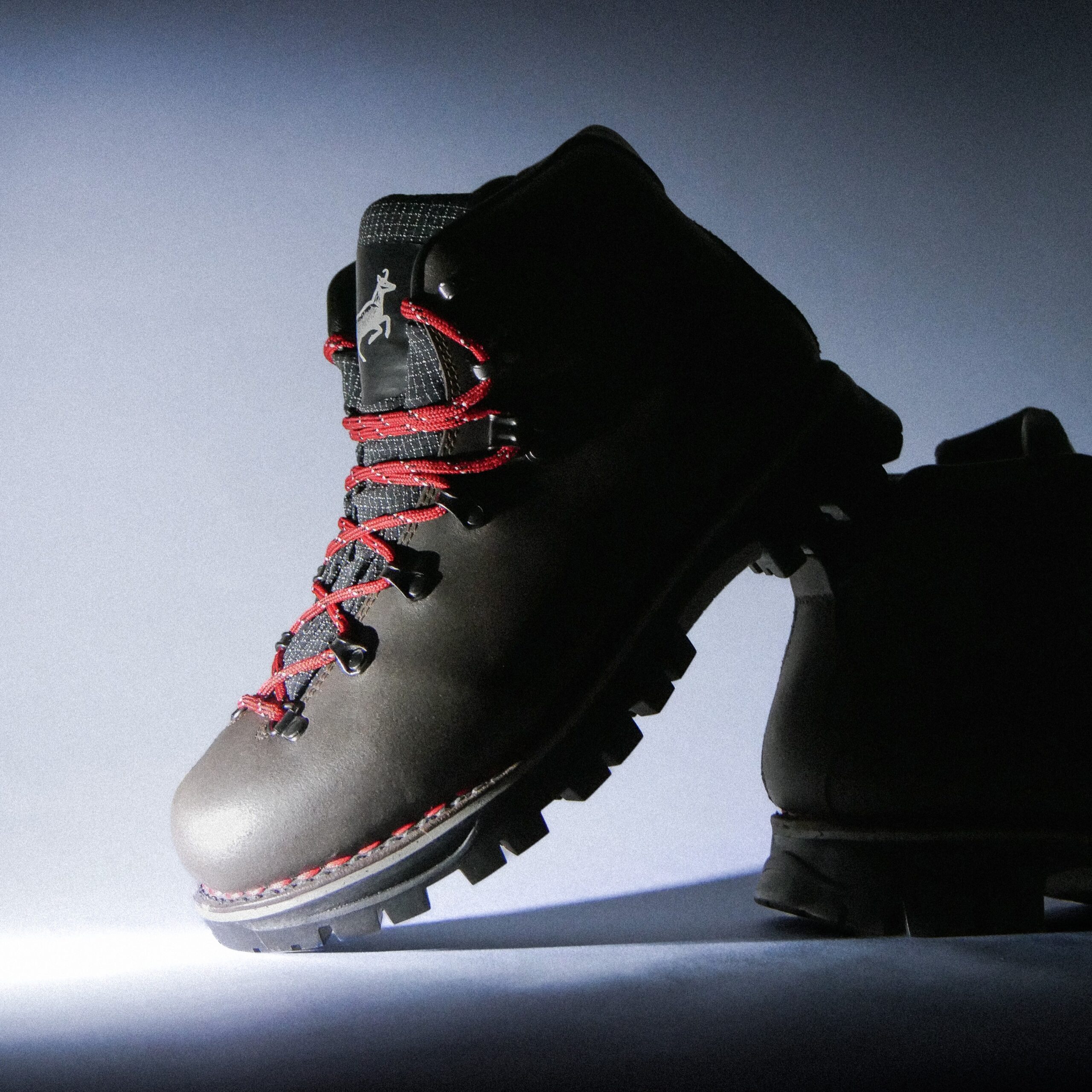
The Super Rando is the perfect compromise between the durability of Galibier leather and the flexibility needed for modern trekking. Both models feature the brand’s DNA, the famous red laces and a full-grain leather upper.
The Super Rando Mid (mid upper): Ideal for those who hesitate with stiffer mountaineering boots. It offers reassuring ankle support without the total rigidity of a mountaineering boot.
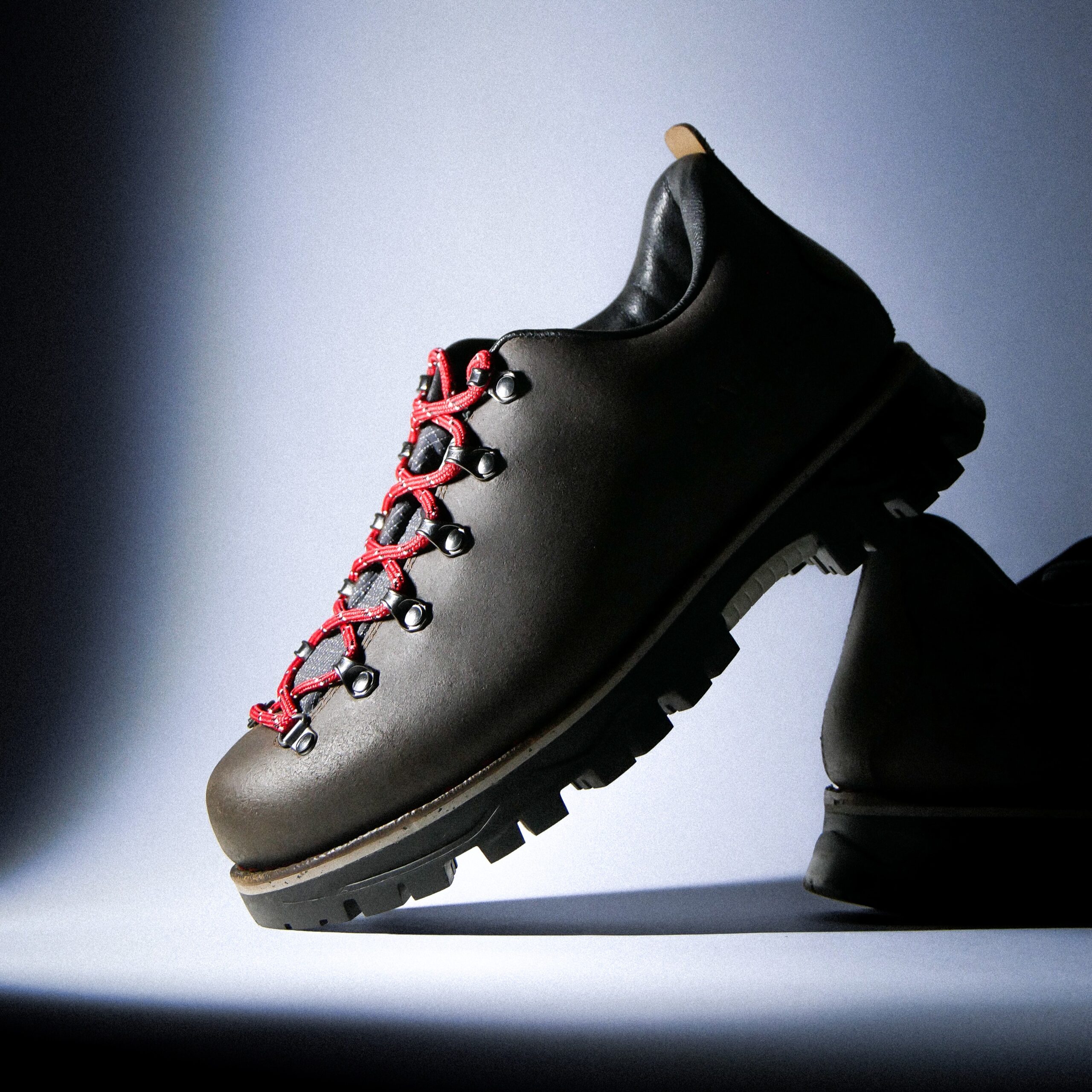
The Super Rando Low (low shaft): Designed for those who prefer the agility of modern low shoes. It offers the sturdiness and protection of leather, adapted to mid-mountain conditions.
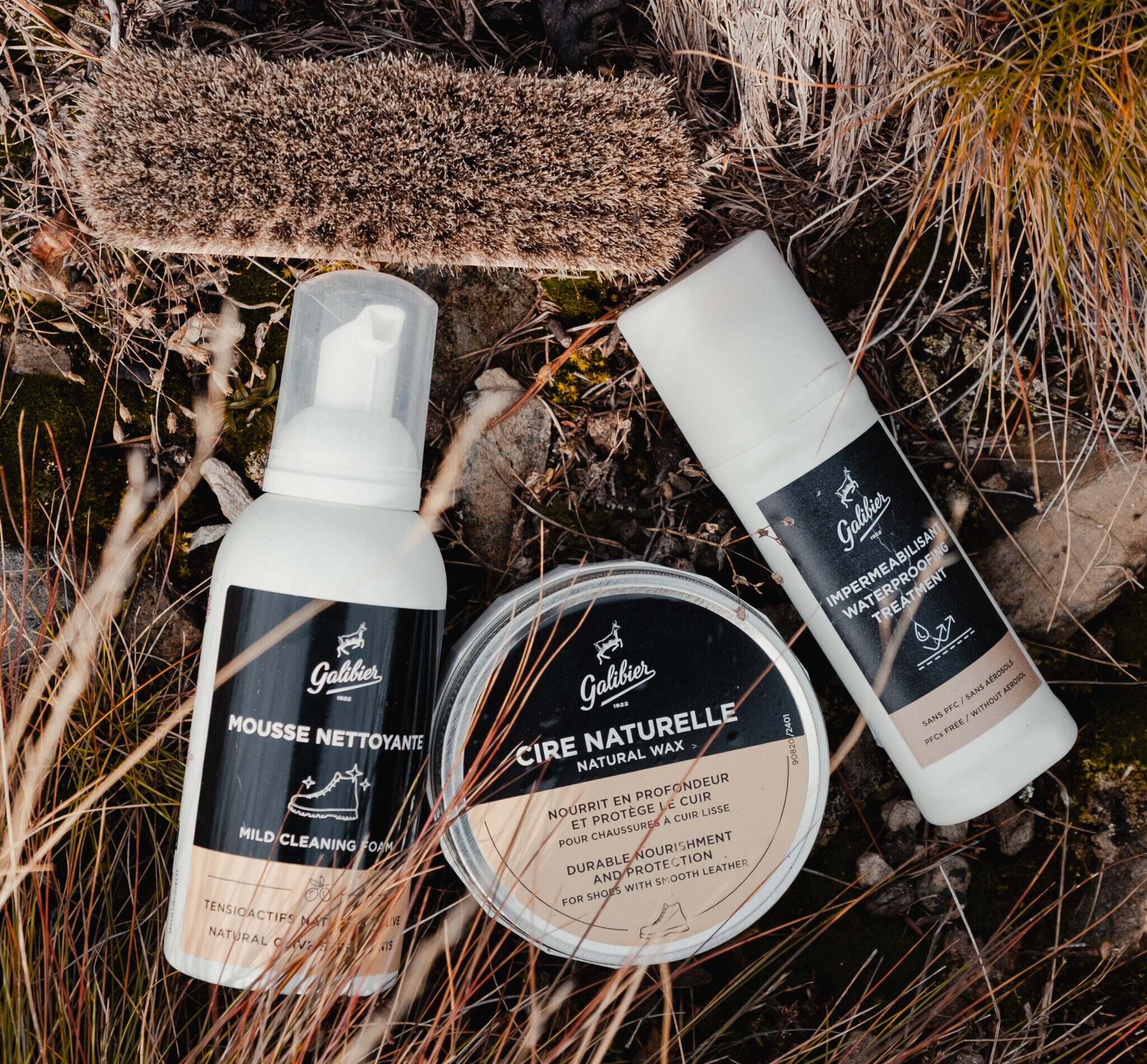
Caring for your leather mountain boots
Owning a fine pair of leather shoes brings with it a responsibility: maintenance. It's the sine qua non for your investment to last. Leather is like your skin: if it dries too much, it cracks. If it's dirty, it suffocates.
Choosing a leather mountain boot means choosing consistency. It means choosing the durable object over the consumable, absolute protection over technological marketing and mass production. With Galibier, you’re not just wearing shoes, you’re perpetuating a history of the mountains: raw, demanding and eternal.
FAQ : Leather mountain boots
GALIBIER

Absolutely, and often more durable. If the Gore-Tex membrane is renowned for its waterproofing, a well-maintained (greased) full-grain leather mountain boot offers a natural barrier against water while retaining excellent breathability. Unlike a membrane, which can puncture over time, leather is a fibrous material that regenerates itself. For those looking for the ideal shoe that will stand the test of time, traditional Norwegian stitched leather remains the undisputed benchmark.
Long-lasting comfort is the secret of leather. On long hikes, the foot swells and needs support. After a period of adaptation, the leather adapts to the shape of your foot (“second skin” effect), limiting chafing and blisters. Whether you’re looking for sturdy, heavy-duty men’s hiking boots or a women’s model, leather offers ankle stability and shock protection that no textile can match.
The famous red lace-up leather mountain shoe is the Super Rando. It’s an icon in our collection. It embodies the vintage aesthetic and authenticity of Galibier leather mountain boots. Less rigid than the Super Guide (an absolute high-mountain reference in its day, but no longer meeting modern standards of automatic cramponing), the Super Rando is perfect for mid-mountain and long-distance trekking.