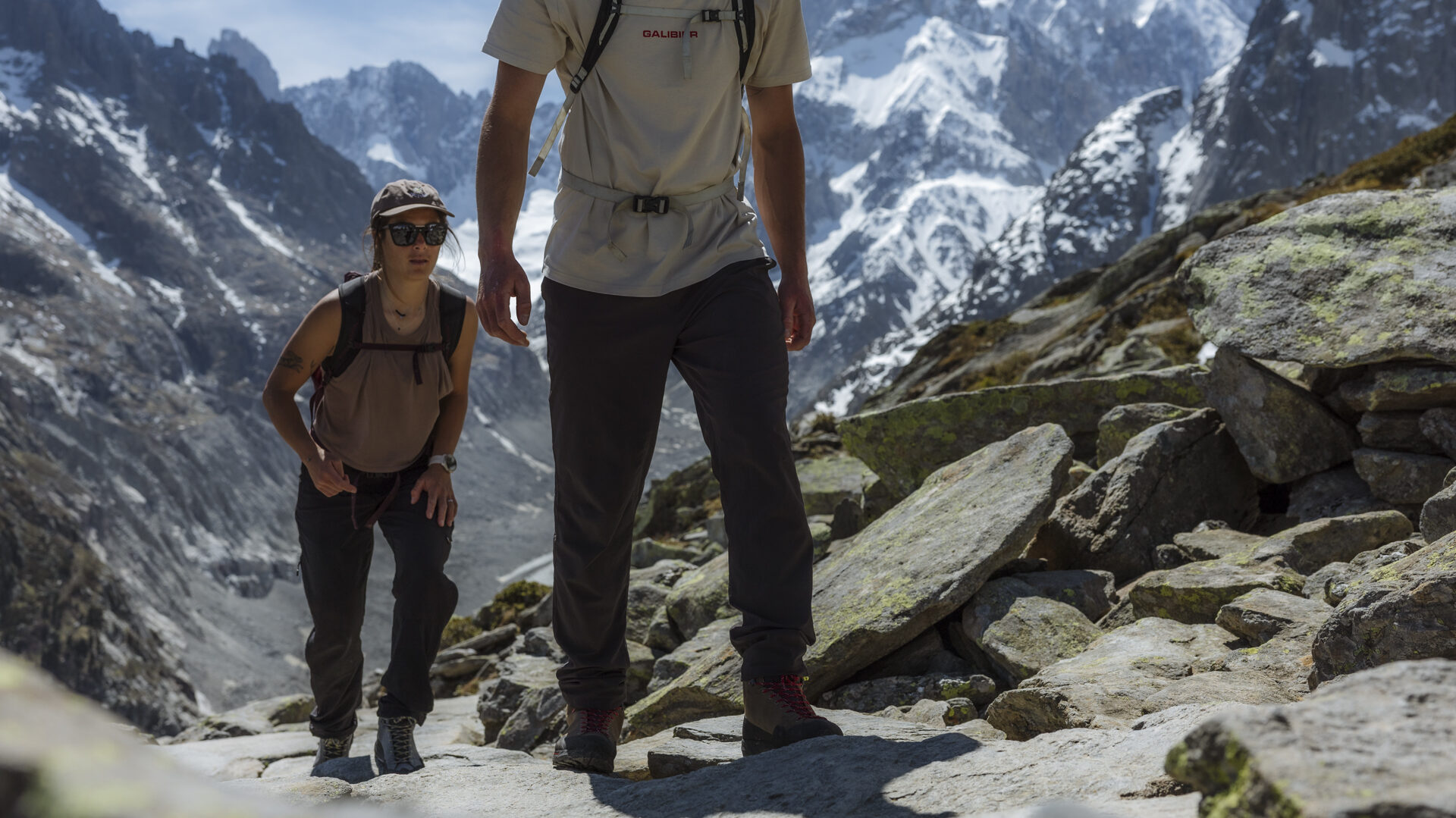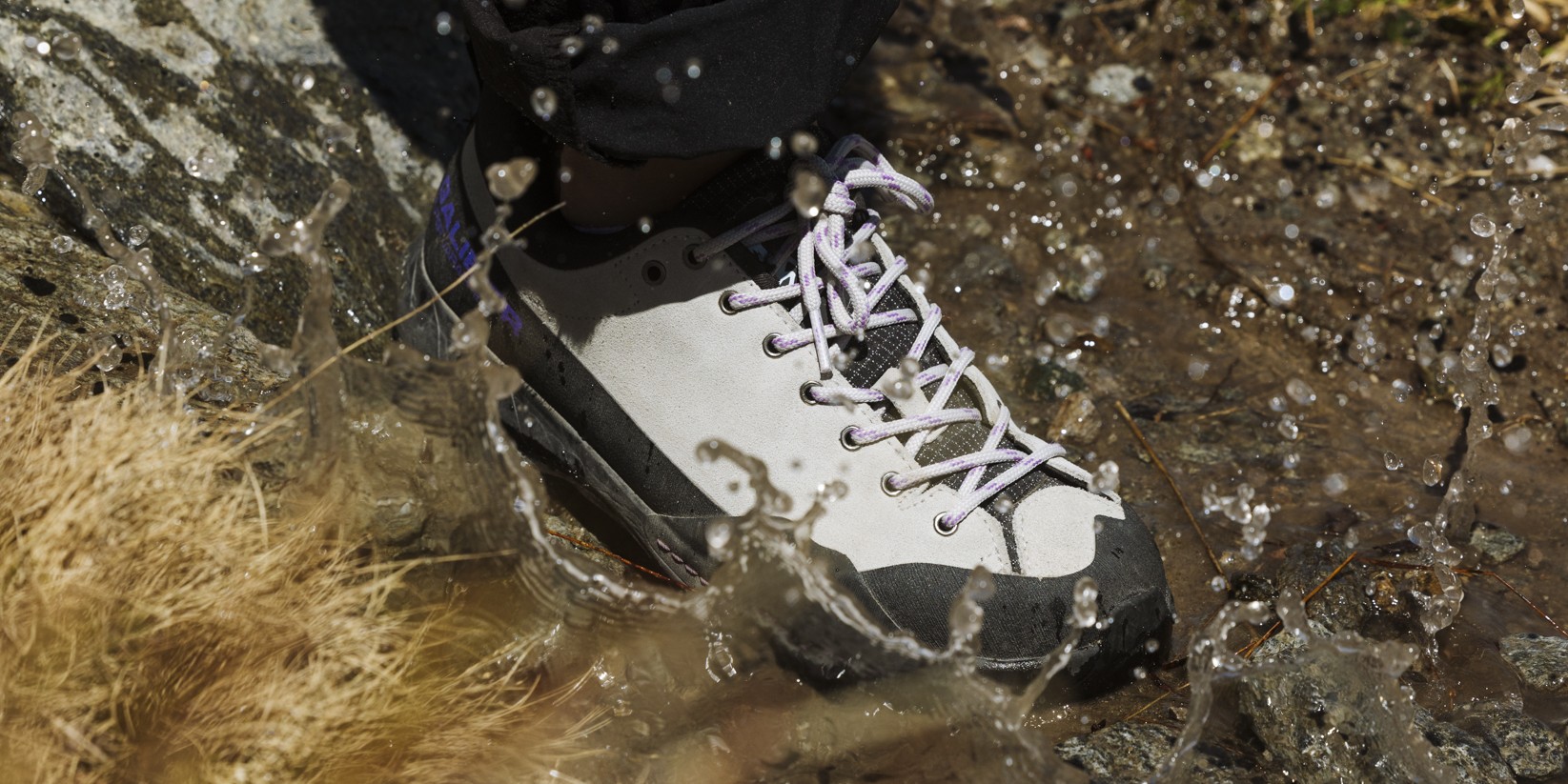
Women’s approach shoes are specifically designed to meet the need for reliability. The mountains demand a level of preparation where every detail counts. On the steep sections between the valley and the cliff face, your safety depends entirely on your footing.
It’s the perfect blend of endurance hiking and technical climbing. If you’d like to understand the specific features of this type of footwear before choosing a model, check out our comprehensive guide to approach shoes.
Choosing the right gear requires a thorough analysis of your actual needs on technical terrain. This guide helps you find the model that offers flawless traction, secure support, and comfort tailored to your body. The goal is clear: to let you move confidently all the way to the starting point of your climb.
Why Choose Women’s Approach Shoes?
The anatomy of the female foot has specific characteristics, generally featuring a narrower heel and a less voluminous instep. In the mountains, a loose fit is unforgiving. If your heel lifts or your foot slides sideways, you’ll lose the precision needed for small holds, while increasing the risk of blisters and premature fatigue. To ensure your safety, a women’s approach shoe must provide a precise, millimeter-level fit—an essential prerequisite before slipping on your climbing shoes at the base of the route.
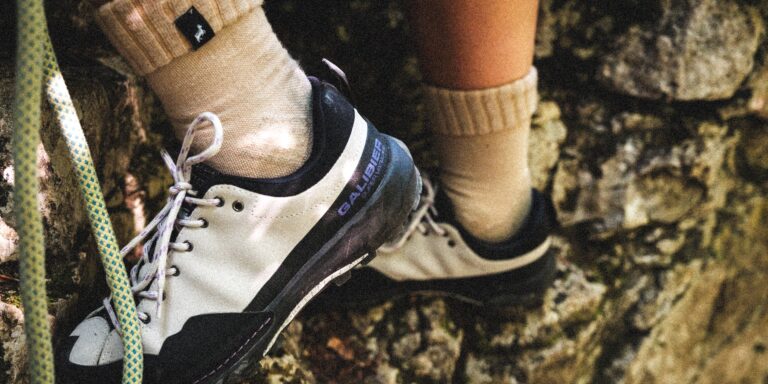
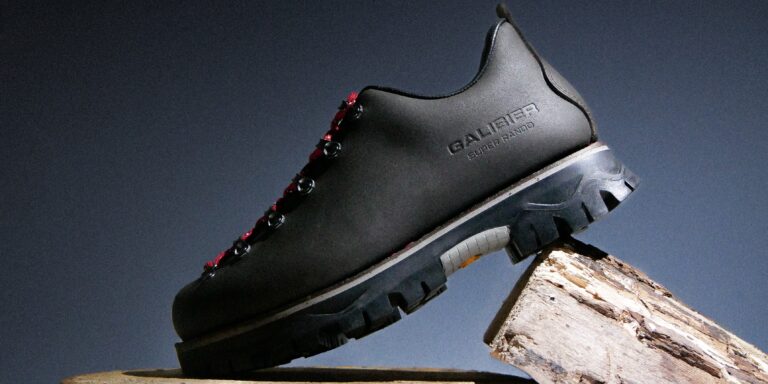
To meet this requirement, Galibier’s technical approach is based on a universal fit, designed to adapt to the unique shape of each foot rather than relying on standardized, gender-specific last shapes. This adaptability is centered primarily on our asymmetrical lacing system. Extending almost all the way to the toes, it allows you to adjust the fit with great precision. This enables you to effectively secure the shoe against a narrow instep and stabilize your heel, without compromising the width of the forefoot.
Above all, this custom fit truly comes into its own thanks to the very nature of our materials. Unlike synthetic uppers, which retain their factory stiffness, the leather we select has the ability to adapt. It simply requires a little patience. Over a break-in period of two to four outings, the material will mold to your foot, softening under the effect of body heat and adapting to your foot’s shape. This adjustment period is the secret to getting a shoe that truly becomes your own, offering unmatched precision on the rock.
This universal design applies to our entire product line. You can also check out our tips for men’s approach shoes, which are based on the same technical requirements and models.
Women’s Approach Shoes vs. Hiking Shoes
Confusion between these two types of footwear is common. However, their uses are very different. Traditional hiking boots are designed to promote a natural foot roll and provide cushioning over long distances. Their soles are relatively flexible.
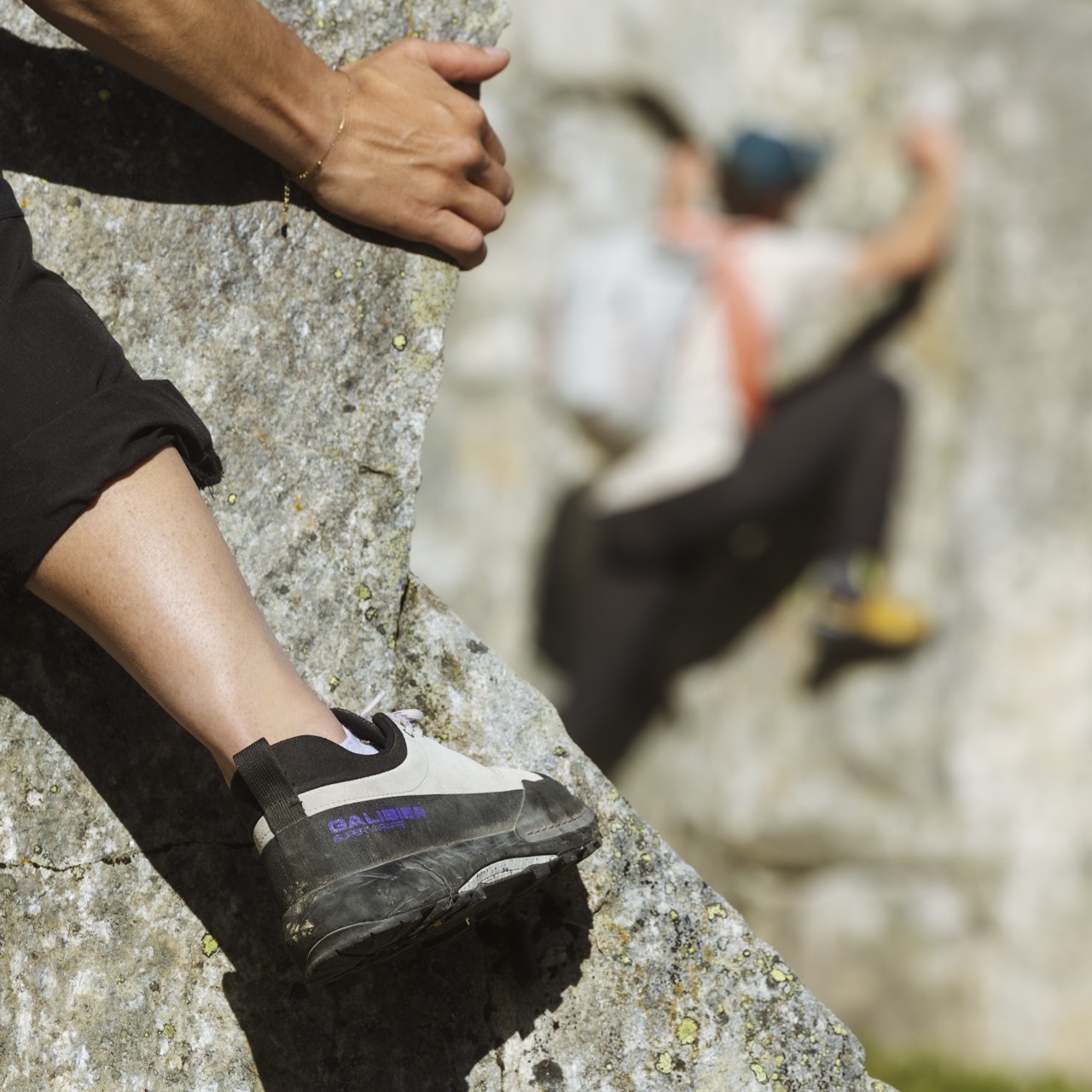
In contrast, women’s approach shoes are designed for vertical movement. Their soles are stiff to support your weight on small rock ledges without bending. If you prefer long hikes on marked trails, the stiffness of the approach shoe will tire you out. But if your route involves using your hands on the rock, a classic hiking boot will quickly reveal its limitations in terms of safety.
The Best Uses for Women’s Approach Shoes
These hybrid models excel in many alpine situations. They are, of course, designed for approach hikes leading to multi-pitch climbs or summer mountaineering routes. However, their versatility appeals to a wider audience. They prove to be formidable for technical hiking on vertigo-inducing terrain or ridge traverses. The exceptional grip of their soles also provides great reassurance to via ferrata climbers on metal rungs and smooth steps.
Galibier’s Expertise: The Demands Placed on Materials When Dealing with Rock
At Galibier, we design gear built to withstand the elements season after season. We firmly believe that a technical product must be built to last. That’s why our women’s leather approach shoes are made with 1.8 mm Perwanger Nepal suede leather.
Developed as early as 1989 in collaboration with mountaineers for extreme conditions, this water-repellent leather offers a waterproof rating of over 8,000 mm and abrasion resistance far superior to that of synthetic materials. The innovation lies in its chemical compatibility, which allows for ultra-strong bonding of seamless rock guards, thereby eliminating a major point of failure when encountering rocks.
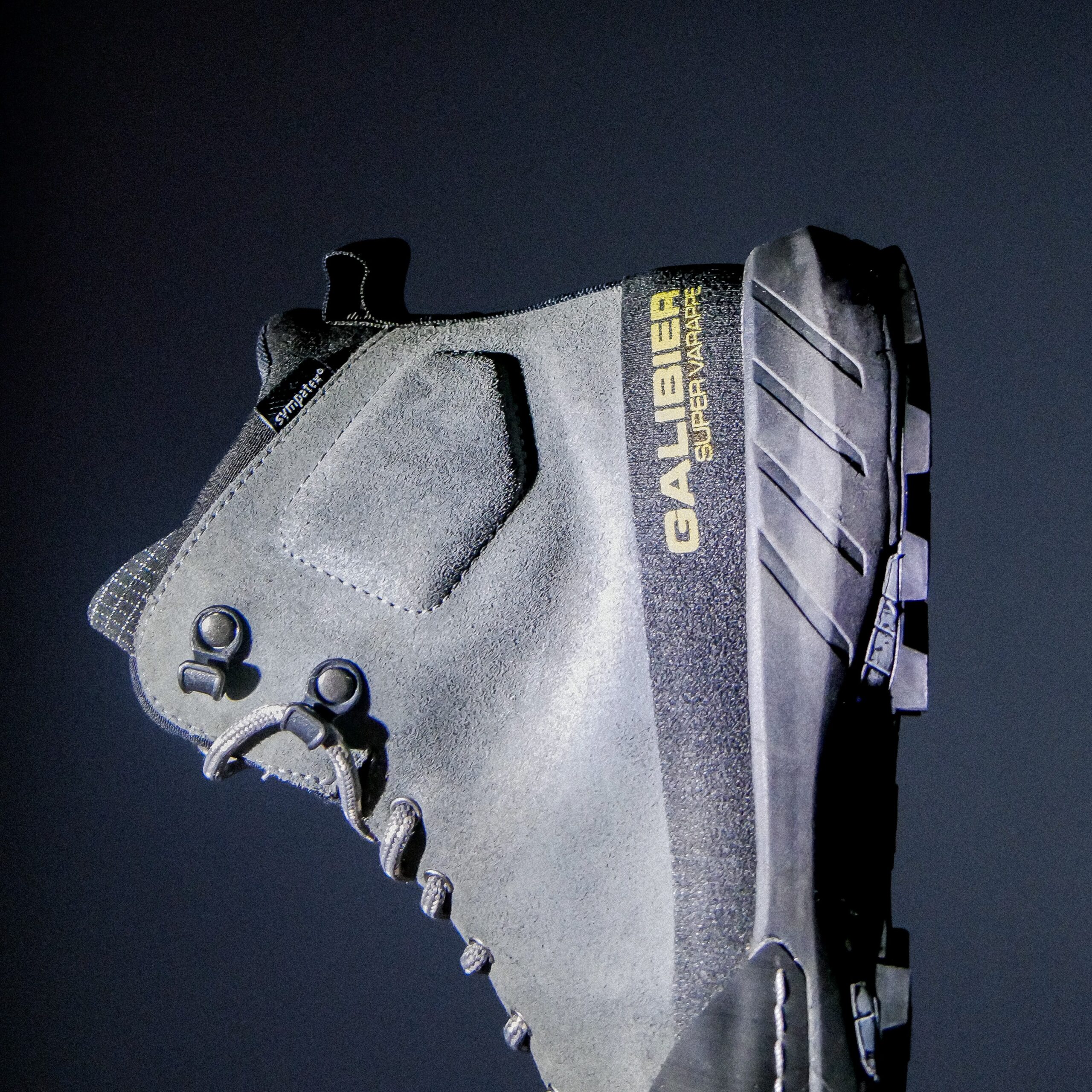
Discover the technical properties of this historic tannery’s water-repellent outdoor leather. Combined with our traditional craftsmanship, this material ensures reliable footwear that molds to your foot over time.
Super Varappe Low: Women’s Approach Shoe for Multiple Activities
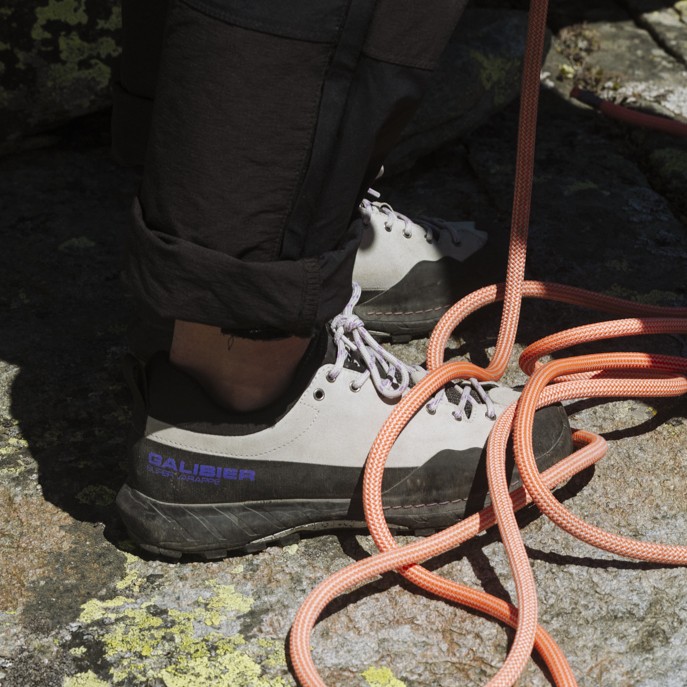
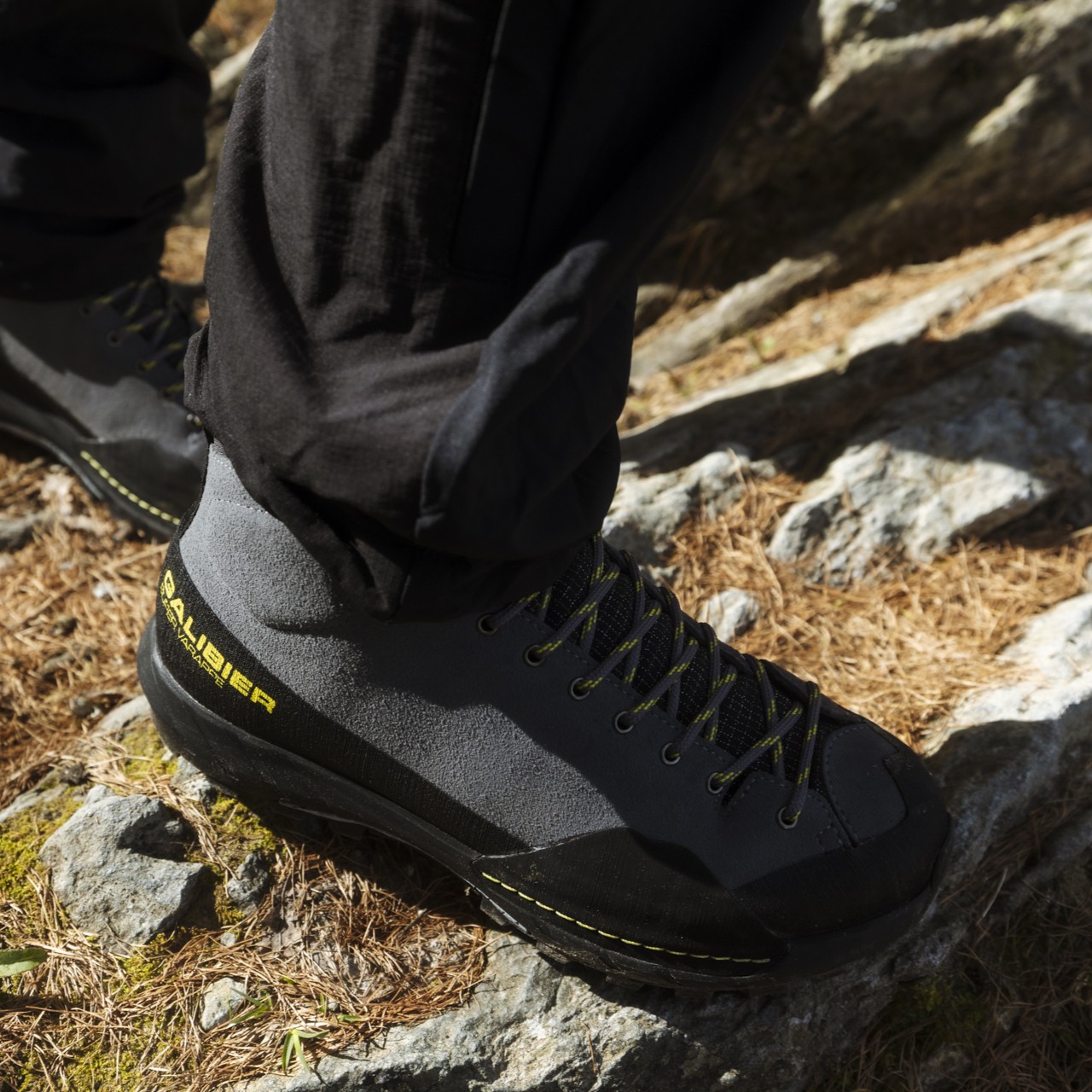
Agile and lightweight, the Super Varappe Low is revolutionizing fast approach hiking. It combines Perwanger leather and Dyneema fabric for total protection against rocks and moisture. Ideal for a variety of activities, it offers precision, responsiveness, and reliability.
Super Varappe Mid: Women’s Approach Shoe for Demanding Hikes
The womens approach shoe for your hikes. The Super Varappe Mid offers comfort, total protection, and a commitment to the environment. It features a waterproof and breathable Sympatex membrane and a high-cut upper for excellent ankle support.
How to Properly Care for Women’s Approach Shoes
Taking care of your gear ensures its technical longevity. To properly maintain your approach shoes, your first step should be to dry-brush them after every outing. This removes dust and tiny rock crystals that can seep into the seams and wear them down. If they get damp, remove the insoles and let the leather air dry.
There’s one golden rule: never place your shoes near a direct heat source. A radiator, a stove, or even strong summer sunlight coming through a window will dry out the leather rapidly, causing it to crack and potentially melting the glue in the sole. Once the shoes are dry, apply a nourishing leather conditioner as needed to ensure the leather retains its suppleness and water-repellent properties.
FAQ – Women’s Approach Shoes
GALIBIER

We recommend choosing a half size larger than your usual size. Sustained physical activity and heat naturally cause your feet to swell over time. However, make sure your heel stays firmly secured at the back of the shoe as you roll through your stride. The low lacing will always allow you to adjust the fit and support in the forefoot.
At Galibier, we prioritize universal design over standardized gender-specific shapes. The difference, therefore, does not lie in a factory mold, but in the shoe’s ability to adapt precisely to your anatomy. Since women’s feet are often narrower at the heel and instep, our asymmetrical lacing system takes over. Extending almost all the way to the toes, it allows for highly precise adjustment of the internal volume.
Although these models were originally designed for vertical terrain, they are perfectly suited for seasoned hikers with low-cut boots and strong joint support. While they are by no means unsuitable for classic hiking, a Super Rando will often offer a better compromise. On flat, rolling trails, the structural stiffness of these shoes can actually hinder the natural stride, leading to premature fatigue. These shoes truly shine on rugged, rocky, and steep trails.