Women’s mountain footwear: the Galibier heritage
Article published on 15 February 2026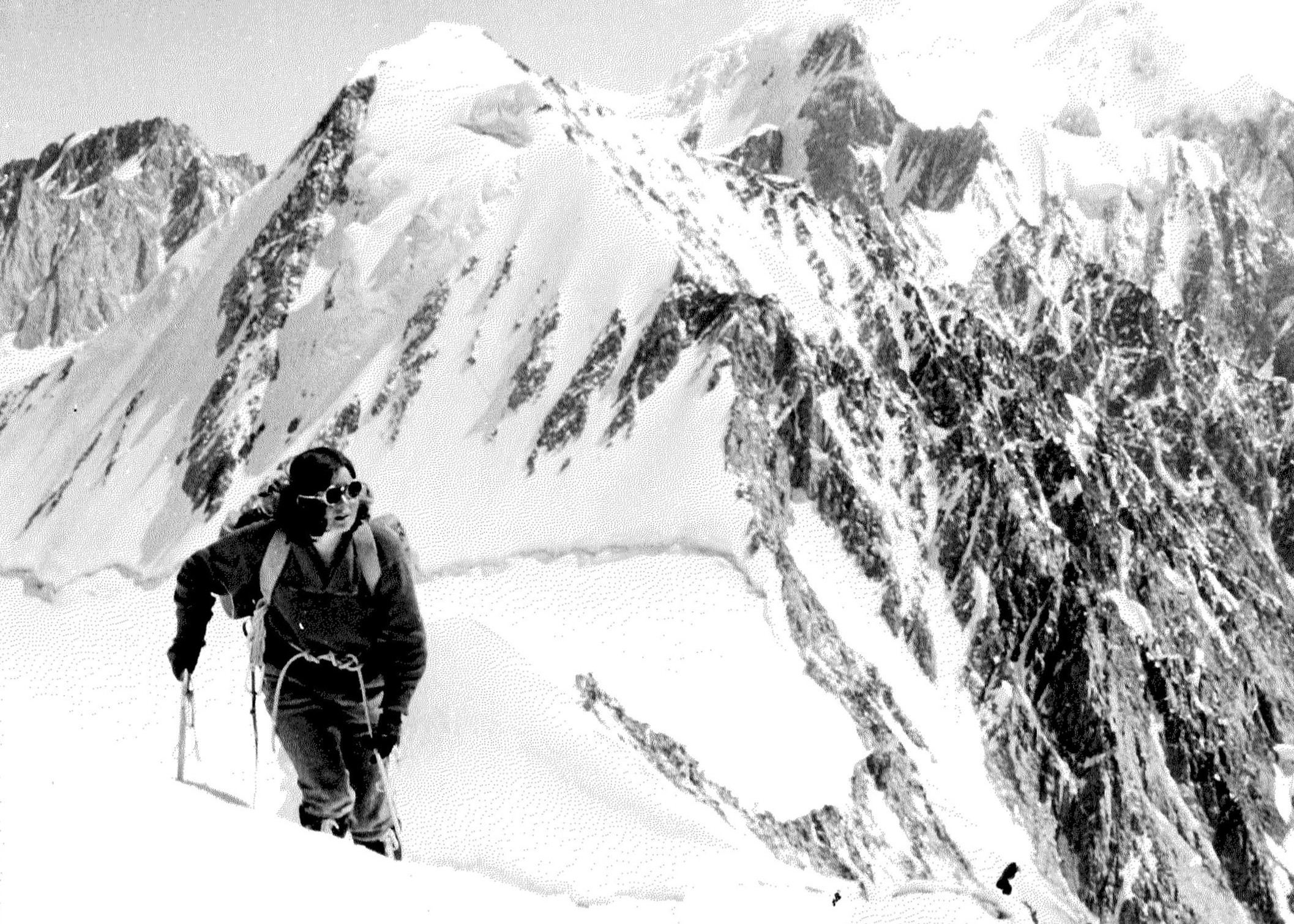
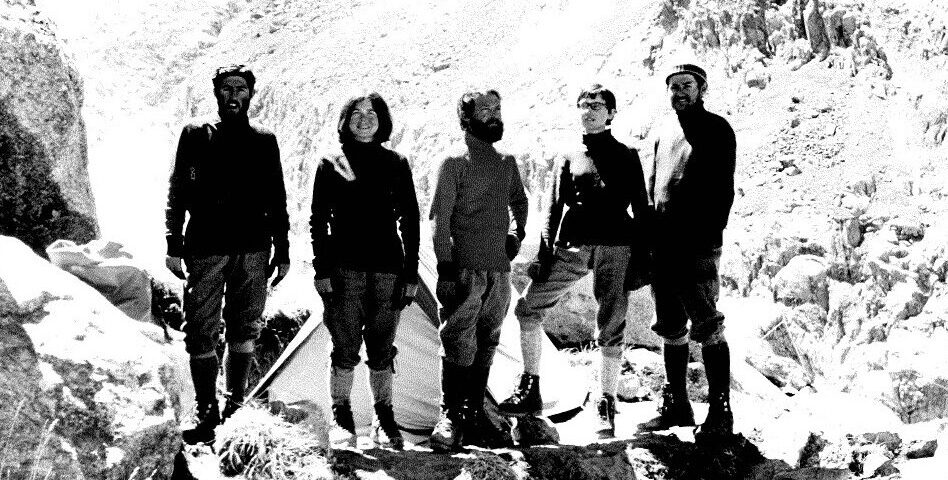
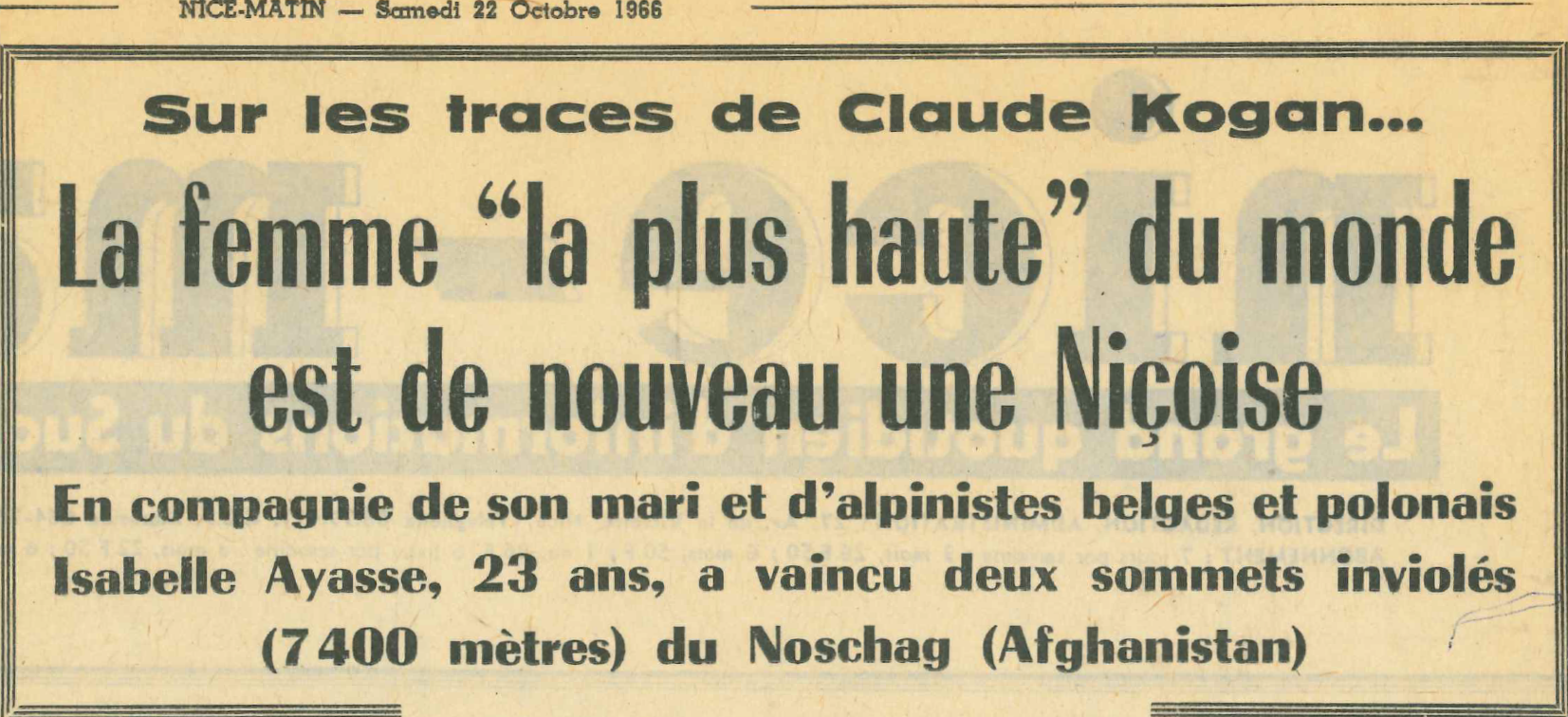
The thermometer reads -50°C. The wind howls on the walls of Noshaq. At an altitude of 7,430 metres, oxygen is scarce and every step is a victory over asphyxiation. In the middle of this white hell, a silhouette advances. It was Isabelle Agresti (Ayasse), a 23-year-old student from Nice. She was wearing a woman’s mountain boot made of full-grain leather with red laces.
1966. Hindu Kush. 7,430 metres altitude.
At 7,430 metres, oxygen is scarce. On her feet, not trainers, but a pair of leather Galibier shoes. She doesn’t know it yet, but she’s writing one of the most daring pages in French mountaineering history. She is on the verge of becoming one of the women to have reached the highest altitude on a summit never before climbed.
At Galibier, we believe that women’s adventure deserves the same raw technicality. It’s a plunge into the essence of a real women’s mountain boot: a tool for freedom, safety and emancipation, forged by the experience of those who paved the way.
The history of women’s mountaineering is paved with little-known exploits such as that of Isabelle. To rediscover these pioneering figures, we recommend Vertige Media ‘s article on the history of women’s mountaineering.
The epic of 1966: A lesson in reliability
To understand the demands we place on our models today, we need to go back to what ‘going on an expedition’ meant in the days of Isabelle and Henri Agresti, her companion and husband at the same time.
When a rock fall hits Isabelle, or when an avalanche sweeps away the camp, the equipment has to hold. It’s this heritage that guides the design of our boots today. Women’s mountain hiking boots are not simply a lighter version of the men’s model.
20,000 kilometres of testing before the summit
Today, we take a plane, we land, we walk. In 1966, the adventure began at the bottom of the building. Isabelle and Henri didn’t just climb. They travelled the world.
They travelled almost 20,000 kilometres by lorry through Eastern Europe, Turkey, Iran and Afghanistan. Imagine the conditions:
- The dusty tracks of Anatolia.
- The mud of the Afghan plateau.
- Random temperature variations, from +50°C to night frost.
Their equipment was not stored in bags. It was either on them, or bouncing around in the back of a military truck on barely tarmac roads.
This is the first lesson of Galibier: true reliability is revealed beyond the Sunday hiking trails. It’s measured by wear and tear, abrasion and time.
In those days, there was no such thing as a disposable. With a total budget of 9,000 francs for two (a derisory sum even for those days, the equivalent of €1,372.04 today…), financed by savings and aid from the Ministry of Youth and Sport, it was inconceivable that the shoes would break before the finish line.
Equipment as life insurance
The American Alpine Club’s report documenting this expedition is chillingly sober, but it reveals the vital importance of the equipment. The worst happened to the expedition. An avalanche swept through the camp, sweeping away their companion, the Pole Potocki. The survivors, including the Belgian Jean Bourgeois and the Pole Heinrich, found themselves isolated at an altitude of 6,800 metres, with no food and no stove, for three days in a storm.
When you’re standing still at -40°C, with no more calories to burn to keep warm, the only thing keeping your feet from freezing is the insulation in your shoes. If your feet freeze, you can’t go back down. That’s the end.
Isabelle Agresti’s story is a reminder that ‘technicality’ is not a selling point for social success. It’s a guarantee of getting home.
How do I choose the best women’s mountain boots?
For decades, the outdoor industry has taken a lazy approach to women: take a man’s shoe, reduce it to a size 37, and add a touch of pink or purple. It’s what the Americans call “Pink it and shrink it”.
At Galibier, this approach is heresy.
While reliability must be identical, anatomy differs. Ignoring these differences means condemning women hikers to discomfort and even injury. We often hear that walking for women systematically requires more flexibility. This is a mistake on technical terrain, where sturdiness knows no gender. Our women’s mountain boots are made from the same materials as our men’s range.
The arch and the arch of the foot
Women’s arches are often more pronounced and have different ligament elasticity, influenced in particular by hormonal cycles, which can affect the laxity of the ligaments.
A woman’s mountain boot must offer arch support that accompanies this morphology without being too rigid. This is where leather excels: it eventually adapts to the shape of your foot, which plastic will be hard put to imitate.
Volume and kick
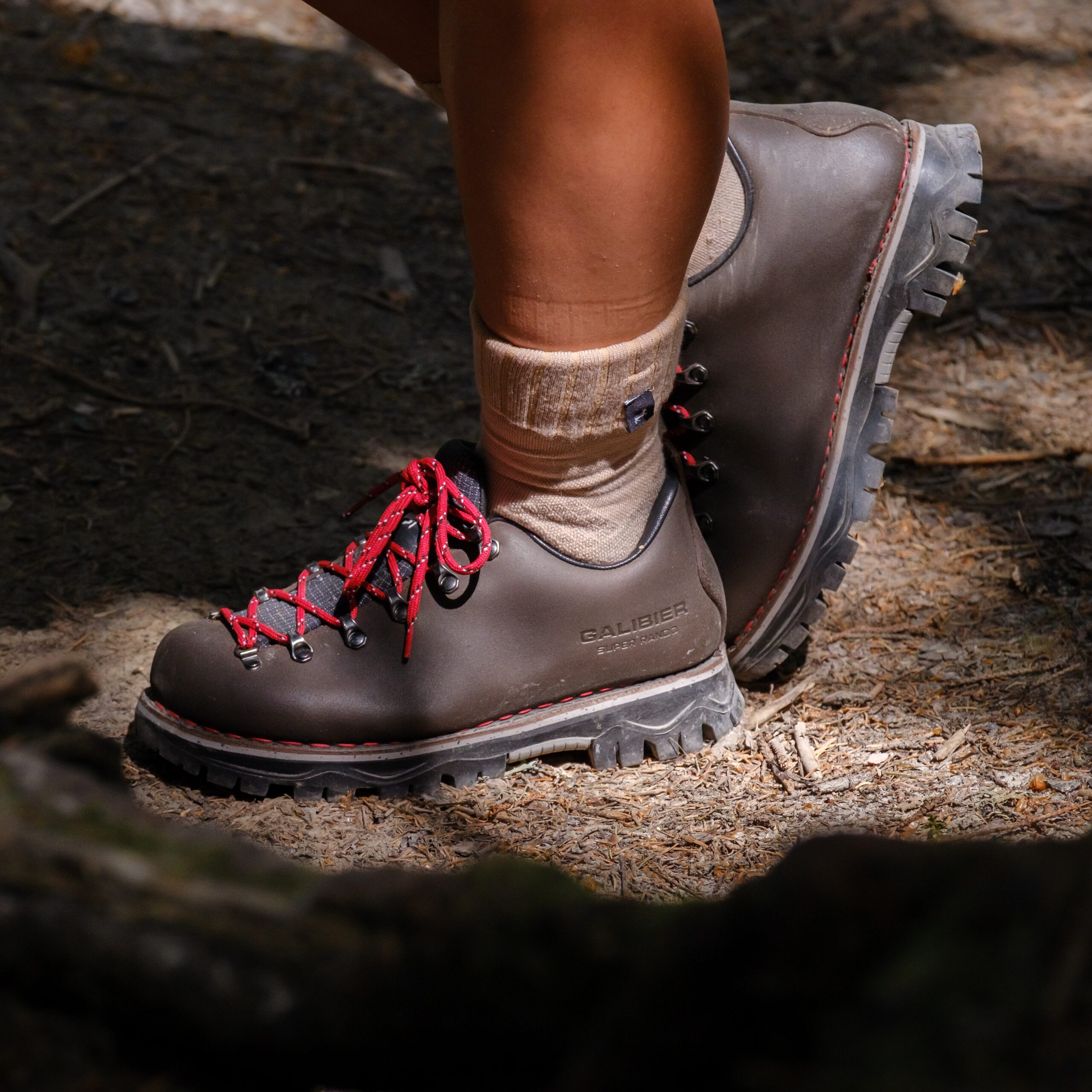
The female instep (the height of the top of the foot) varies enormously, but the overall volume of the forefoot requires particular attention.
When going downhill, the foot naturally slides forward. If the toe box is too narrow or too low, the nails dig in. This is the number one cause of black nails or nail loss after a trek. Our models keep a generous volume in the front to let the toes play their stabilising role.
The myth of the “pink shoe
At Galibier, we’ve always taken an uncompromising approach to mountain gear, and that includes our women’s line. We categorically refuse to simplify the women’s range to simple chromatic variations or pastel colours, which are often perceived as stereotypical. For us, performance and authenticity have no gender.
Our women’s models, like our Super Rando range, retain the alpine DNA and technical rigour for which our brand is renowned. We use quality materials, such as full-grain leather, selected for its reliability and physical properties. The lines of our trekking boots are pure, functional and designed to blend in with the mountain environment.
It’s a “masculine-feminine” technical and aesthetic heritage that we fully embrace. It’s about offering excellent equipment, but without sacrificing robustness or performance characteristics.
How do I choose the best women’s mountain boots?
Before choosing, you need to define your use among the different types of hiking.
In a world dominated by synthetics, mesh and ultra-light composite materials, Galibier is resisting. Why persist with leather?
Because Isabelle Agresti’s story isn’t written in plastic.
Abrasion resistance: The rock test
Imagine the wear and tear even before the climb. In 1966, to reach the Noshaq base camp, Isabelle and Henri Agresti crossed Europe and the Middle East by truck: 8,000 km of tracks, from Poland to Afghanistan, followed by long approach walks with porters in the Wakham valley.
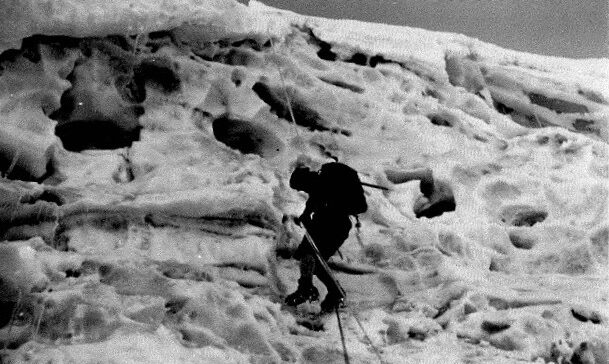
Back to Noshaq. On the ascent to camp III, Isabelle had to cross a 300 metre high rock bar. This is mixed terrain, made up of sharp rock, ice and unstable scree. In this type of terrain, a shoe made of synthetic fabric (mesh) is vulnerable. A sharp edge can tear the fabric, compromising waterproofing and structure.
Full-grain leather (the noblest and densest part of the hide) has a unique ability: it can take a beating. It can be scratched, marked or given a patina, but it cannot be pierced. For Isabelle, who suffered a head injury from a falling stone in this passage, her equipment was her only shield. If her shoes had failed at that point, evacuation would have been impossible.
Active breathability
Contrary to popular belief, leather is one of the most breathable materials there is. It is an organic material. It manages moisture naturally. Combined with a modern membrane (such as Sympatex), it offers the best of both worlds: waterproofing and thermal regulation that all-plastic fabrics struggle to match (pressure cooker effect).
Weight vs. stability: the secret of women’s mountain boots
There’s an old military rule confirmed by the US Army Research Institute: “1 kg on your feet is equivalent to 5 kg in your pack in terms of cardiac expenditure”. However, on uneven terrain (scree, slopes), a shoe that is too soft forces your muscles to compensate.
So why choose a structured Galibier? Because the mountains are not a treadmill. On uneven terrain (scree, slopes), a soft shoe forces your muscles to compensate for every imbalance. It’s an invisible nervous and muscular overload.
The Super Rando acts like an exoskeleton: its leather upper locks the ankle and absorbs mechanical stress instead of your tendons.
The result? You preserve your physical integrity for the descent. That’s the secret of a high-performance women’s mountain boot: knowing how to support the ankle to save energy.
The Sole and Construction: All-Terrain Insurance
If the leather is the body, the sole is the engine. And the assembly is the chassis. This is where Galibier’s technical heritage comes into its own.
The myth of the flexible sole
Women’s mountain boots are often praised for their immediate comfort (the “slipper effect” in the shop). Beware, it’s a trap.
On a flat, groomed trail, that’s fine. But as soon as the ground rises or becomes uneven (scree, roots, slopes), a sole that is too soft becomes deformed. It hugs every sharp stone, bruising the sole of the foot over time.
What’s more, in technical terrain, you need ‘edges’, just like in skiing. You need to be able to put the edge of the boot on a small rock strip and the boot to hold without bending.
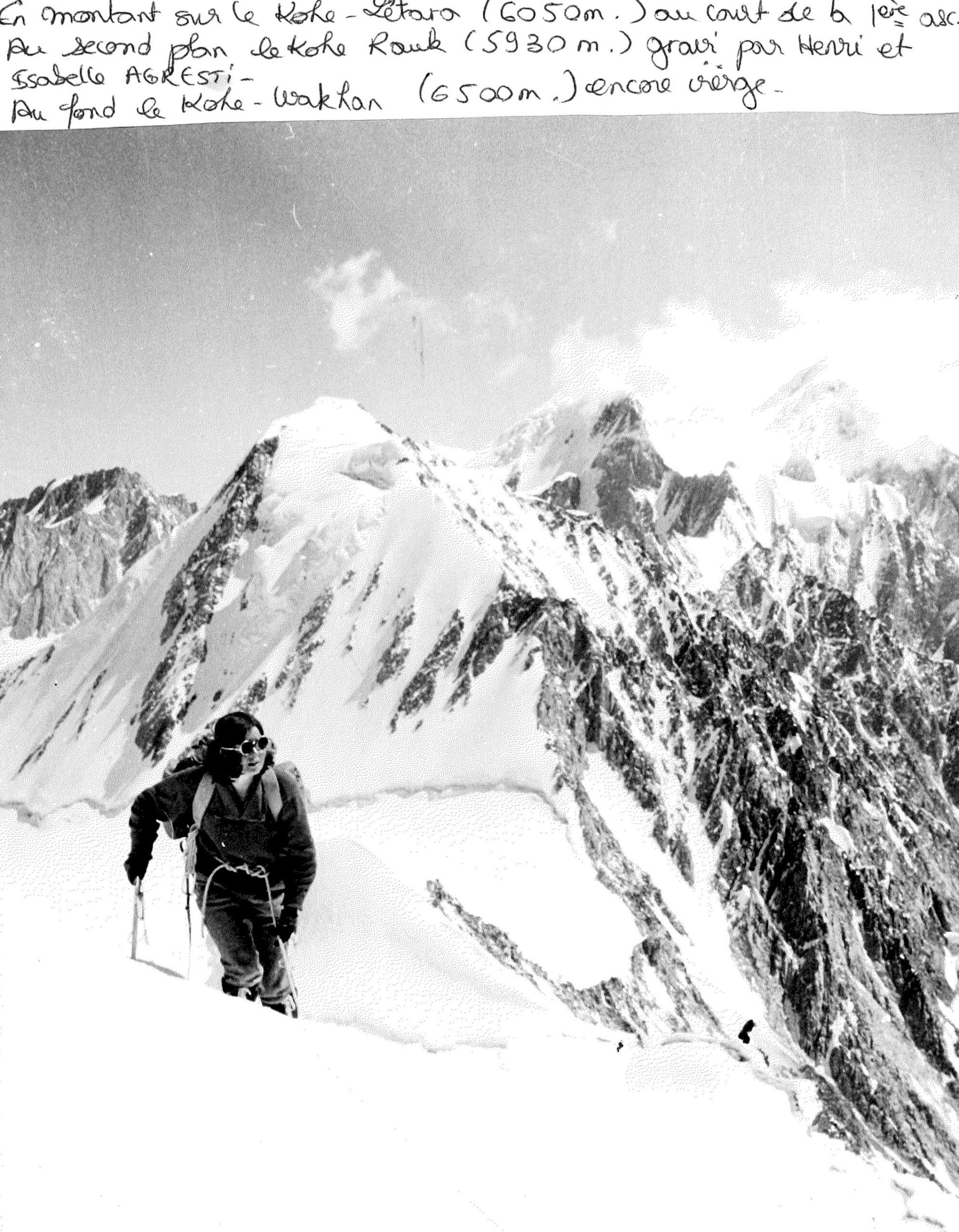
This is what enabled the Agresti to climb virgin 5,400 metre peaks in the Wakhan Gol. They needed a rigid platform to progress safely.
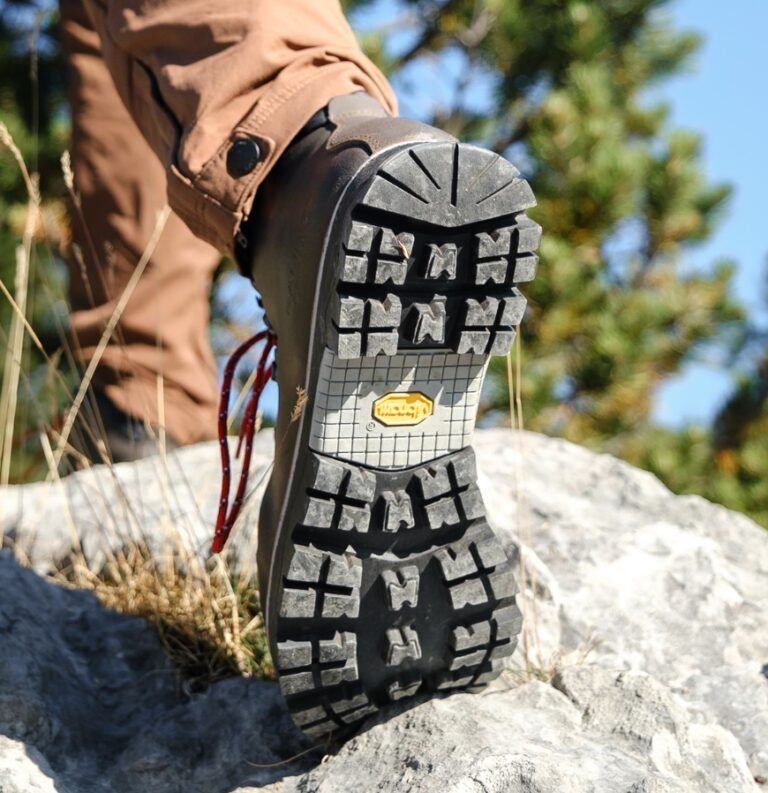
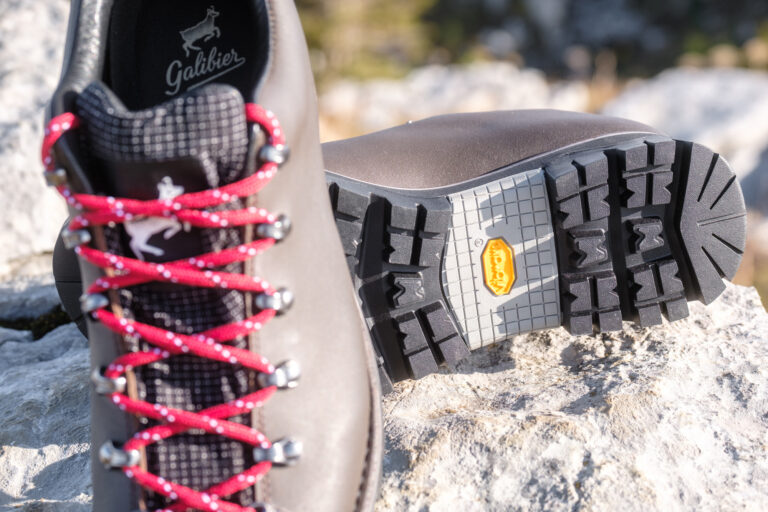
Galibier uses Vibram sole blocks designed to offer this compromise:
- A soft compound for grip on wet rock.
- Rigid internal structure for stability and protection.

Le Cousu Norvégien: The soul of Galibier
It’s our signature. Most modern shoes are “glued”. However, when the glue dries or heats up, the sole can come loose.
Norwegian stitching is an age-old assembly technique. The upper leather is joined to the sole by two visible, strong seams.
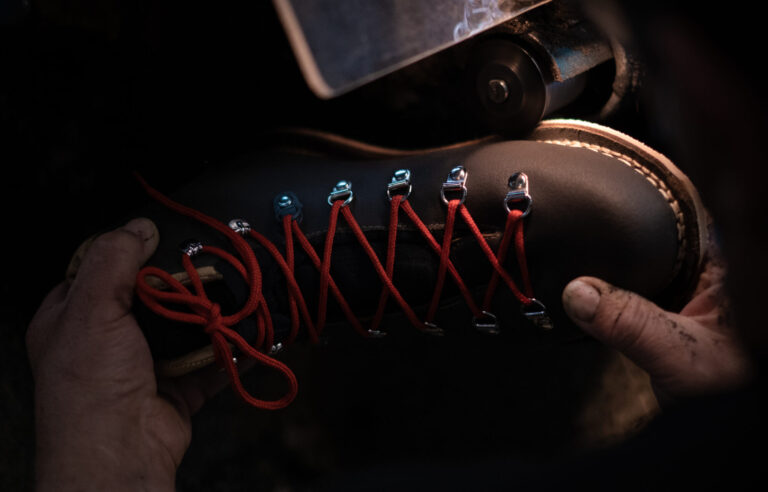
Waterproofing. Seams block water better than simple gluing.
Repairability. A sewn shoe can be resoled ad infinitum. When the sole wears out, we change it. Leather, on the other hand, has taken the shape of your foot and become more comfortable with age. Galibier’s aim is not to throw away a leather shoe that has taken on the shape of your foot.
Women’s mountain boots : The Super Rando range
You may not be leaving for Afghanistan tomorrow. But whether you’re preparing for the GR20, the Tour du Mont-Blanc or hiking in the Pyrenees, your choice of footwear follows the same rules.
The Super Rando range embodies our vision of versatility and reliability. Designed for all-round use in the mountains, they are made from quality materials. Repairable and fully resoleable, they are the ultimate anti-jump boots. These walking shoes are an investment, designed to accompany you for a long time on the trails.
Super Rando Low: lightweight and comfortable
What it’s used for: Designed for fast hiking on well-maintained terrain, these shoes are exceptionally versatile. From coastal paths to light mid-mountain hikes, from travel to urban exploration, it can be adapted wherever comfort is paramount.
Technical highlight: Its strong point is its low upper. This design frees up the Achilles tendon and ankle, encouraging a natural gait and reducing muscle fatigue over long distances. These low shoes are lightweight and comfortable.
Grip and safety: lightness doesn’t mean compromise. This shoe features a Vibram sole. Its toothed structure and specific rubber ensure optimum traction on a variety of surfaces (dry rock, earth, sand), guaranteeing stability and safety at every step.
Who’s it for? For walkers looking for a light, comfortable shoe. It’s for women who want a responsive shoe that’s easy on the feet so they can move quickly with a moderate rucksack.
This is the ideal women’s hiking boot for those looking for a lightweight, reliable pair that can keep up with a fast pace.

Super Rando Mid: trekking boots
Backpacking and porterage: Its reinforced structure is built for endurance. It compensates for the weight of a loaded rucksack and provides the shock absorption essential for multi-day treks.
All-terrain stability: whether on scree, slippery rocks or in mud, the Vibram outsole provides exceptional grip. It ensures a secure footing and drastically reduces the risk of twisting.
Protection and freedom: the key feature is the supple leather collar. It wraps around the ankle to protect it from shocks and intrusions (stones) without “locking” it. The foot rolls naturally, even on steep inclines.
Precision lacing: The system allows micrometric adjustment of the internal volume. You can adjust the tightness: looser on the way up for better circulation, firmer on the way down to prevent the foot from slipping and hitting the toe cap.
Who are they for? The demanding adventurer looking for a unique pair. This is the choice for women who don’t want to change shoes between a day hike and a challenging exploration, covering 4 seasons of use (excluding extreme mountaineering). A good women’s mountain walking boot should guarantee faultless thermoregulation.

It’s the perfect compromise. It incorporates the technical features of trekking boots without the heaviness of rigid mountaineering boots.
When you choose our boots, you’re wearing a piece of technical equipment, designed to be reliable enough to meet the variety of alpine challenges. They can handle a demanding women’s hike over several days on technical trails, while providing the comfort needed for a simple day outing in the mountains. The Super Rando is proof that it’s possible to combine elegance, respect for our alpine heritage and technical features.
An adventure for two
There is a magnificent sentence in the archives of Henri and Isabelle Agresti, written on their return from their incredible journey:
“And the most incredible thing is that we were able to experience this unique adventure… just the two of us.
This sentence sums it all up. The mountains are a place of sharing, of fusion, but also of raw truth. Up there, you can’t cheat. Not with your emotions, not with your partner, not with your equipment.
Isabelle Agresti was not a follower. She climbed at the front. She led the way, she gritted her teeth as the blood poured from her forehead, she survived the cold and the fear as the avalanche swept away their friends. She proved that a woman in the mountains is not a fragile flower, but a rock, provided she is well equipped.
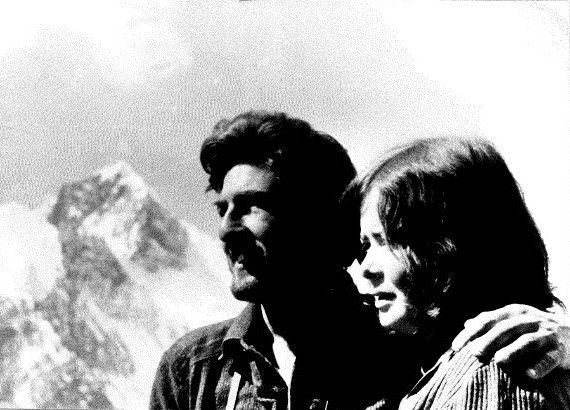
At Galibier, when we design a woman’s mountain boot, we think of Isabelle. We make shoes for people who want to write their own story.
For women who want to be able to rely on their feet to take them to the ends of the earth, and above all, to bring them back.
The Super Rando isn’t just a shoe. It’s a piece of heritage. It’s a promise that, whatever storms you weather, your foundations will hold.
So, are you ready to put on your history shoes?
Caring for women’s mountain boots
A Galibier leather hiking boot for women can last 10 or 15 years.
The secret? Care. Adopt the right tips for looking after your women’s mountain boots.

1 – Drying
Leave to dry naturally in an airy room, away from heat sources (radiator, fireplace, sun) to prevent the leather from hardening or warping.

2 – Brushing and cleaning
Brush and clean gently to remove dust, mud and dirt, using a polishing brush or foam cleaner if necessary, but never machine wash shoes.

3 – Nourishing the leather
Apply a thin layer of natural wax to keep leather supple, prevent cracking and revive its color.

4 – Waterproofing
Spray a waterproofing agent all over the shoe, paying particular attention to the seams, to limit water penetration and extend the life of the leather.
FAQ : Women’s mountain boots
Here are the answers to the most frequently asked questions to help you finalise your choice of women’s hiking boots.
GALIBIER

The difference lies in the structure and duration of the effort.
Women’shikingboots are often more flexible and lightweight, suitable for day-long outings on marked trails.
Conversely, trekking boots are designed for autonomy over several days: they are more rigid to support the weight of the rucksack (heavy load) and protect the foot on very uneven or unstable terrain.
Ideally, no. A low, very ventilated shoe (mesh) will be perfect in summer, but dangerous as a woman’s snow shoe (cold, water ingress).
However, a versatile leather model like the Super Rando Mid, coupled with good gaiters and merino wool socks, is an excellent compromise for covering all four seasons (Spring, Summer, Autumn and moderate Winter without extreme conditions).
This depends radically on the material:
For a standard syntheticpair , we often talk about 500 to 800 km before structural degradation.
For a quality women’s leather mountain boot like a Galibier, the lifespan is counted in years. If the sole wears out, it can be replaced (resoled). If the leather is nourished, it will not move. It’s a long-term investment.
Yes, it’s a golden rule.
On downhill runs and with effort, the foot swells and naturally moves forward in the shoe. To avoid hitting the toe (and losing toenails), allow about 1 cm room at the front, which is often half to one size bigger than your usual street size.