Men’s trekking shoes: how to choose the right pair
Article published on 19 August 2026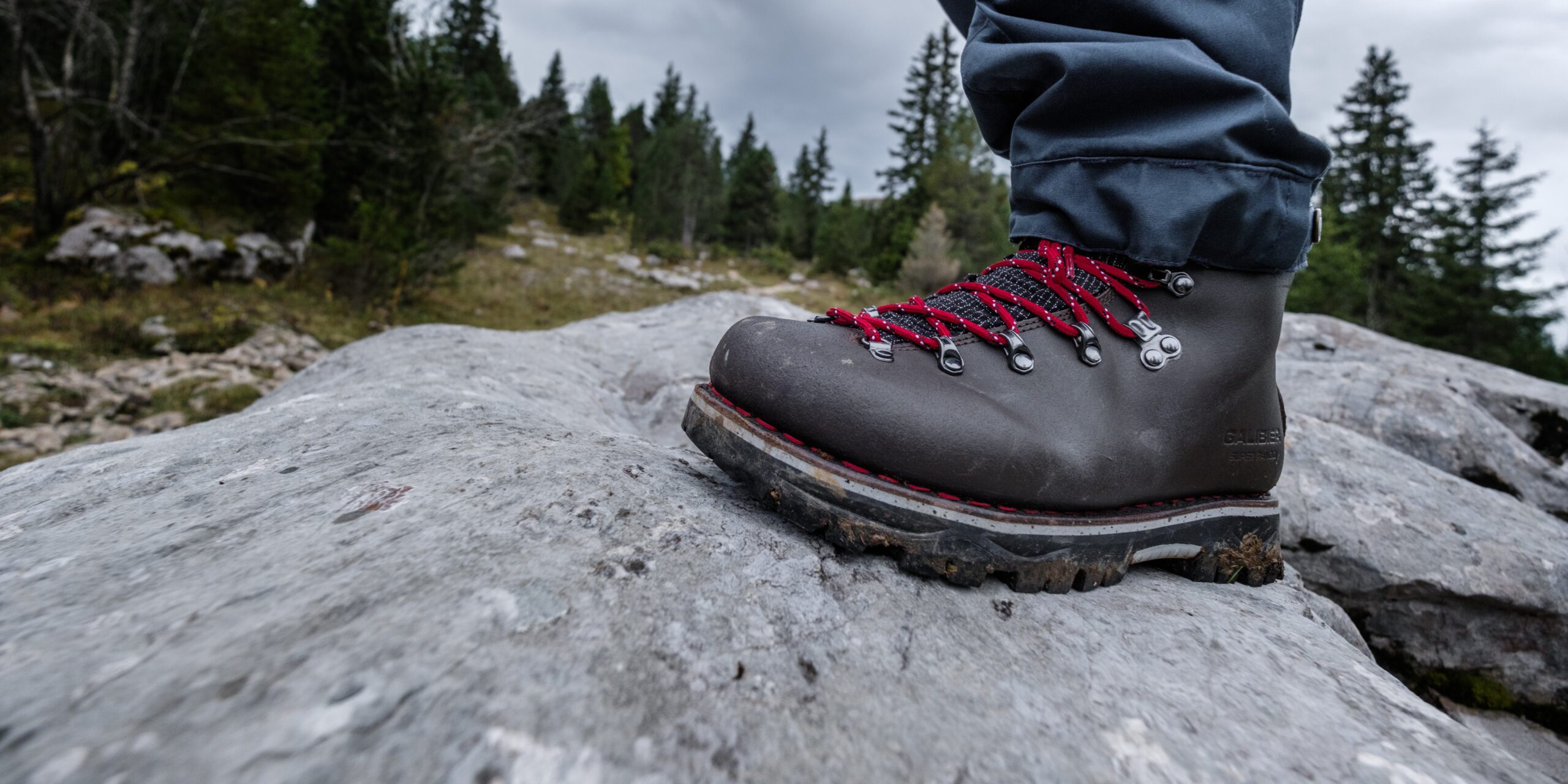
A great pair of men’s hiking boots directly affects your safety and your progress on multi-day hikes. Setting out on your own for several days requires equipment you can count on. Your feet support not only your own weight but also that of a backpack, which is often very heavy. In mountainous terrain, even the slightest flaw in your gear can have immediate consequences.
The goal of this guide is clear: to help you objectively analyze the technical criteria so you can make the right choice. We’ll discuss the specific considerations related to weight, duration, and the type of terrain. Finding the best men’s hiking boot requires understanding how your body type interacts with the actual demands of the terrain.
Why Choose the Right Hiking Shoes for Men
The shape of a man’s foot has distinct characteristics. On average, the overall shoe volume is larger and the forefoot is wider than in women’s hiking boots. A men’s hiking boot must accommodate this width without ever compressing the metatarsals.
In addition, the total weight being carried is often greater. A man carrying an 18 to 20-kilo hiking pack generates a biomechanical impact with every step. This need for stability requires enhanced ankle support. The density of the sole must prevent the arch of the foot from collapsing under the load. Inappropriate gear accelerates muscle fatigue and drastically increases the risk of joint injuries when descending.
Key Features of Men’s Hiking Shoes
A thorough analysis of your equipment’s key features is essential to making an informed decision. This expertise will allow you to tackle your backpacking trip with complete confidence.
Material reliability: grip and durability of the sole
The mountains can take a toll on delicate gear. Men’s hiking boots must incorporate reliable technologies and materials. Full-grain leather, 2.4 mm thick, naturally resists abrasion from rocks.
The outsole rubber must grip the ground. Deep, widely spaced lugs ensure effective traction in mud and safe braking on descents. When carrying a heavy pack, the rubber’s wear resistance becomes a key factor in ensuring the longevity of your men’s hiking boots.
Men’s Hiking Boots: Ankle Support and Stability
The shoe collar serves a mechanical support function. It must extend high enough to secure the ankle. This stability is vital when fatigue sets in after several hours of walking. Firm support limits lateral twisting when stepping on unstable rocks.
Weather Resistance: Men’s Hiking Shoes
Keeping your feet dry prevents blisters from forming. A good pair features a waterproof and breathable membrane, such as Sympatex. This membrane blocks out water while wicking away the heavy natural perspiration generated by physical exertion. The water-repellent treatment on the leather prevents the upper from getting heavy in the rain.

Optimal comfort: long-lasting
Comfort is best judged on the third day of the trek, not when you try them on. Cushioning should relieve pressure on your joints without causing instability. For carrying heavy loads, opt for a polyurethane (PU) midsole rather than an EVA foam one. PU maintains its density under continuous pressure and doesn’t compress as you walk mile after mile.
How to Choose Men’s Hiking Shoes
The technical demands of trekking require better gear than those of traditional hiking. On multi-day hikes, where you face isolation and heavy loads, boots become an essential piece of equipment. Their reliability must ensure proper body support and safety on all types of rugged terrain.
Men’s Hiking Boots: Trek Duration
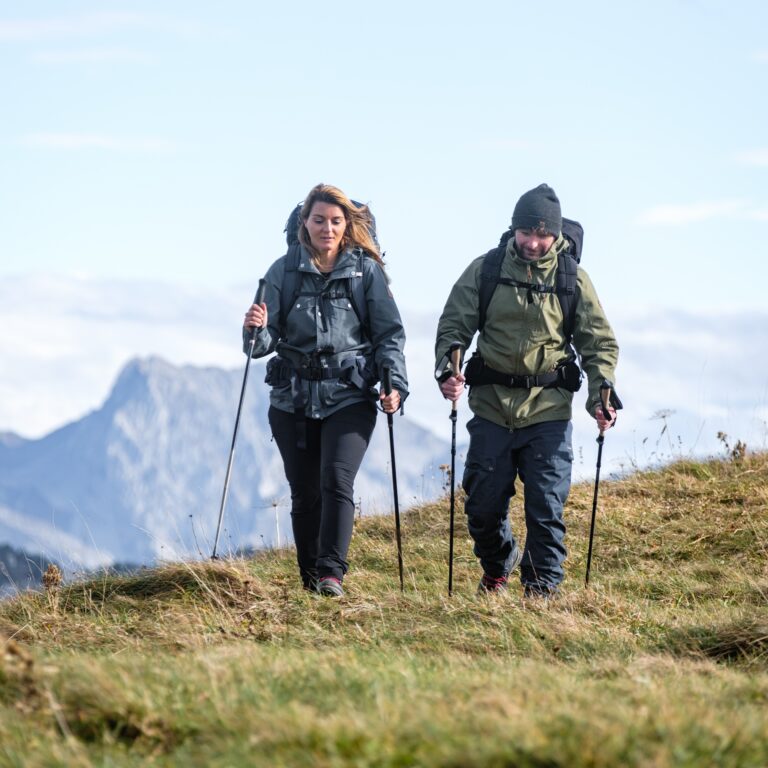
For a short trek lasting one or two days, you can opt for a slightly more flexible model. On a long trek, fatigue builds up. In that case, you’ll need the best men’s trekking shoes in terms of structure. The shoe’s stiffness helps compensate for a loss of focus and missteps.
If you’re looking for inspiration to test your gear before a big trip, the French Hiking Federation offers excellent two- to five-day routes in the Auvergne-Rhône-Alpes region an ideal playground for breaking in a pair of Galibier boots under real-world conditions.
Depending on the type of course played and the weight of the bag
On clean, well-marked trails, a sole that provides a smooth roll makes walking easier. However, in high mountains and on scree slopes, stiffness is essential. A stiff sole allows you to dig into the rock and create footholds on sloping terrain without exhausting your calves.
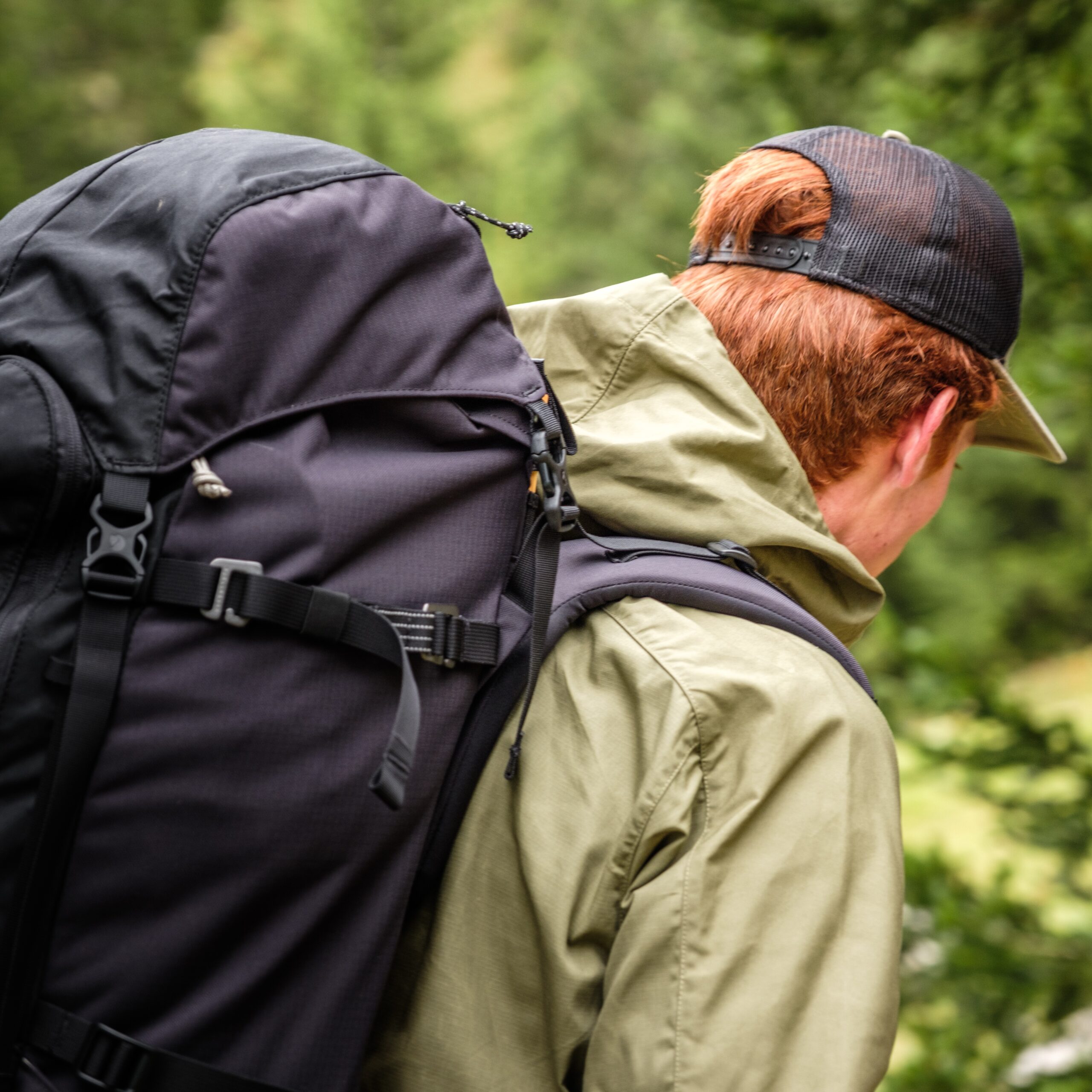
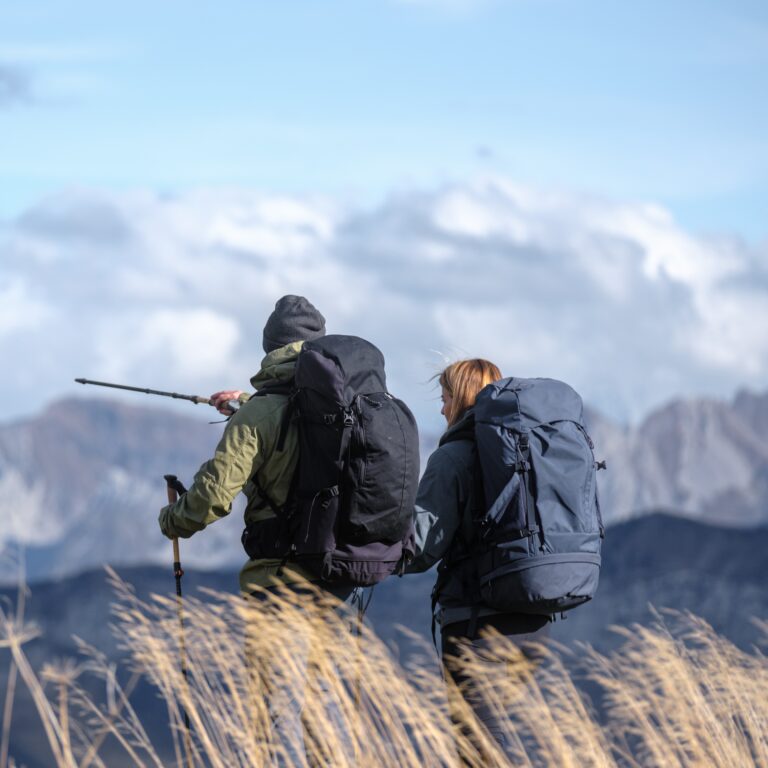
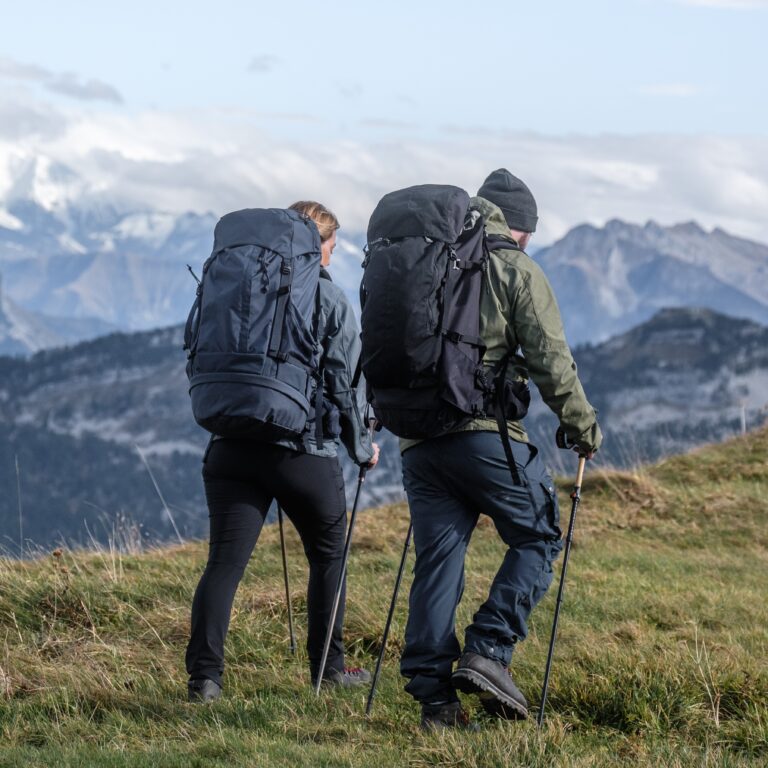
The weight you're carrying determines the height of the shaft. A lightweight backpack sometimes allows for a low shaft. But a trekking backpack weighing more than 12 kilos requires a high shaft and a very stiff frame. The shoe must transfer the energy from the load to the ground without crushing your foot.
Which shoe fit should you choose: width and support?
The fit is key to a pain-free hike. The heel must be securely locked in place during ascents, with no vertical slippage. The forefoot must have enough room to move. Your toes should never hit the back of the shoe during descents. It’s this precise balance that defines the best men’s trekking shoes.
Spotlight on the Galibier Models
Galibier is committed to absolute reliability. We design shoes built to tackle the mountains and stand the test of time. Our premium models feature full-grain leather sourced to the highest standards.
A High-Mountain Icon: Super Guide
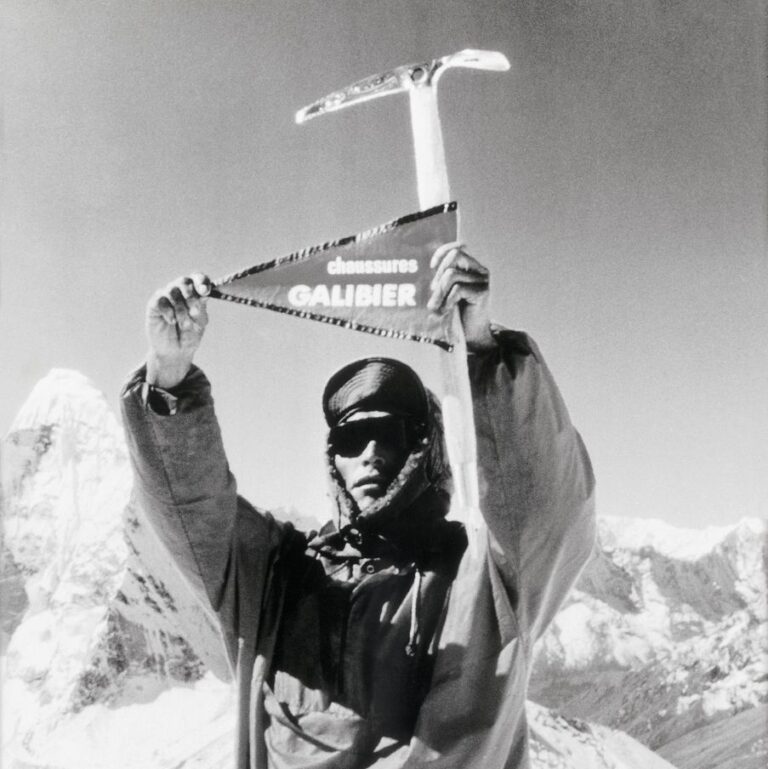
The Super Guide is the ultimate icon. Recognizable by its thick leather, it has been worn by the greatest mountain guides. Sturdy, compatible with crampons, and virtually indestructible thanks to its Norwegian stitching, it is the very definition of the traditional leather mountaineering boot. It is both a historic collector’s item and a hiking tool whose performance was unmatched in its day.

Super Rando Mid: The Hiking and Trekking Shoe
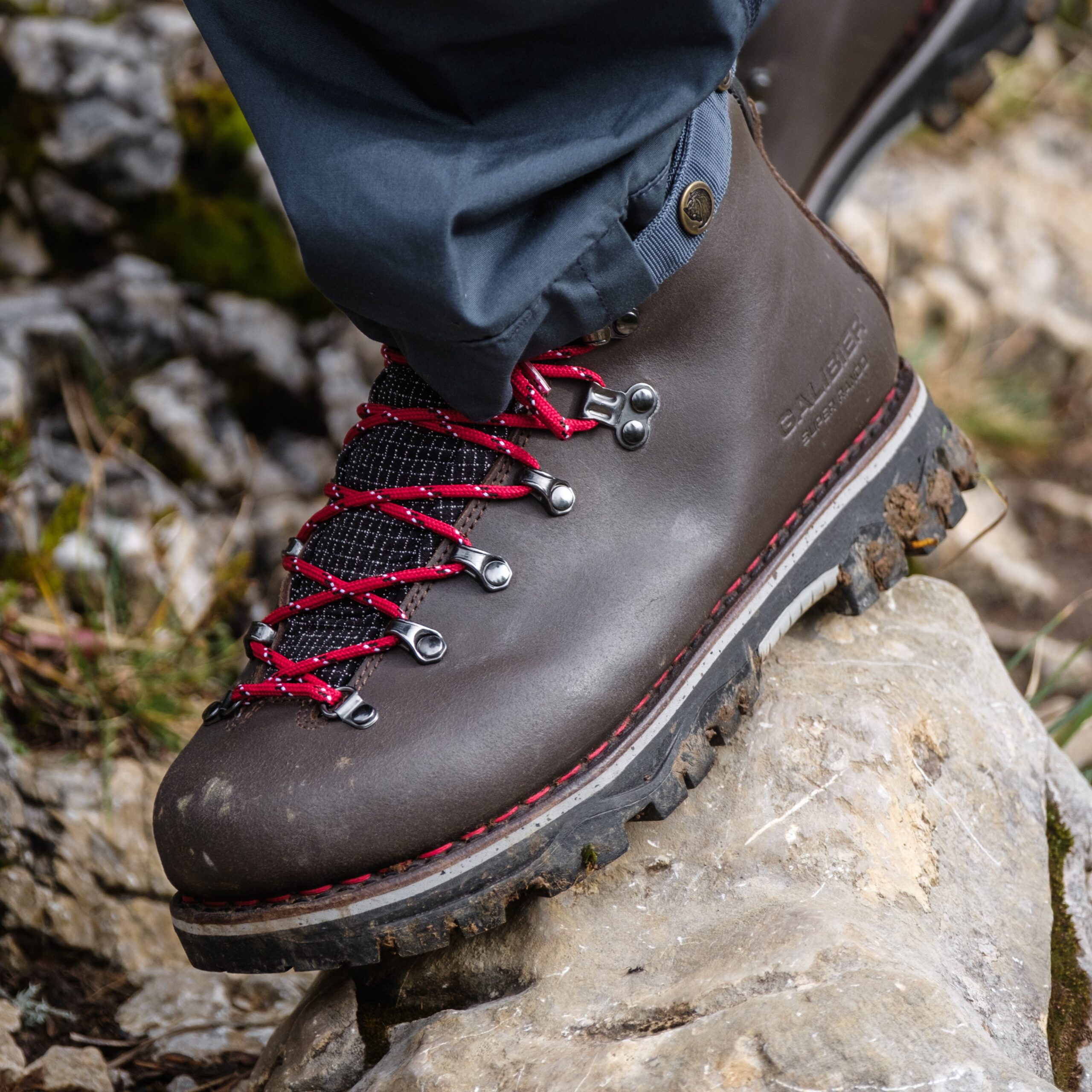
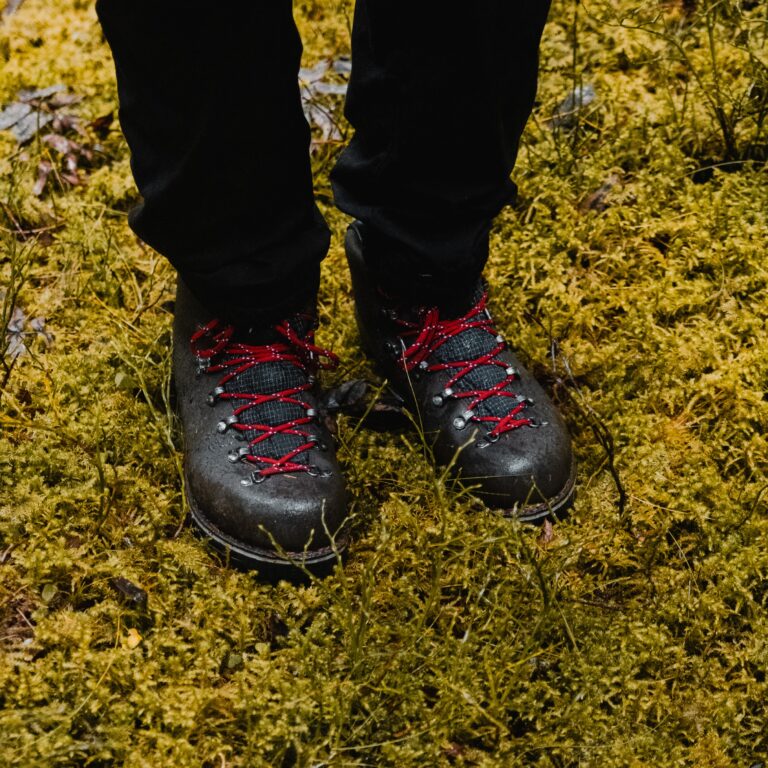
The Super Rando Mid embodies the rebirth of an icon. It carefully preserves the signature features that forged the Galibier legend: its famous red laces, its distinctive tread pattern, and its one-piece construction, a guarantee of unmatched reliability. It is this unique silhouette—instantly recognizable on the trails—that reflects our time-honored craftsmanship.
Super Rando Low: the shoe for trekking and fast hiking
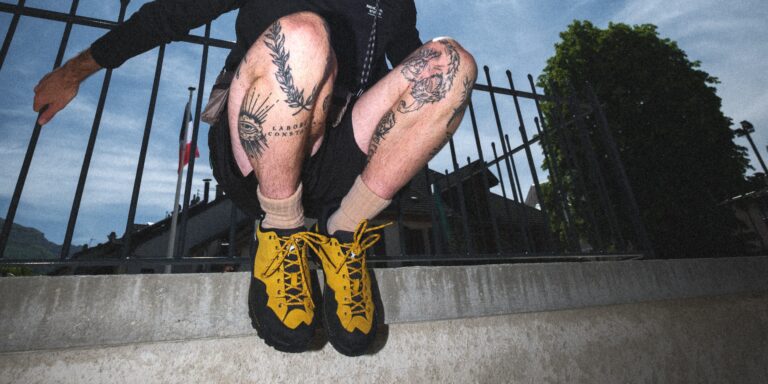
However, staying true to the aesthetic codes of low-cut hiking shoe brands does not come at the expense of innovation. Beneath its timeless look, the Super Rando Low features a construction made of technical materials. This structural evolution significantly reduces weight while improving the breathability of the liner.
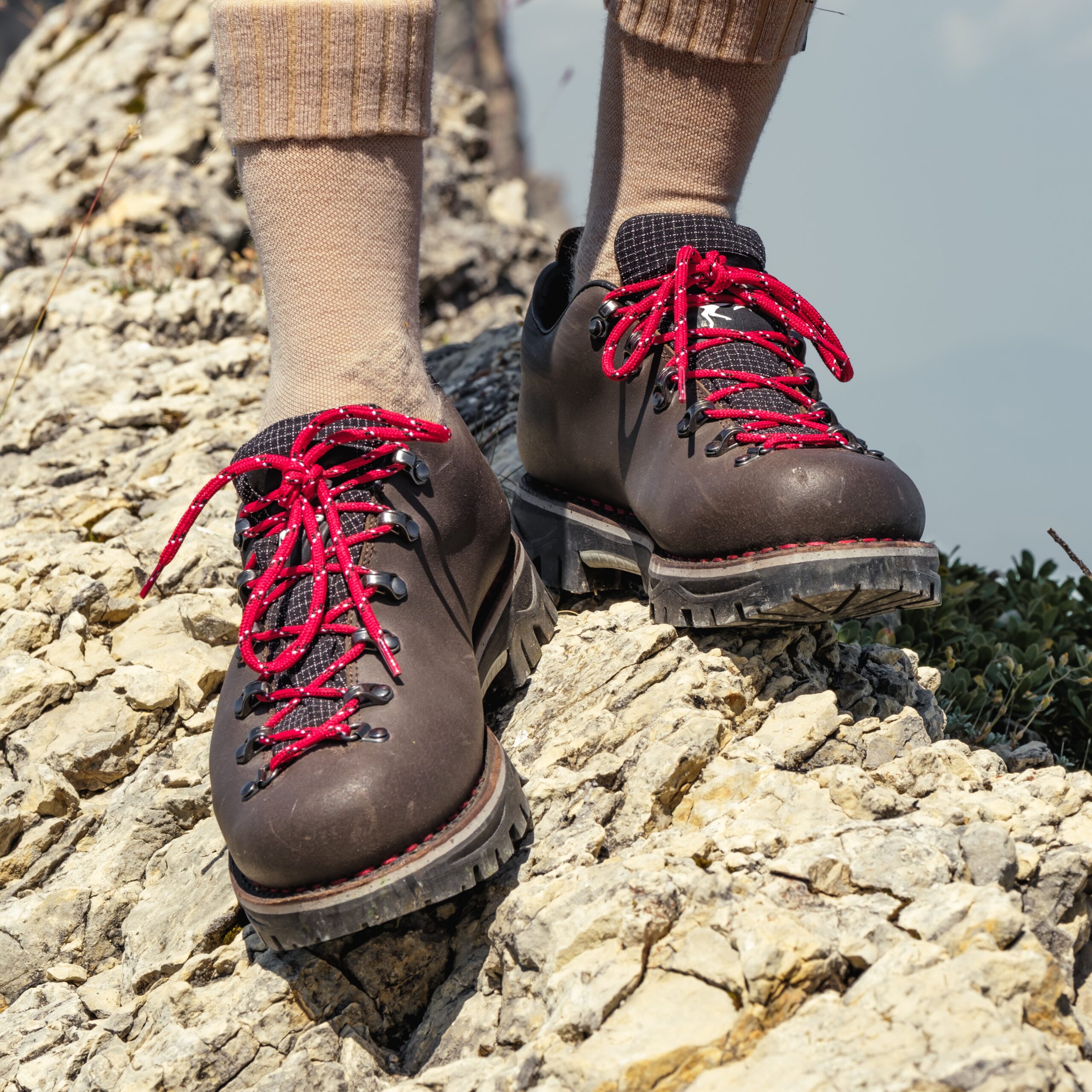
Our brand’s value proposition is simple: we avoid obsolescence. Our Super Rando line features Norwegian-style stitching, allowing our artisans to completely resole the shoe. Choosing Galibier means opting for technical, repairable gear that will develop character through your expeditions rather than falling apart.
Men’s Trekking Shoes vs. Hiking Shoes
The difference in use is drastic. Lightweight hiking boots are designed for day hikes with a light pack. They prioritize flexibility and immediate lightness.
In contrast, trekking involves self-reliance and carrying a pack. The physical demands require a protective structure, dense materials, and flawless support. Using a classic hiking boot for a challenging trek directly exposes the user to sprains and premature wear and tear on the equipment.
Caring for Men’s Hiking Boots
Choosing the right hiking boots requires careful consideration. Don’t be tempted by the lightest pair on the shelf. Consider how much you’ll be carrying, the length of your hike, and the terrain conditions.

1 – Drying
Leave to dry naturally in an airy room, away from heat sources (radiator, fireplace, sun) to prevent the leather from hardening or warping.

2 – Brushing and cleaning
Brush and clean gently to remove dust, mud and dirt, using a polishing brush or foam cleaner if necessary, but never machine wash shoes.

3 – Nourishing the leather
Apply a thin layer of natural wax to keep leather supple, prevent cracking and revive its color.

4 – Waterproofing
Spray a waterproofing agent all over the shoe, paying particular attention to the seams, to limit water penetration and extend the life of the leather.
By investing in a reliable, well-designed, and serviceable model, you’re protecting your joints in the long run. With gear designed for high-altitude mountaineering, you can set out confident that your equipment won’t let you down.
FAQ – Men’s Hiking Shoes
GALIBIER

It is often recommended to choose shoes that are half a size to one size larger than your usual size. Prolonged exertion and heat cause your feet to swell naturally. Allowing some extra room prevents your toes from hitting the front of the shoe hard when going downhill.
You should try on the boots at the end of the day, when your feet are swollen, wearing your own hiking socks. The heel should not lift when you walk. You should be able to wiggle your toes, while the instep remains firmly secured by the laces.
Yes. Our shoes have a removable insole. You can replace it with a customorthotic insole, provided that the overall platform remains stable and your arch is properly positioned within the upper.