

Comfort, performance and safety. These three pillars of hiking are undoubtedly the crucial elements of a shoe adapted to this sport. But finding a women’s hiking boot that meets all these criteria is no easy task. This guide will help you make the right decision.
It’s important to feel comfortable in your hiking boots. Walking up and downhill is already hard work. So there’s no need to complicate matters by leaving the comfort of such a wonderful excursion almost to chance.
Given the differences in morphology between men and women, with women generally having thinner feet and narrower heels, it’s important to ensure a good fit. Especially in a sector where footwear is primarily developed for the often larger male foot.
The choice also depends on the intended use of a hiking boot. Short, long, snowy, mountainous or light.
At Galibier, we’ve been making footwear for over 100 years. Offering models adapted to demanding practices has been our business for generations.
We focus our expertise and know-how on the quality of our equipment. This means, of course, a fit and a shoe adapted to all shapes.
Why choose a hiking boot designed for women?

A shoe made for women means a shoe that specifically fits the shape of a woman's foot. A brand's expertise provides the know-how needed to offer a product that's right for everyone. Successful hiking requires the right level of comfort and firm foot support. No matter what your morphology. These are more than valid reasons to buy women's hiking boots, which are becoming a must-have.
As previously stated, women generally have a narrower arch, a thinner heel and a different foot shape than men.
A suitable women’s hiking boot takes these differences into account and guarantees a better fit.
Fit is also synonymous with support, and guarantees safety during practice. Safe walking reduces the risk of injury. A good shoe with good support will prevent you from twisting your ankle, for example.
Also, in terms of mountain safety, it will reduce the risk of falls on uneven terrain , where every support is necessary.
So, what would the perfect hiking boot look like? At Galibier, we think it would be built to fit the foot perfectly and become a natural extension of the leg.
A women’s hiking boot in leather can therefore be very interesting to consider. Leather is a material that adapts to the shape of the foot. It takes on the shape of the foot as you go out and use the boot.
This ensures that even thin feet are comfortably supported, whatever the terrain or length of the ride.
Which women’s hiking boot for which type of terrain?
Appropriate footwear doesn’t just mean good foot support. Good adaptability to the terrain and practice is essential to avoid problems during a hike.
In fact, it would be unpleasant to realize in the middle of a run that your shoes are unsuitable. They could, for example, be poorly equipped with crampons and not offer enough grip. Or simply not cushioned enough.
Light hiking
Footwear will therefore adapt to different types of hikes, and vary according to their duration and difficulty.
The first category of hiking is the most accessible to all, and is similar to walking. Lightweight hiking boots for women are the most suitable pair of shoes, similar to those used for walking.
This activity is defined by several criteria. First, lightness of equipment. You’ll want to equip yourself with the bare minimum for a light hiking outing. The bag is small and will essentially contain food, water and one or two changes of clothing maximum.
Lightness means speed. This is the second criterion for this activity. Reduced weight means a longer stride and greater speed. A low-cut hiking shoe will be light enough to allow good ankle mobility for a fast stride. Short, day-long outings are favored.
Long-distance hiking
The second category will require more time and energy. We're talking about multi-day hikes. The equipment must therefore be suitable for a long and time-consuming practice. Shoes must provide good ankle support to avoid repetitive pain. These long-distance hiking shoes must be robust enough to accompany the hiker. They must be able to carry a heavy pack, including a tent, camping gear, food and water.

The expression of “technique
A technical shoe will be larger and more robust. Technical is defined by the difficulty of the terrain. A technical trail, for example, would be very steep, muddy, snow-covered, very rocky or simply uneven.
Technical trails are easier to find at high altitude or in the high mountains. Vegetation is sparser and the routes are by definition less popular.
A sturdy shoe with good grip is therefore essential for safety in this type of activity.
Summer vs. winter: which shoe for which season?
It’s true that some well-designed, breathable models allow four-season use. However, conditions are very often different; temperatures vary and so do types of terrain.
In hot weather, you’ll want a shoe that’s breathable and, above all, low-profile. In other words, a construction that stops just below the ankle. This model is very popular as a women’s summer hiking boot.
A women’s winter hiking and snow shoe will be relevant for more demanding outings in low temperatures. Feet that stay dry are desirable for outings where humidity is high. A high-cut boot keeps snow out and rain in.
Essential selection criteria
A hiking boot will have several specific features and/or technologies. These will generally be arguments that will be put forward during the sale. Some of them are superficial, while others are necessary for proper use.
Women’s hiking boots: sole and grip
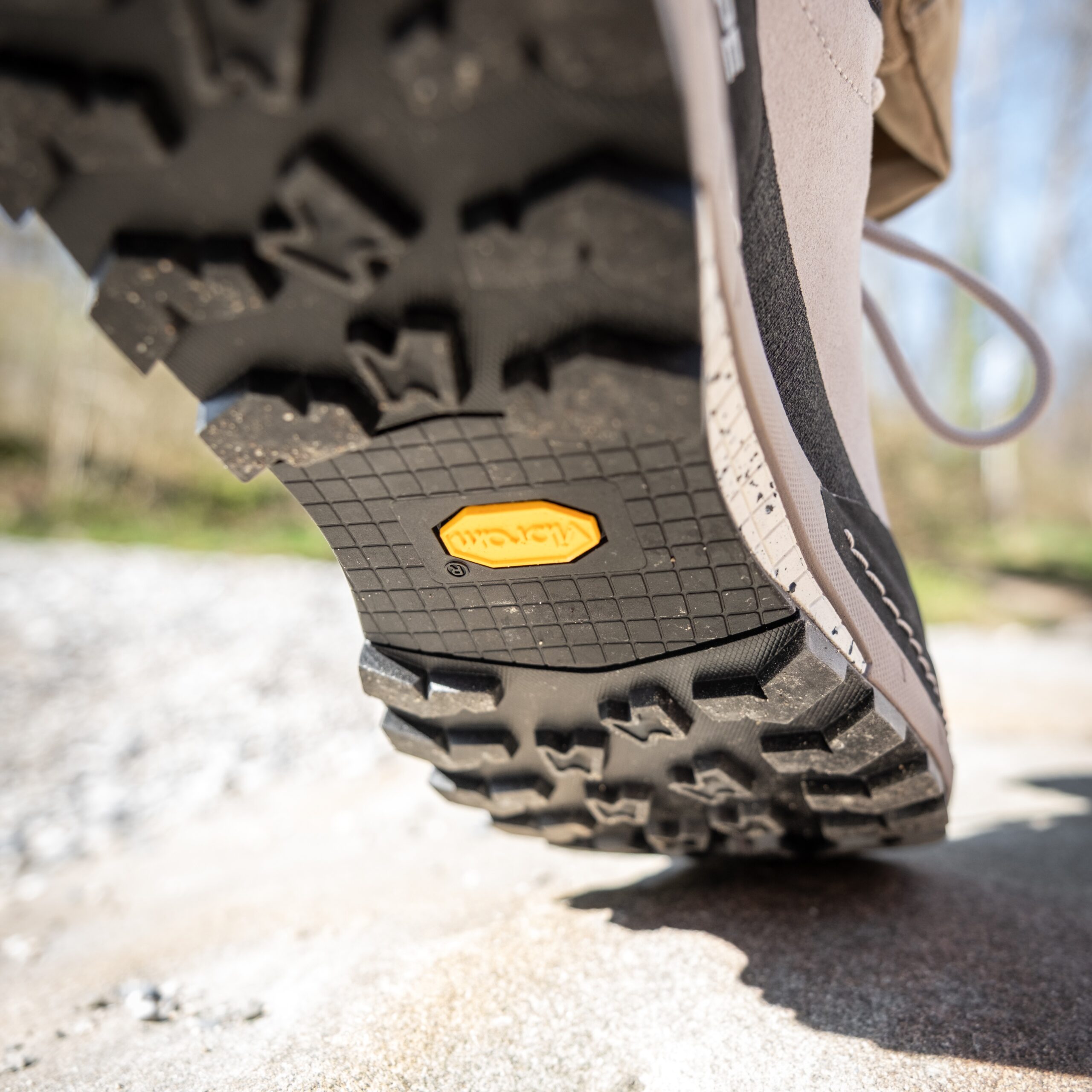
A good outsole, for example, is essential and is perhaps even the most important element of a hiking boot. Why? Because it’s the only part of the shoe that’s in contact with the ground Because it’s the only part of the shoe in contact with the ground.
The outsole provides grip, traction and durability, protecting the foot from unevenness and offering the necessary stability with every step. They are generally made of rubber or TPU (thermoplastic polyurethane), wear-resistant materials offering good grip on different types of ground.
For hiking, the outsole is often equipped with deep, multidirectional crampons. These improve traction on a variety of terrain (mud, rock, snow) and make it easier to handle ascents and descents.
A dress shoe, on the other hand, will have a flat, smooth sole. It’s really not advisable to use this type of shoe on technical terrain. You risk putting yourself in danger by slipping.
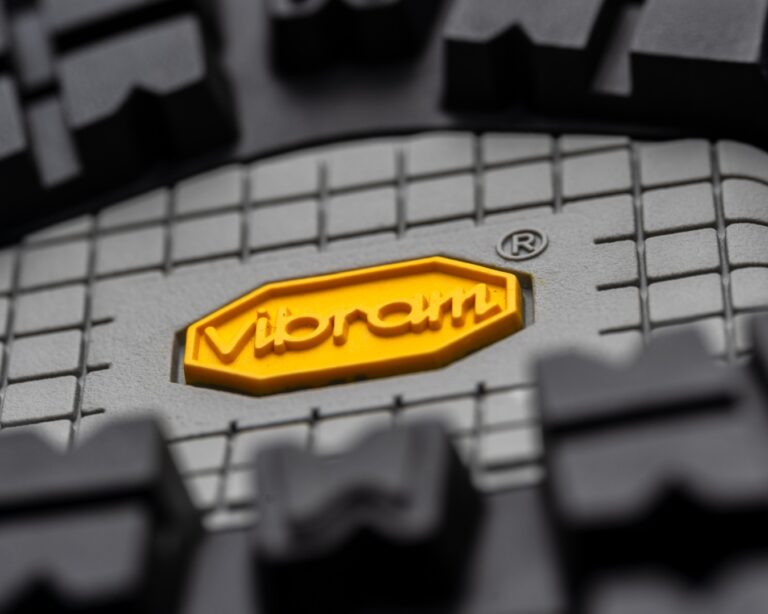
Our women’s Vibram shoes set the standard for technology and performance in the outdoor sector.
So it’s the materials used for the sole and studs that guarantee excellent grip.
Women’s hiking boots: cushioning and breathability
Cushioning is part of the sole, not the outsole. It belongs to the inside of the shoe and translates into a soft, comfortable material
Cushioning reduces the impact on the foot and body with every stride, contributing to comfort and injury prevention. It absorbs and distributes shock to protect joints. Cushioning is often provided by EVA (ethylene vinyl acetate) or PU (polyurethane) foams. When hiking, although cushioning is comfortable, it must also be stable. It is therefore sometimes reinforced by anti-stone plates or stabilizing inserts to protect the foot on uneven terrain. En randonnée, l’amorti bien que confortable se doit également d’être stable. Il est donc parfois renforcé par des plaques anti-pierres ou des inserts stabilisateurs qui protègent le pied sur les terrains accidentés.
Cushioning reduces the impact on the foot and body with every stride, contributing to comfort and injury prevention. It absorbs and distributes shock to protect joints. Cushioning is often made of EVA (ethylene vinyl acetate) or PU (polyurethane) foams.
When hiking, cushioning, while comfortable, must also be stable. It is therefore sometimes reinforced by anti-stone plates or stabilizing inserts to protect the foot on uneven terrain.
Breathability technology, meanwhile, is a hotly debated topic in hiking circles. It is pitted against its opposite: waterproofing. It’s more or less a given that you have to choose between the two, because they are antonyms. A waterproof shoe will, by definition, prevent water from seeping in, but also from getting out.
They often incorporate membranes Sympatex® (like Gore-Tex®) or water-repellent treatments that protect the foot from rain, puddles and ambient humidity. This technology is often integrated into women’s Gore-Tex hiking boots.
A breathable shoe allows water to seep in, but can evacuate it very quickly, and also wicks away perspiration and heat. These are generally breathable materials such as synthetic mesh or technical textiles.
In the interests of efficiency, breathable technologies are integrated into low-cut hiking boots. Waterproofing, on the other hand, is a feature of high-top models, i.e., hiking boots.
Our Galibier selection
Galibier offers two models of hiking boots. Over 100 years of know-how and expertise have given us a unique reputation in this sector. If we have developed new products in 2025, it is to bring consumers an exceptional product that they can keep and maintain for decades.
Our added value lies in the product’s lifespan. They are specially designed locally to be repaired using durable, natural materials.
Super Rando low: lightweight & agile
The Galibier Super Rando Low is the low model in our new collection. It is a mixed hiking shoe, but is more popular with our women’s clientele.
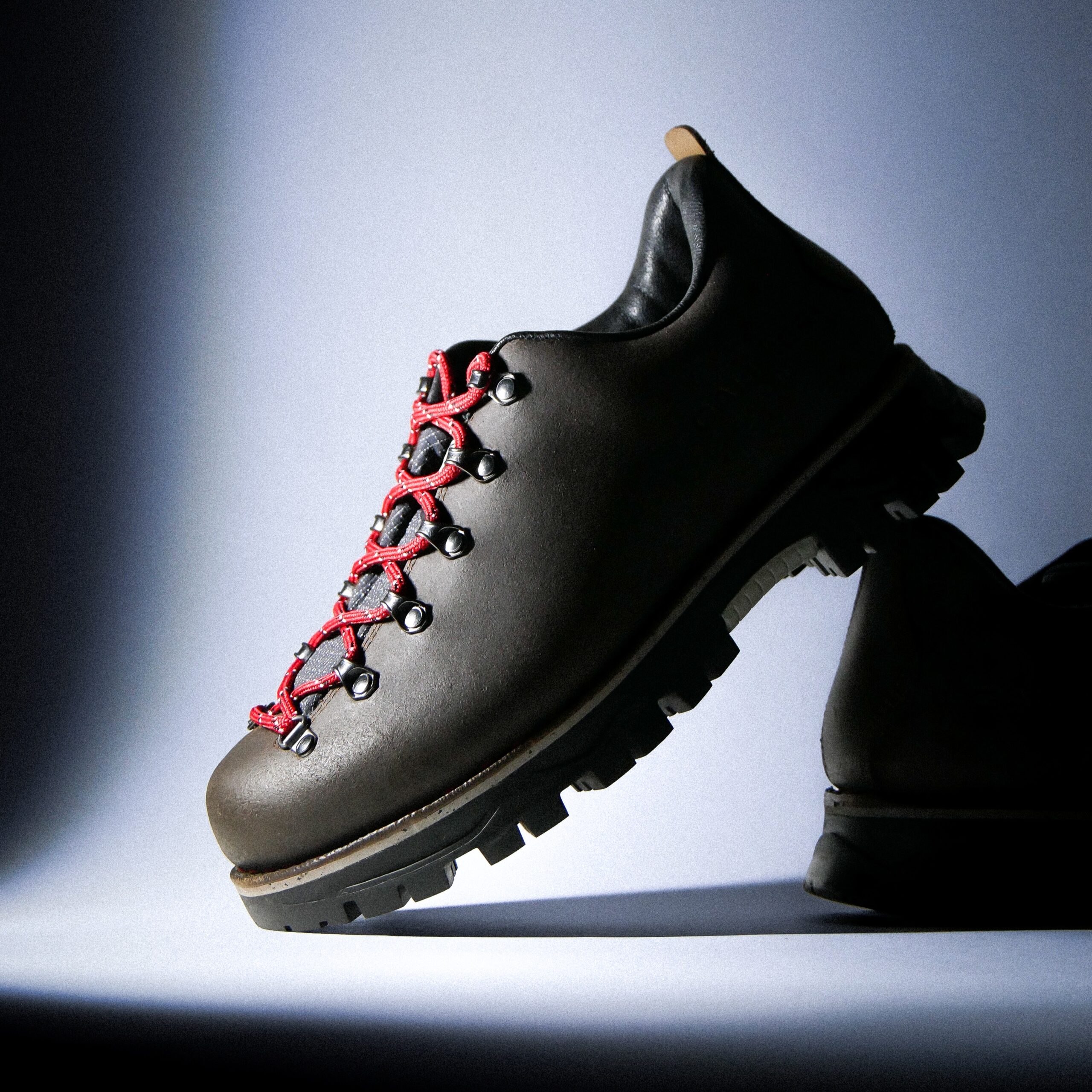
Its lightweight, unobtrusive construction provides excellent versatility, and its low shaft makes it even more agile, without compromising sturdiness.
This shoe is ideal for short-distance or day hikes. But don’t worry, they can be used to great effect, thanks in particular to their sturdiness.
Super Rando Mid: support & sturdiness
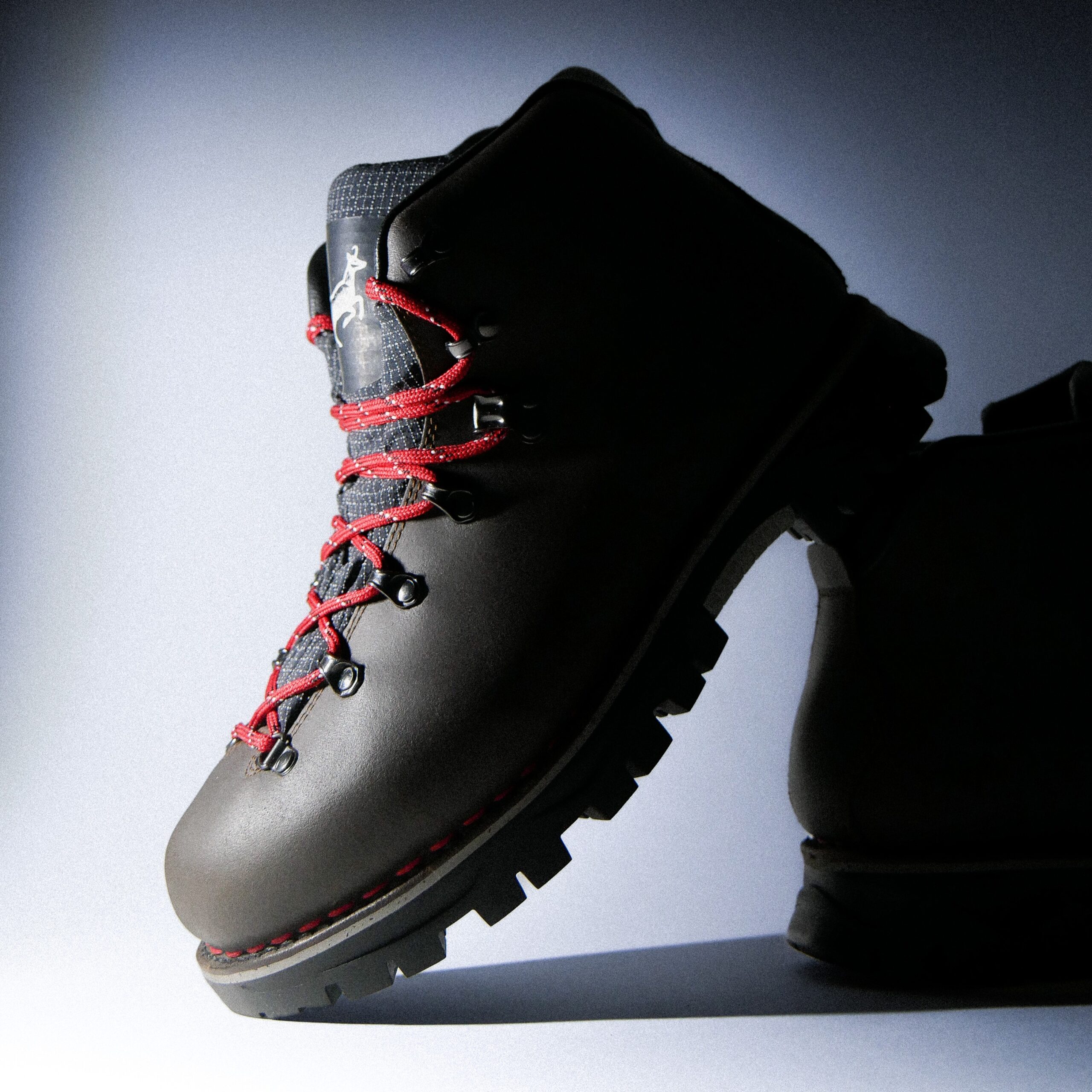
The Galibier Super Rando Mid is totally designed for long distances. Its higher upper provides extra support for optimum comfort over repeated effort.
What’s more, it’s equipped with a Sympatex membrane to guarantee waterproofing and efficient wicking of perspiration. Look no further, you’ve found your ideal partner for long hikes and bivouacs.
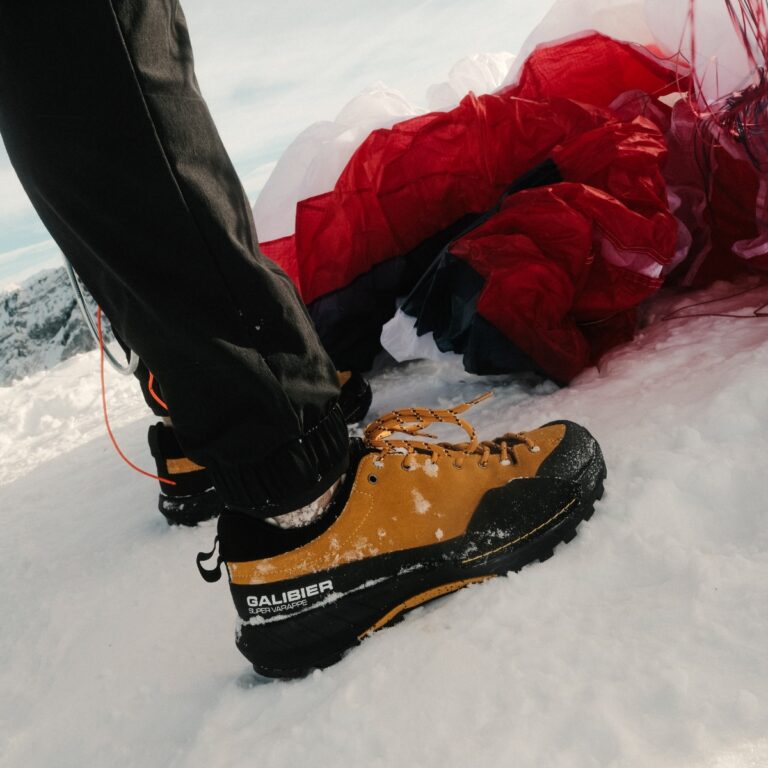
Super Varappe Low: lightweight, grippy and technical
The Super Varappe Low is the ideal choice for enhanced freedom of movement and safety. This model combines water-repellent leather with Ripstop Dyneema panels, ensuring exceptional abrasion resistance.
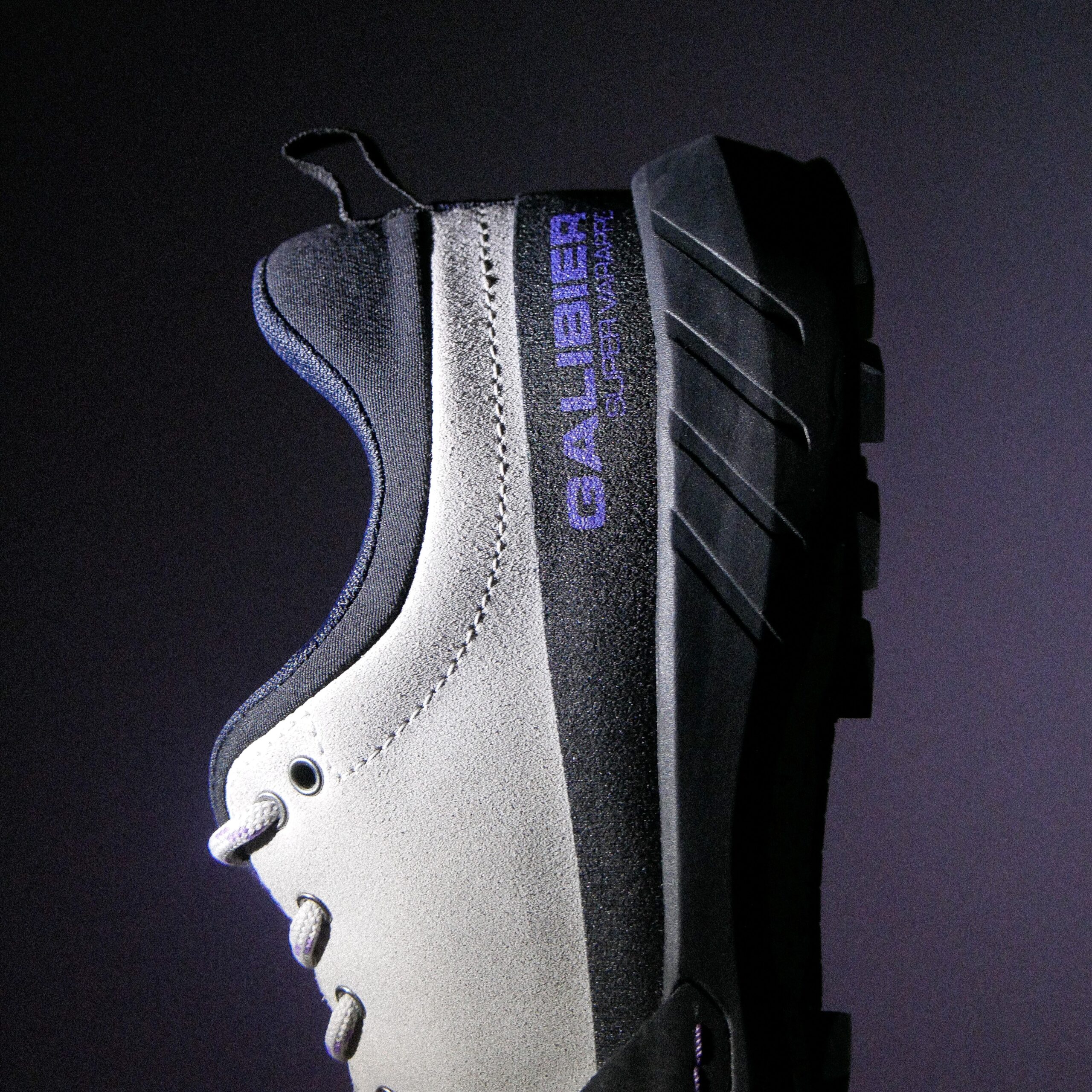
Super Varappe Mid: full protection and versatility
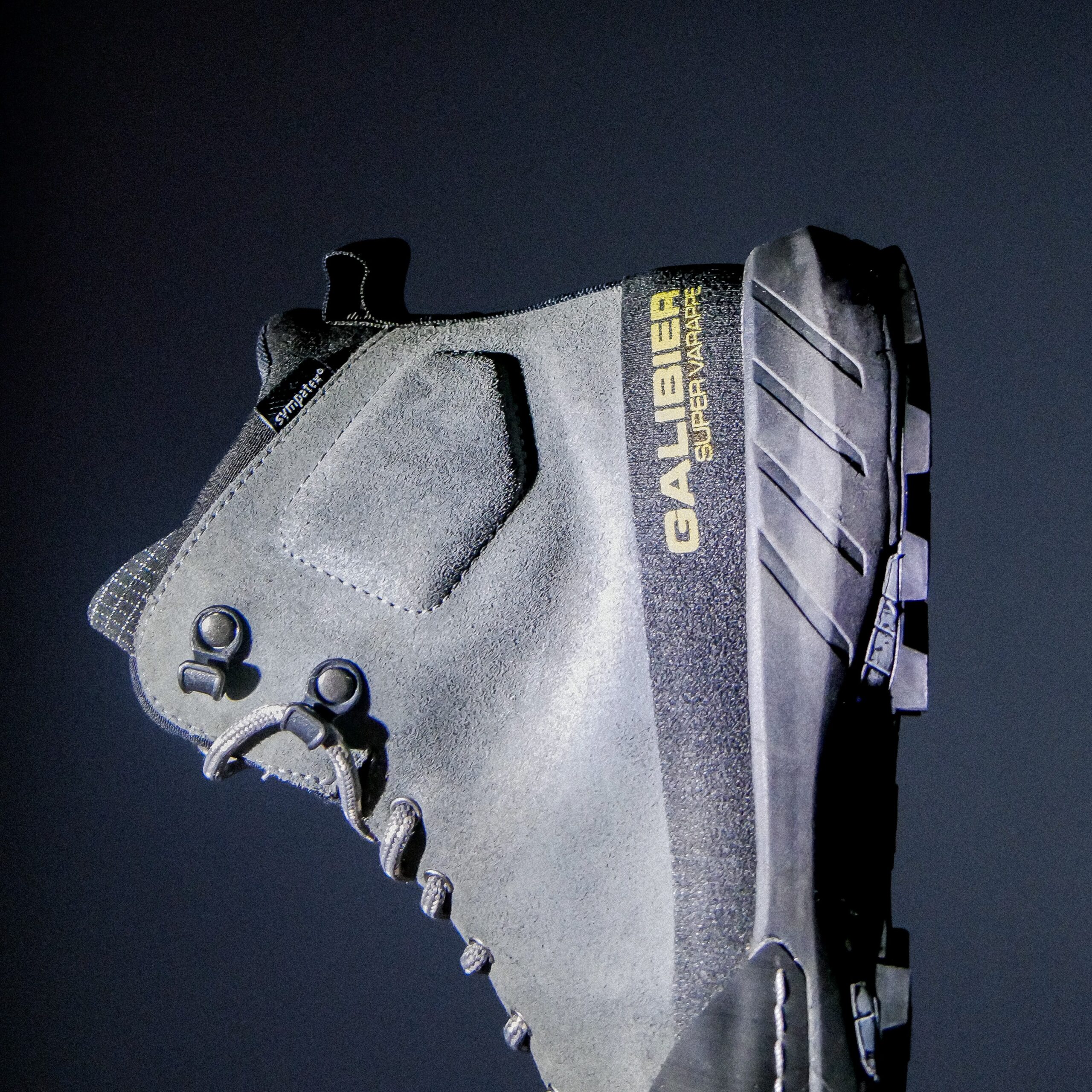
The Super Varappe Mid features a Sympatex liner and a high-cut Perwanger leather upper for waterproofing and ankle protection (360° rock guard). Ideal for approach walks and technical trails, it keeps your feet dry.
The repairability and ease of maintenance of these two models will keep them in use for many years to come. Adventure after adventure.
Women’s hiking boots: what are the special features for sensitive feet?
Choosing the best women’s hiking boots for sensitive feet requires careful attention to materials, comfort and fit. Soft materials such as nubuck leather or breathable mesh reduce chafing and may be just the thing.
Interior comfort is essential. A PU foam insole like the Galibier is shock-absorbing and cushioning. This contributes to the feeling of putting on real slippers when you try them on. It also provides relief on long walks over technical terrain.
In terms of fit, the shoe must neither compress nor allow too much freedom. A good lacing system plays an essential role in this adjustment process, provided it doesn’t create tension zones. This avoids overheating and pain caused by friction.
Opting for a low-profile women’s hiking shoe can also be a wise choice. Lighter and often more flexible, they are well suited to sensitive feet, especially for day hikes on moderate trails.
Together, these criteria guarantee a great walking experience in comfortable shoes, even for the most sensitive hikers.
Now all you have to do is lace up your shoes and set off to conquer the trails, with your mind free and your feet well protected.
FAQ – Chaussures de randonnée femme
GALIBIER

Women’s feet have anatomical differences (a narrower arch and a slimmer heel) compared to men’s. Models designed specifically for women take these characteristics into account to ensure a better fit, superior comfort and firm support, thereby reducing the risk of injuries such as sprains.
The key criteria are comfort, performance and safety. This means having a good outsole (for grip, traction and durability), reliable cushioning (to absorb shocks and protect the joints) and a design suited to the type of hike (lightweight, long-distance or technical) and the season (breathability in summer, waterproofing/high-top design in winter).
It’s often a trade-off.
Waterproof shoes (often featuring a Sympatex® membrane, equivalent to Gore-Tex®) keep water out, making them ideal for wet or snowy weather, but they may not wick away sweat as effectively.
Breathable shoes (often low-cut and made of mesh) allow water to escape quickly and minimise heat and perspiration, making them perfect for warm weather and light hikes. The choice will therefore depend mainly on the conditions and the intensity of your activity.


