
Hiking boots: the complete guide to choosing the right boot
Article published on 08 July 2025
Galibier, a century-old company with unique know-how, returns to the hiking boot market after a long slumber. Our proposition is to provide a top-of-the-range pair of shoes that meets the needs of all hikers. The right pair is the guarantee of a successful hike.
Hiking is about discovery. It’s about taking time for yourself, getting some fresh air, breathing, and recharging your batteries. Hiking is also about seeing new landscapes and admiring the beauty of nature.
What better way to discover a region you’ve just moved to? Where you’re spending a few days or weeks of your vacation? Hiking is easy and accessible. Just slip on your hiking boots, tie your shoelaces, grab a bag and off you go.
Gradually, shortness of breath can set in, and leg and foot pain can occur. To avoid this, it’s essential to choose the right hiking boots. Indeed, the quality of your walk depends to a large extent on your choice. If you choose correctly, you can be sure of a serene and confident walk, free of aches, discomforts and frustrations.
Why is it crucial to choose the right hiking boot?
As previously stated, it’s important to take the time to learn how to choose the right pair of hiking boots. In the event of precipitation, the risks are multiple, and the impact can extend over several weeks, months or years. It’s not something to be taken lightly.
The risks of making the wrong choice
A hike in the snow is a perfect illustration of the consequences of the wrong choice of footwear. Heels can be gouged, sometimes causing bleeding, due to footwear ill-suited to the conditions encountered.
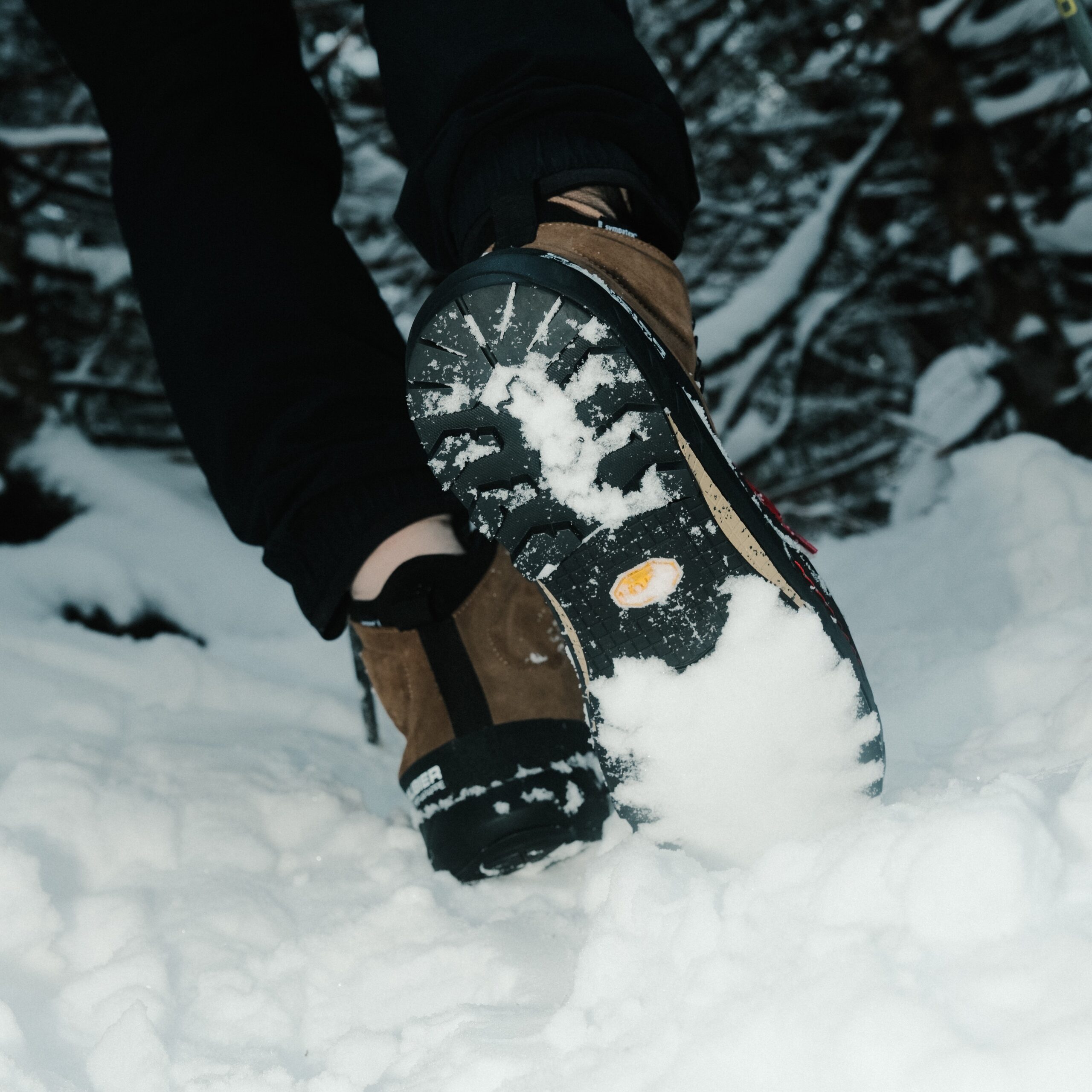
Under the combined effect of pressure and effort caused by sinking into the snow, Achilles heels are exposed to unusual friction that can damage them. The result: open wounds that are difficult to heal, sometimes leading to persistent pain lasting several weeks.
Feet are a bit like health in general: we don’t realize how important they are until they’re well. When they’re not, the pain is omnipresent and persistent, aggravated by our incessant movements which slow down the healing process.
Although bandages and healing creams can help, they are often ineffective if the wound reopens with activity.
Comfort and safety: the importance of quality
Foot discomfort is therefore responsible for a large number of ailments. Blisters are one of them, and rank among the most common pains encountered when walking. They result from the foot rubbing against a new shoe that’s too tight or too loose.
Moisture trapped inside hiking boots can lead to blisters caused by folds in the skin. Last but not least, the quality of the fabric used for socks and boots is also important in the context of abrasion and burns.
In addition to the discomfort, your safety is directly affected, especially when practicing on uneven terrain. A confident, sure step that takes full advantage of its support will always be more capable than a tense, painful, badly-shod step.
As you can see, we don’t compromise on the quality of a hiking boot.
What types of hiking boots are available?
Before giving in to the temptation of the first models seen in the shop window or spontaneously mentioned. It’s important to know what the different shoes are, why they’re different and what they’re suitable for.
Low or mid hiking boots: advantages and limitations
The first type of hiking boot is called a low boot. Low, because of the height of the boot’s collar, which generally doesn’t extend beyond the ankle. To be more precise, it stops at the malleolus, the small bone on the inside and outside of the ankle.
The low hiking boots will allow for fairly pronounced agility and will be defined above all by its versatility. They are designed to be lightweight, easy to put on and easy to carry. These shoes will also be easier to wear in a non-hiking context, whether it’s another sporting activity or a more everyday activity.
Our Galibier Super Rando Low model falls into the low hiking boot category. Lightweight yet robust, they are the ideal companion for everyday outings.
Mid our high hiking boots are undoubtedly the most popular hiking boots. As the name suggests, they rise above the malleolus, stopping 4 to 5 cm above the ankle.
They therefore offer a more assertive support for the foot, thanks to a stiffer, higher structure. Their look is also more mountain-like, accentuating the product’s robustness, perhaps to the detriment of its lightness and breathability.
The Super Rando Mid takes up these features and is no exception, becoming our best-seller.
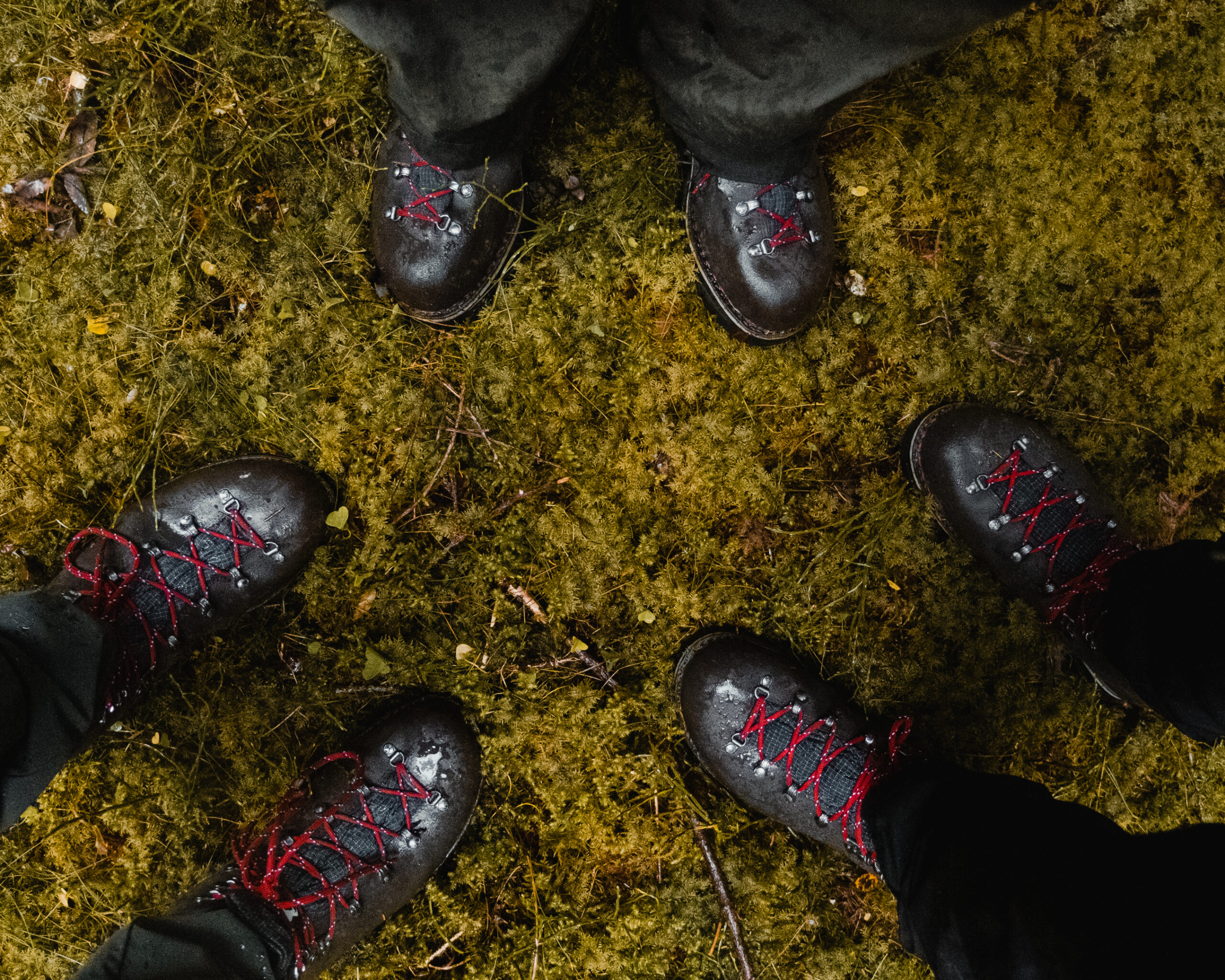
Super Rando
The Super Rando Mid and Low meet a very current demand: walk faster, lighter, while being secure. Designed for the pioneers, made for the adventurers.
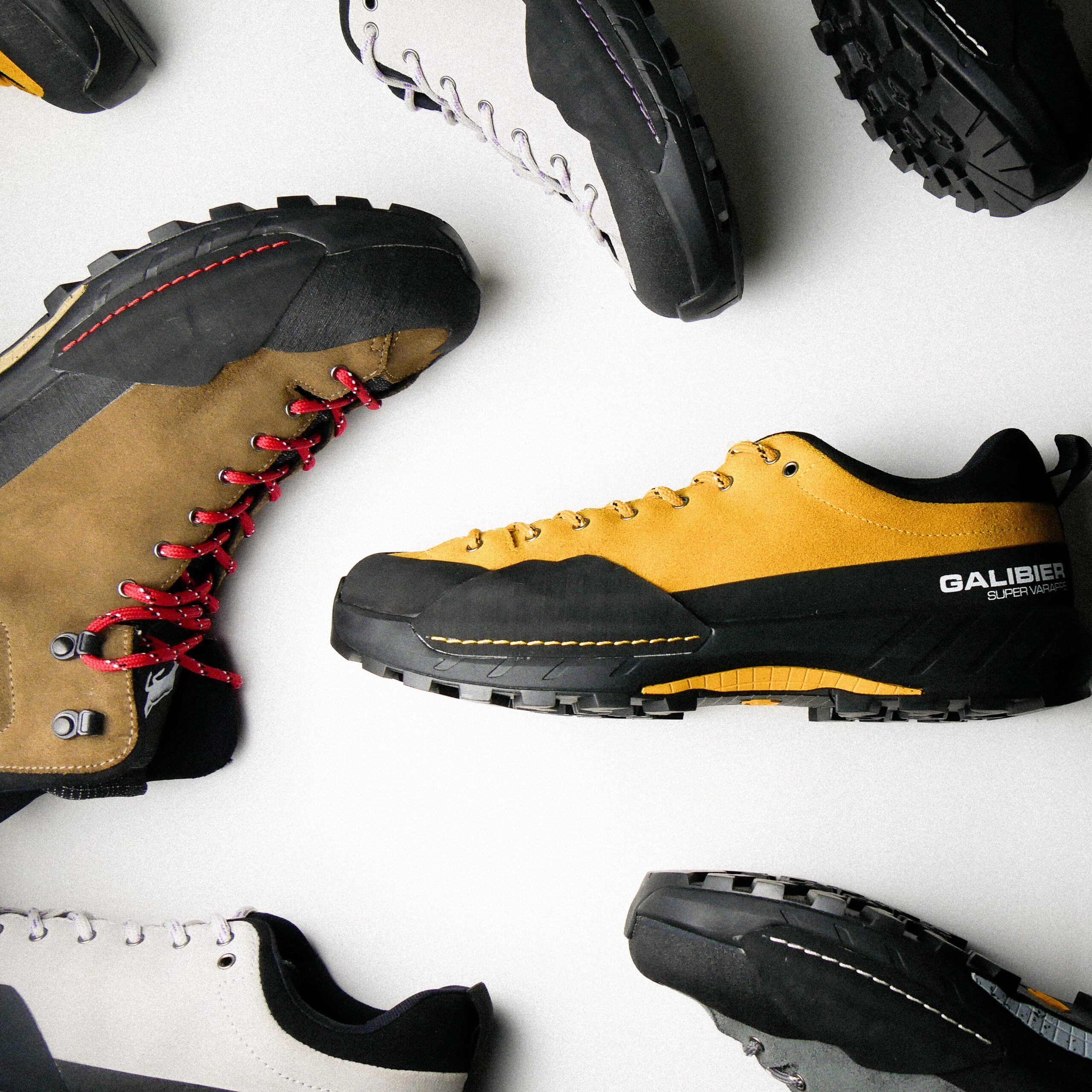
Super Varappe
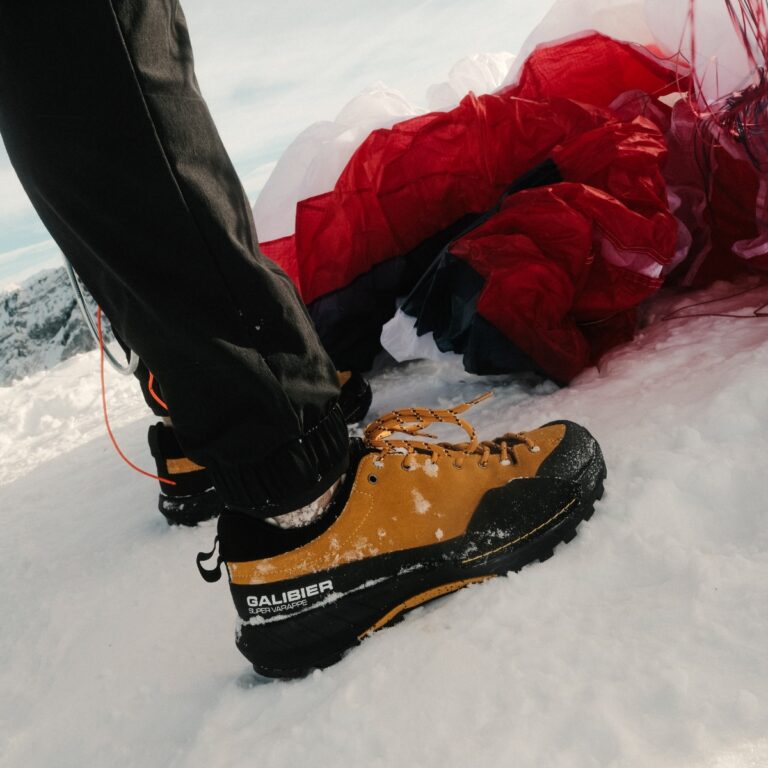
We designed this new Super Varappe range to accompany you in the next chapters of your alpine story.
Designed for multi-activity and tailored for approach, it is built to go far.
Mounted hiking boots: robust and technical
Super Guide
The Galibier Super Guide is the archetype of the reliable and imposing high-cut shoe. Ideal for the most demanding alpine activities, it guarantees maximum resistance to conditions and extreme terrains.
Designed for the most demanding alpine activities.
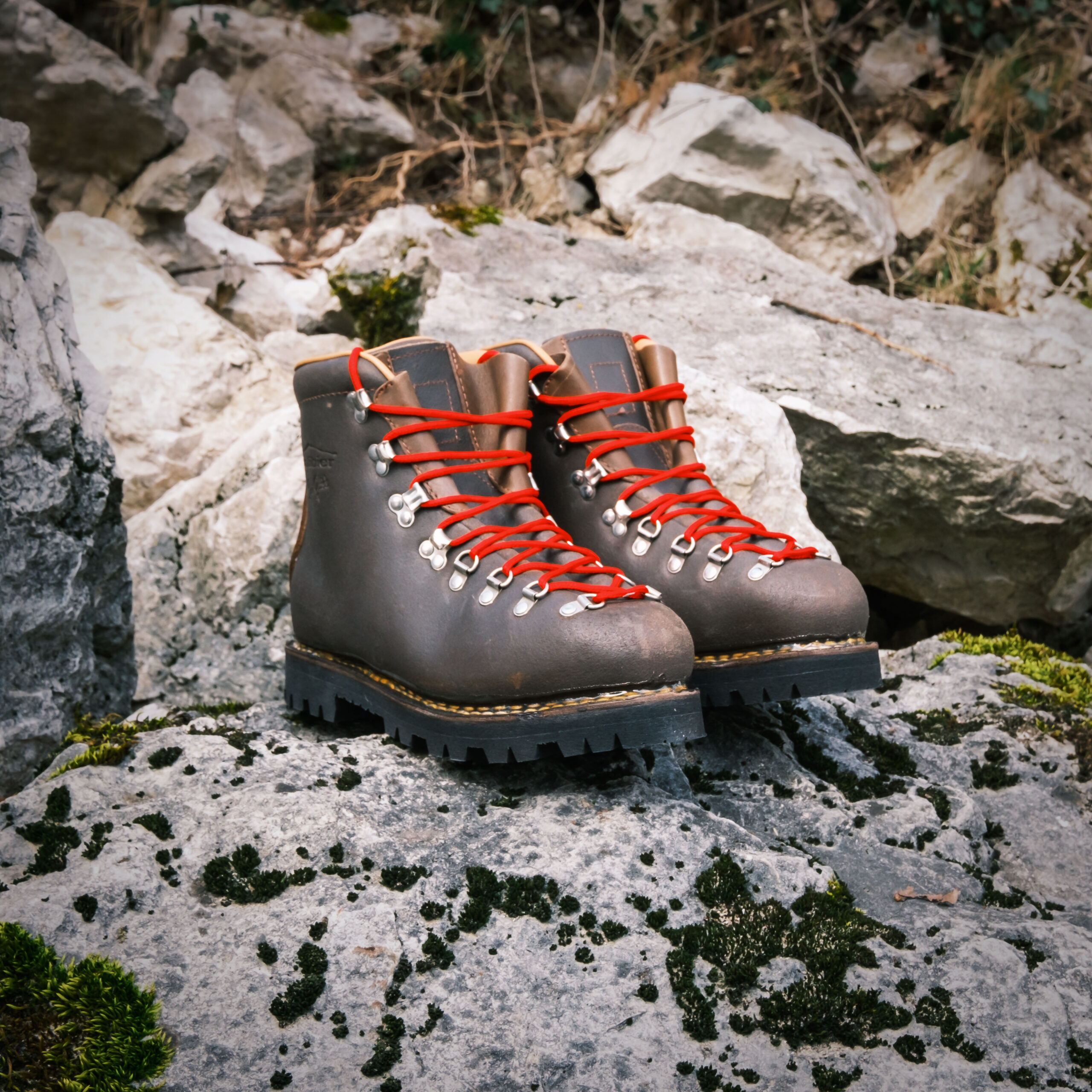
This is first and foremost a technical shoe that will in most cases meet the needs of mountain professionals. Mountain guides, rescuers, alpine herders and forest rangers will be its best customers.
Shoe models for light hikes vs. long treks
The choice of a hiking boot obviously depends on the type of activity and the intended use. A model suitable for everyday walking may not necessarily be so for a multi-day excursion.
Lightweight hiking boots are ideal for day-long outings. A lightweight, versatile model is highly recommended. It therefore promises a low shaft and agile construction for rapid foot roll.
A model designed for trekking or bivouacking will take into account the need to prolong effort over several days in a row. It will feature a high, thicker upper for better ankle support and greater comfort.
Joints are put to the test due to the duration of mobilization, and will require a high degree of safety. In this case, ultra-lightness is not the preferred choice.
Waterproof vs. breathable hiking boots
It’s hard to imagine yourself in a hiking boot that isn’t Gore Tex-certified, especially when this technology is presented as the best way to keep your feet dry. However, it’s important to know the pros and cons of this innovation in order to adapt to it.
A waterproof gore tex hiking boot resists puddles, snow and other wet exposures from the bottom and sides. Rain infiltration, however, depends on the type and quality of the associated pants.
If pants are not made with waterproof fabric, water can easily seep down the leg and into the shoe.
The height of the shoe is important in this process: it needs to be high enough to allow the bottom of the pants to partially cover it.
Once water has seeped through the top of the shoe, the technology doesn’t allow it to drain away, promoting blister formation. Friction increases tenfold, as does the discomfort of wet feet.
Breathable hiking boots are therefore also worth considering. Moisture enters them more easily, but comes out just as well, even during continuous exertion. They dry more easily, limiting the risk of mold and bacteria growth. Provided, of course, that you remember to air them out at the end of your trip.

Sympatex technology
The technology used on the Galibier Super Rando is called Sympatex. It's a waterproof, breathable membrane located inside the shoe. It absorbs moisture from the inside of the shoe, particularly perspiration, and expels it to the outside.
Differences between men’s and women’s hiking boots
There are many anatomical differences between men and women. It’s only natural that this should have repercussions on products, particularly in the footwear sector.
The first thing to notice is, of course, the difference in sizes. Smaller for women and larger for men, generally ranging from 36 to 47. Those with feet smaller or larger than these sizes should consider made-to-measure. A more complicated and, above all, more expensive option.
Although foot length is the most visible difference, width is no less important. It determines the shape of the foot and ensures that it is neither too tight nor too loose in the fit. Women’s feet tend to be slimmer, while men’s are more imposing.
Choosing and adapting hiking boots
A women's hiking boot must be adapted to the female foot to guarantee optimum comfort. A larger size not only means a change in length, but also an adjustment of the volume inside the shoe. We recommend that you choose a size larger than your usual shoe when buying a hiking boot.

Feet swell during exercise. A shoe that’s too tight or too tight only risks impeding blood circulation and causing pain.
Of course, you have to find the right balance, so you don’t end up floating around in them, with your feet wandering. Good support remains the priority of a good shoe.
Optimized comfort isn’t just a matter of choosing the right shoes. Sometimes, waiting is also part of the game. This is particularly true of leather shoes, which can be hostile at first.
The leather will need to “get used to the foot”, i.e. take on its shape. So it’s a good idea to test out your new leather hiking boots a little at a time, starting with short strolls.
Criteria for choosing the right pair
This guide has been designed to help hikers in their quest for the ultimate hiking boot. Reviewing the various features and components of a shoe is therefore part of a learning process. Learn to understand, understand to choose.
Stem height
When we talk about upper height, we’re referring to the construction of the shoe. The upper of a shoe is the upper part that covers the foot and holds it in place. Designers attach the upper to the sole, and offer it in a variety of shapes, materials and heights, depending on the type of shoe.
The upper can be made of fabric, plastic or leather, with or without seams. At Galibier, our upper is a single piece of leather, with no seams or inserts. Our Mid and Low models include this feature, a guarantee of quality and, above all, durability: the fewer seams, the lower the risk of cracking.
A high upper provides greater ankle support and firmly accompanies the rolling of the foot. A low upper, on the other hand, offers greater amplitude and mobility.
Sole and grip
The sole, on the other hand, is the part directly in contact with the ground. A bit like the tires that connect the car to the road, a sole is also made of rubber. This is the case for most hiking boots, but also for city shoes.
The sole of a hiking boot will feature crampons. The more high-altitude the boot, the larger the crampons. Ultra-light hiking models, for example, will have flatter soles. Flatter than a Galibier Super Guide, for example, our historic alpine model.
It is in this configuration of studs that a shoe’s grip is determined. Users will experience this in technical terrain, and consider a sole to be good when it doesn’t slip or skid.
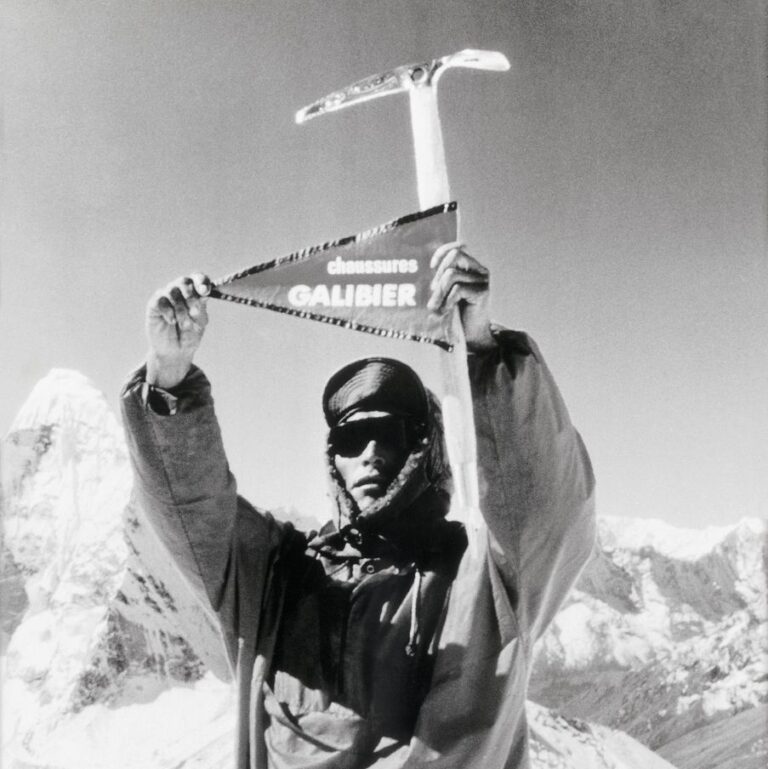
The rigidity of the sole is also important. For example, the first Galibier models were approved for mountaineering when climbers planted the tip of the shoe in the ice and it remained perfectly stable, even when vertical.
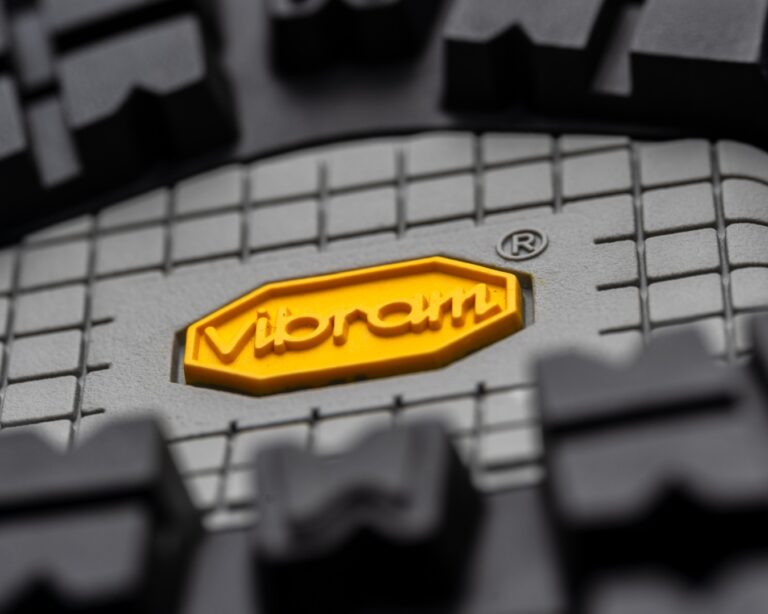
Vibram is one of the best-known insole manufacturers. They cover a very broad field of footwear. They equip gore tex hiking boots, trail shoes, ultra-light hiking boots for women, as well as leather shoes.
We equip our Super Rando with Vibram’s SpringLug technology, an essential element in their robustness.
Cushioning and material
When it comes to cushioning in footwear, hiking isn’t exactly the most concerned sport. Especially when compared to sports such as running or trail running. These sports place the emphasis on cushioning. To spare your joints as much as possible.
When hiking, steps are slower, so we prefer close contact with the ground for greater stability. And better stability means greater safety on all types of terrain.
The material of hiking boots is a big topic. It refers to the materials used in the construction of the shoe, in particular the upper and sole.
Firstly, the material will have an impact on comfort in use. Secondly, it will have an impact on the product’s durability. Synthetic materials are less resistant than well-maintained leather. Plastics are used by manufacturers in high-altitude sports for their waterproofing properties.
Recommended hiking boots by use
Now it’s time to look at the different uses of a hiking boot. They vary in terms of duration, length, technicality, altitude and even weather.

Long and short hikes
For light hiking or "fast hiking", we recommend low-cut shoes. They're lighter in construction and above all offer good freedom of movement. Long-distance hiking requires greater comfort and sturdiness. This is the essential element of this category. The well-being of your feet will be essential to endure a long adventure.
Shoes specifically designed for mountain outings, i.e. at high altitudes, will inevitably need to be more technical. The environment is more hostile, whether in terms of temperature, difficulty of terrain or snow cover.
There are also specific models for everyday walking. Hiking sandals fall into this category. They offer an airy, comfortable fit for short strolls in hot weather.
Focus on waterproof models
Particularly in high-altitude, high-mountain environments, where humidity and snow are omnipresent, waterproofing is essential.
Inside the shoe, the membrane plays a key role in keeping your feet dry while maintaining an ideal temperature. It functions thanks to a structure of hydrophilic molecular chains, which attract moisture.
These chains absorb perspiration in the form of vapour and repel it towards the outside of the shoe. The greater the difference between heat and humidity on the inside and outside, the better the membrane’s performance.
The different technologies: membranes and treatments
Unlike chemically-treated membranes, Sympatex technology uses a more environmentally-friendly solution. Solvent-free and PTFE-free, it combines performance and durability while limiting its ecological impact.
Thanks to all these qualities, a shoe equipped with this type of membrane will offer you excellent protection and optimum comfort for your hikes in all conditions.
Finding the perfect pair: conclusion and tips
This comprehensive guide to hiking boots is coming to an end. The aim was to provide the best possible support for the tedious task of finding the perfect pair from a wide choice of hiking models.
All the essentials you need to find the right shoe are in one place. You now have all the keys you need to choose a product adapted to your needs, types of terrain, weather conditions and, above all, one in which you’ll feel comfortable, safe and free from any risk of injury.
This is what makes Galibier a profoundly “core” brand. Committed to, and by, mountain practitioners.

FAQ – Hiking boots
GALIBIER

Yes, because the requirements are different. In summer, you should opt for lighter, more breathable styles, often with a low or mid-cut upper, whereas in winter, it is advisable to wear a higher-cut, better-insulated shoe to withstand the cold and damp.
It all depends on how often you use them and how well you look after them. On average, a good pair of hiking boots can last for between 800 and 1,200 km of walking. Regular care, such as cleaning, waterproofing and drying, significantly extends the product’s lifespan.
You can extend this lifespan even further thanks to easy repair options, particularly by having the soles replaced.
Yes, absolutely! Our low- and mid-cut styles are designed to be versatile. Hiking boots are perfectly suited to everyday wear, provided you don’t compromise on comfort or style. Our styles combine performance and style so you can feel comfortable on any terrain.
Walking shoes are designed for everyday use on flat or gently undulating terrain. They are lighter and more flexible, making them very practical for holidays or weekend trips. Hiking boots, on the other hand, are designed to tackle more demanding and varied terrain. They are ideal for long walks, hills and uneven surfaces.


